
Use this template: Project_Ep##_Segment_Role_V###_YYYYMMDD_SR24b_CH. It works because every field is both human-readable and machine-parseable, so a collaborator or an automated script can identify the project, episode, version, and audio spec without opening the file. A platform like Audome that tracks versions and timestamped feedback makes this template even more reliable, since the file itself stays locked while history lives on the platform.
TL;DR:
- Keep the episode ID stable, use three digit versions and export dates, and exclude public titles because late edits otherwise force renames across related files.
- Use sequential three digit versions, add status tags such as DRAFT or APPROVED, reserve FINAL for delivery, and label later corrections HOTFIX.
- Separate WORKING, DELIVERABLES, and ARCHIVE folders by episode, and require each delivery bundle to include a manifest with filenames, formats, durations, and checksums.
- Export client masters and stems as uncompressed WAV, use MP3 only for previews, and label voice, music, and effects stems separately.
- Validate filenames at upload, require project, episode, and version metadata, and manually review exceptions such as multi host episodes or rush deliveries.
Table of Contents
- How to break down the standard filename template
- Versioning and revision labels that remove ambiguity
- Folder structure and delivery packaging that matches your filenames
- Automation checks and QA that catch naming mistakes early
- Sample filenames and a one-page naming policy you can copy
- How a collaboration platform enforces these rules in practice
- Deliverable file formats and what each filename suffix should signal
- Keeping public titles separate from internal file names
- Legal considerations and copyright issues in episode naming
- SEO optimization for episode titles happens outside the filename
- Balancing creativity with clarity in episode naming
- Common pitfalls and mistakes in podcast episode naming
- A standardized system pays off faster than expected
- Putting the naming system on autopilot with a collaboration platform
- FAQ
How to break down the standard filename template
Each field in Project_Ep##_Segment_Role_V###_YYYYMMDD_SR24b_CH does one job, and the order never changes. Here is the annotated version using a real example: ThePivot_Ep12_IntroSegment_MIX_V004_20260312_SR48b_CH2.
- Project: a short, stable code for the show, like
ThePivotorTPCfor The Pivot Cast. Pick this once and never rename it mid-season. - Ep##: the internal episode ID, zero-padded to two digits minimum (
Ep12, notEp9). This is separate from any public episode number that marketing might change later. - Segment: the clip or section name, such as
IntroSegment,InterviewA, orSponsorRead. - Role: who or what the file represents:
HOST,GUEST,MIX,STEM,RAW, orMASTER. - V###: the version token, always three digits (
V001,V002), never a bare number or a date standing in for version. - YYYYMMDD: the export date, not the recording date, so collaborators know when the file left the editor’s hands.
- SR24b: sample rate and bit depth shorthand, like
SR48bfor 48kHz orSR24bfor 24-bit depth paired with whatever rate the project uses. Keep this consistent with your sample rate standard so every exported file matches what you recorded. - CH: channel format,
CH1for mono orCH2for stereo.
Stick to uppercase letters, numbers, and underscores only, with dashes reserved for internal word breaks inside a single field if needed. Avoid spaces, ampersands, and special characters entirely, since they break scripts and some upload systems silently truncate them. Keep the whole filename under 80 characters when possible. One more rule matters more than it sounds: never put the public-facing episode title in the filename. Titles change during marketing review, get localized, or get rewritten for SEO, and a filename tied to a title that no longer exists creates confusion for everyone touching the project later.
Versioning and revision labels that remove ambiguity
A version number should tell you two things at a glance: how far along the file is, and whether it is safe to treat as final. Numeric versioning alone covers progress but not status, so pair the two.
- Use
V001,V002,V003for sequential passes, always three digits so files sort correctly in any file browser. - Add a status tag directly after the version when the stage matters more than the count, such as
V002_DRAFT,V003_REV, orV004_APPROVED. - Reserve
FINALfor the single file that goes to delivery, and never reuse that version number for a later fix. - If a fix comes after
FINALships, label itV004_HOTFIXrather than quietly overwriting the approved file. - For parallel branches, like two mix directions being tested at once, use a letter suffix (
V002a,V002b) rather than skipping ahead toV003, which implies one replaced the other.
Tie each version to a change log entry or a timestamped comment thread so anyone opening V003 can see what changed since V002 without guessing. A podcast approval workflow built around timestamped feedback handles this naturally, since every comment is already pinned to a specific version and a specific moment in the audio. Once a file is marked FINAL, copy it into an archive folder immediately rather than leaving the only final copy mixed in with drafts.
Pro Tip: Never delete a superseded version. Storage is cheap; reconstructing a client’s rejected edit from memory is not.
Folder structure and delivery packaging that matches your filenames
A naming template only works if the folders around it follow the same logic. Keep it minimal: a top-level folder per project, then a subfolder per episode, then three standard folders inside each.
/PROJECTCODE/EP_##/WORKING/holds raw takes, in-progress edits, and anything not yet reviewed./PROJECTCODE/EP_##/DELIVERABLES/holds client-ready exports only, packaged as a single bundle likeThePivot_Ep12_DELIVERABLES_V003.zip./PROJECTCODE/EP_##/ARCHIVE/holds superseded versions and the final approved files, tagged by month asARCHIVE_202603for easy retention sweeps.
Every deliverable bundle should include a manifest.txt listing each filename, its format, duration, and a checksum. This single file saves hours when a client claims a file is missing or corrupted, since the manifest proves what was sent and in what state. A delivery and revision workflow guide covers how to structure this handoff so nothing gets lost between editor and client. Set a cadence, monthly or at season’s end, to move completed projects into cold archive storage, clearing active folders for current work.
Automation checks and QA that catch naming mistakes early
Manual naming discipline breaks down the moment a team grows past two people, so build a check into the upload step itself. A regex pattern like ^[A-Z0-9_-]{3,}_(EPd{2})_.*_Vd{3}_d{8}_SRd+b_CHw+$ validates the canonical structure before a file ever reaches a client folder, catching missing fields or malformed version tags automatically.
- Require metadata fields (project code, episode number, version) at upload rather than relying on the filename alone.
- Use auto-rename features that append the correct version token based on upload history instead of trusting manual entry.
- Run a short manual QA pass on exceptions: multi-host episodes, rush deliveries, or files renamed outside the normal export process.
Pro Tip: Add a preflight step that blocks final downloads until a manifest file is present in the bundle, which stops half-finished deliveries before they reach a client.
Sample filenames and a one-page naming policy you can copy
Seeing the template applied across real scenarios makes the rules stick faster than reading them in isolation.
| Scenario | Example filename |
|---|---|
| Raw take | ThePivot_Ep12_InterviewA_RAW_V001_20260312_SR48b_CH2 |
| Comped edit | ThePivot_Ep12_InterviewA_EDIT_V002_20260312_SR48b_CH2 |
| Mix version | ThePivot_Ep12_FullMix_MIX_V003_20260312_SR48b_CH2 |
| Stem | ThePivot_Ep12_FullMix_STEM-VO_V003_20260312_SR48b_CH2 |
| Final master | ThePivot_Ep12_FullMix_MASTER_FINAL_20260312_SR48b_CH2 |
| Social clip | ThePivot_Ep12_ClipA_SOCIAL_V001_20260312_SR44b_CH2 |
| Deliverable bundle | ThePivot_Ep12_DELIVERABLES_V003.zip |
For a one-page policy, condense it to four lines your team can paste into a wiki: the field order and separators, the three-digit version rule, the list of valid status tags, and the required manifest step before delivery as explained in our guide to streamline your content creation workflow for SEO success. A studio file naming policy template lays out this exact structure if you want a starting document rather than building one from scratch. For multi-host shows, add a short host initial to the Role field (MIX-JD). For remote interviews recorded on separate tracks, keep each contributor’s raw file separate and only merge Role tags at the mix stage. Sponsored segments get their own Segment tag (SponsorReadA) so they can be pulled, swapped, or removed without touching the rest of the episode.
How a collaboration platform enforces these rules in practice
These conventions work on paper, but they hold up best when the tools around your team reinforce them instead of relying on memory.
- Version history that timestamps every upload automatically, so a
V003label is backed by a real record rather than a guess. - Feedback pinned directly to a waveform at the exact second being discussed, removing the need for separate revision-note documents.
- Password-protected client pages and download controls that keep draft versions from leaking before a file is marked final.
A mix version naming guide and a client brief template cover how studios document these rules for new hires and clients alike, which matters more than any single filename once a team grows past a handful of people.
Deliverable file formats and what each filename suffix should signal
The role and format fields in your filename should match the actual deliverable type, not just the production stage. WAV files are the default for anything going to a client for further mixing or mastering, since they carry no compression loss; label these with MASTER or MIX in the Role field and keep the bit depth suffix accurate. MP3 exports are for listening copies, social previews, or anything meant for casual review, and should carry a lower sample rate suffix like SR44b paired with a clear PREVIEW or SOCIAL tag so nobody mistakes a compressed file for a deliverable master.
Stems need their own naming layer: STEM-VO, STEM-MUSIC, STEM-SFX inside the Role field, each exported as uncompressed WAV. Bundling stems without clear suffixes is one of the fastest ways to send a client the wrong layer by accident.

Show notes and other text or image assets that travel with an episode (transcripts, chapter markers, cover art variants) should follow the same Project and Ep## prefix even though they are not audio, so a file search for an episode code returns every related asset, not just the sound files. A best practices guide for exporting deliverables covers format choices in more depth, including when a client actually needs a WAV versus when an MP3 is sufficient for the job.
Keeping public titles separate from internal file names
Internal filenames and public episode titles solve different problems and should never be the same string. A filename exists so a machine or a teammate can locate and verify a specific file instantly. A public title exists to get someone to click play, which means it changes late, gets tested, or gets rewritten by a marketing editor days before release.
If your filename contains the public title, every one of those late changes forces a rename across every associated file, stem, and archive copy, multiplying the chance of a mismatch. Keep the internal episode ID (Ep12) stable from the first raw take through final archive, and let the public title live only in your publishing platform, show notes document, or RSS feed, never in the filename itself.

This separation also protects against a quieter problem: search and replace errors. Renaming a batch of files to match a new title invites typos that break automated validators, while an episode ID never needs to be touched once it is assigned. Treat the ID as the permanent internal handle and the title as a marketing asset that can be swapped freely without ever touching your file system.
Legal considerations and copyright issues in episode naming
Filenames themselves rarely create legal exposure, but what they reference and how they are shared can. If a segment name or role tag includes a guest’s full legal name combined with sensitive material, consider whether that file needs the same access restrictions as the content inside it, since a leaked filename can reveal more than intended even before anyone opens the file.
Copyright attaches to the audio content, not the filename, but naming conventions still matter for tracking licensed material. If an episode uses licensed music or a sponsored segment with specific usage terms, tag those files clearly (SponsorReadA, LicensedMusicB) so editors downstream know which segments carry restrictions before they get repurposed into a clip, trailer, or compilation without the necessary rights cleared.
Keep a record of who holds rights to guest interviews and co-hosted material, since multi-host or heavily collaborative shows can create shared ownership questions that have nothing to do with how a file is named but everything to do with who can approve its final release. None of this replaces legal advice specific to your show’s contracts and jurisdiction, but a naming system that flags licensed or restricted content early saves a scramble later when a segment needs to be pulled or re-cleared.
SEO optimization for episode titles happens outside the filename
Discoverability work for episode titles lives in your podcast hosting platform, show notes, and metadata fields, not in the internal filename your team uses for production. Once an episode is ready to publish, the title that appears in a podcast app or search result should describe the specific value of that episode using words a listener would actually type into a search bar, separate entirely from the internal project code and episode ID used during production.
Keep show notes and episode descriptions aligned with the public title so platforms indexing your content see consistent language across the title, description, and any transcript you publish. None of this touches your internal naming system: the Ep12 identifier stays fixed in your files while the public title and description can be revised, tested, or updated after release without ever requiring a single file rename.
Balancing creativity with clarity in episode naming
Creative freedom belongs in the public episode title, not in the internal filename, and conflating the two is where most teams lose consistency. A clever, pun-filled title that makes someone want to click play has no business appearing anywhere in your file system, where a script or a tired editor at midnight needs to parse the filename in under a second.
Internal names should be boring on purpose. The entire point of a fixed template is that nobody has to think creatively about it, which frees up actual creative energy for the part that matters: the title, the cover art, and the episode description a listener sees first. Keep the two systems fully separate, and creativity never collides with clarity, because they never share the same field.
Common pitfalls and mistakes in podcast episode naming
Most naming failures come from small inconsistencies that compound as a project grows past a handful of episodes.
Teams often mix date formats across a single project, using 031226 in one file and 20260312 in another, which breaks any sort order and confuses automated checks. Skipping zero-padding on version numbers (V2 instead of V002) causes the same sorting problem once a project reaches ten versions. Embedding the public episode title directly in the filename is one of the most common mistakes, since a late title change then forces a rename across every related file.
Another frequent error is overwriting a file instead of incrementing its version, which destroys the ability to roll back when a client prefers an earlier edit. Teams also forget to separate working files from deliverables, leaving drafts mixed into client-facing folders where someone might accidentally send the wrong version. Finally, inconsistent role tags, using MIX in one episode and Mixdown in another, quietly break any regex validator built to enforce the template, so the smallest deviation from the agreed format tends to cause the largest downstream headache.
A standardized system pays off faster than expected
One producer we worked with switched from loosely named files to a fixed template and cut file-hunting time in approval meetings almost immediately, since everyone could identify the latest version by name alone. The one step worth taking this week: paste your naming policy directly into your next project brief so it stops living only in someone’s head.
— Kreg
Putting the naming system on autopilot with a collaboration platform
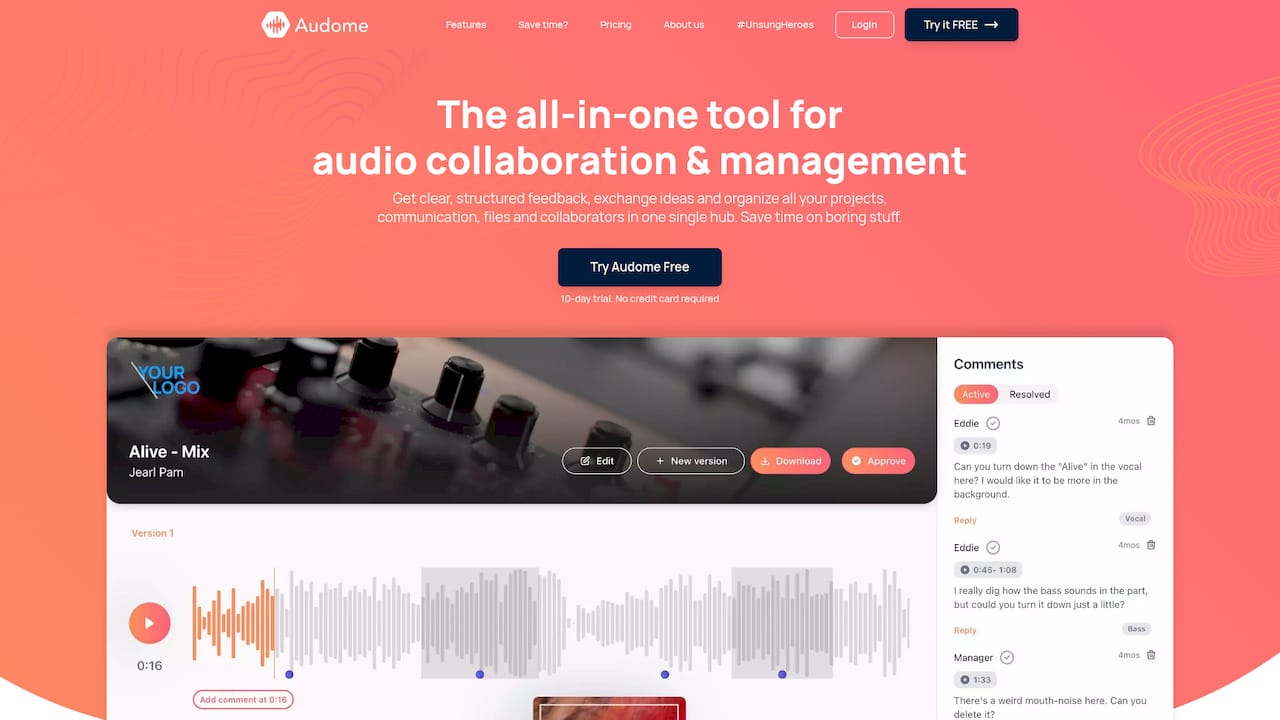
Everything above works as a manual policy, but it holds up best when the platform your team uses actually enforces it. We built Audome around exactly this kind of workflow, where version history, timestamped feedback, and delivery controls do the enforcement work that a shared drive and a naming document alone cannot.
- Unlimited high-resolution uploads mean raw takes, stems, and masters all live in one place without a separate archive drive.
- Automated version tracking removes the need to manually renumber files every time a new mix goes out for review.
- Timestamped feedback ties every comment to an exact moment in the audio, so change logs stay attached to the file instead of scattered across email threads.
- Download controls and password-protected client pages keep draft versions from leaking before a file is marked final.
Check plans and pricing to see which tier fits your studio’s current project volume.
FAQ
What is the best filename format for podcast production files?
A format like Project_Ep##_Segment_Role_V###_YYYYMMDD_SR24b_CH works best because it is readable by both people and scripts, keeping project, episode, version, and audio specs in one consistent string. The key is picking one order and never deviating from it across episodes.
Should I include the episode’s public title in the filename?
No, keep the public title out of internal filenames and use a stable internal episode ID like Ep12 instead. Public titles change late in production, and a filename tied to an outdated title creates confusion across every version and archive copy.
How many digits should a version number use?
Use three digits, like V001 or V010, so filenames sort correctly once a project passes nine versions. A single-digit or two-digit format breaks alphabetical sorting in most file browsers once double digits appear.
Does a collaboration platform remove the need for manual version suffixes?
A platform with automated version history, such as Audome, reduces manual renaming by tracking versions on upload, though many teams keep a version token in the filename as a backup reference. The two systems work well together rather than replacing one another entirely.
What should go in a delivery manifest file?
A manifest file should list every filename in the bundle along with its format, duration, and a checksum for verification. This single document resolves most disputes about whether a file was delivered correctly and in what condition.