
TL;DR:
- Beatmakers should include 2 or 3 revision rounds in their contracts, aligning with industry standards. Clear, timestamped feedback reduces unnecessary revisions by making client notes more specific. Properly defined revision policies and communication improve project outcomes and profitability.
The standard answer to how many revisions should beatmakers include in any project agreement is 2–3 rounds. That number reflects real industry practice, not arbitrary preference. It gives clients enough room to refine their vision while protecting your time, your creative energy, and your bottom line. Get this number wrong in either direction and you either frustrate clients or work yourself into the ground for free.
How many revisions should beatmakers include in a contract?
The industry standard is 2–3 revision rounds before additional fees apply. Most professionals treat anything beyond that as a scope change, not a courtesy. This number works because it creates a natural checkpoint system. Clients get two or three real opportunities to course-correct, and you get a clear stopping point.
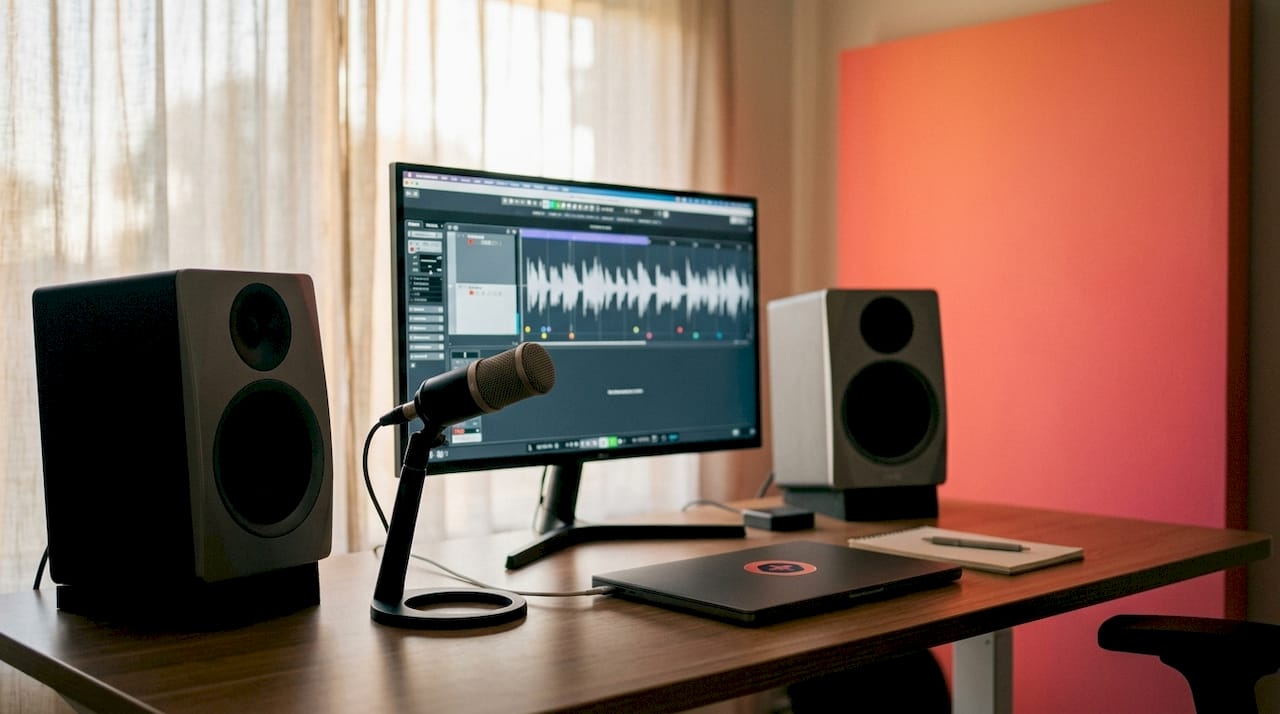
Revision limits serve a second purpose that most producers overlook. They force clients to consolidate their feedback. When a client knows they only have two rounds left, they stop sending one-line texts like “make it harder” and start thinking carefully about what they actually want. That shift alone cuts project timelines significantly.
Most projects land at final approval within 2–3 rounds, and very few exceed 5 revisions without serious timeline consequences. Exceeding 5 rounds is a signal that something structural went wrong early, either in the brief, the feedback process, or the contract terms.
Here is what a solid revision policy covers:
- Number of included rounds: State 2 or 3 explicitly. Do not write “a few revisions.”
- What counts as a revision: One consolidated set of notes per round, not drip-fed changes over multiple messages.
- Turnaround time per round: Specify your delivery window after receiving feedback, typically 3–5 business days.
- Fee for additional rounds: Set a flat rate or hourly charge before the project starts, not after the client asks for round 4.
- What triggers a full rework: Structural changes like key, tempo, or genre shifts are reworks, not revisions.
Pro Tip: Write your revision policy in plain language, not legal boilerplate. Clients read and remember simple sentences. “You get 2 rounds of revisions included. Additional rounds are $75 each” is clearer than any clause-heavy contract paragraph.
Why timestamped feedback cuts revision rounds in half
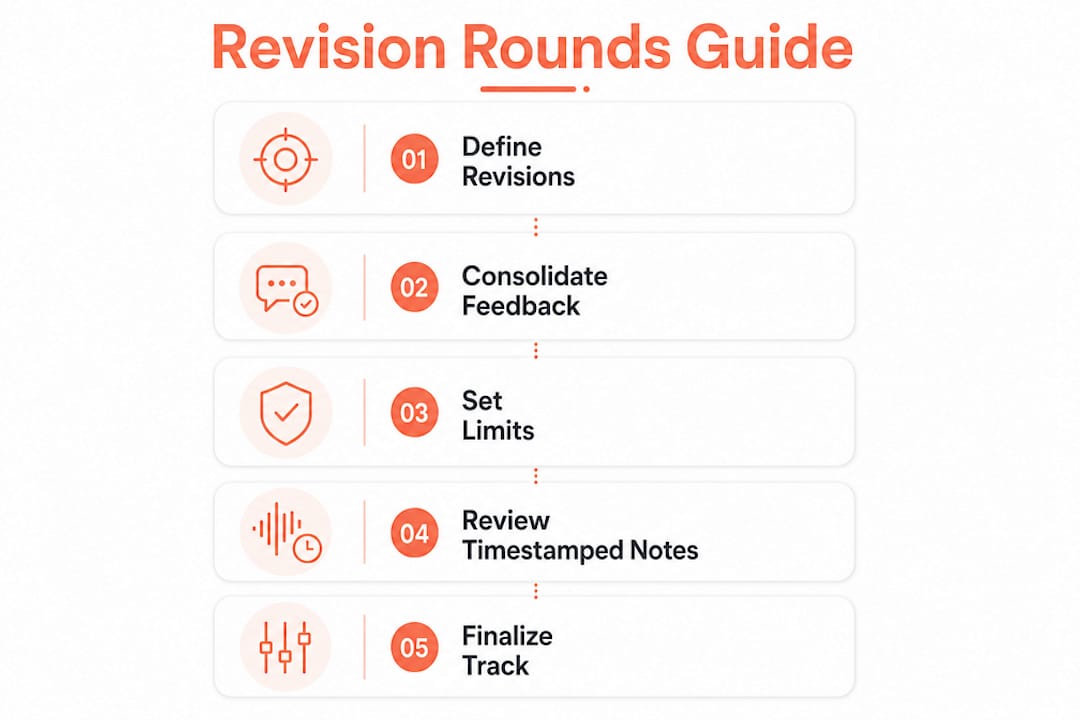
Ambiguous feedback is the real driver of high revision counts. Excessive revisions most often stem from vague notes, not demanding clients. When a client says “the chorus feels off,” you have no idea whether they mean the melody, the mix, the energy, or the arrangement. You guess. They respond. You revise again. That cycle repeats until someone gives up or gets specific.
Timestamped feedback breaks that cycle at the source. When a client can click on a waveform at 1:24 and type “the snare is too loud here,” you know exactly what to fix. No back-and-forth email thread. No phone call to decode vague impressions. Just a precise note tied to a precise moment in the track.
Before producers adopted timestamped feedback workflows, 60–80% of revision time went toward clarifying what the client meant rather than actually making changes. That is a staggering waste. Fixing the feedback process is more valuable than adding another revision round.
A structured feedback workflow looks like this:
- Send a draft with a feedback deadline. Give clients 48–72 hours to listen and respond. Open-ended timelines produce scattered, unconsolidated notes.
- Require timestamped, specific notes. Ask clients to reference exact moments in the track and describe what they hear, not just how they feel.
- Consolidate all notes before starting. Never begin revisions on partial feedback. Wait for the full round of notes, then work through them in one session.
- Confirm changes before delivery. Send a brief summary of what you changed so the client can verify their notes were addressed.
Platforms built for audio collaboration, including Audome, let clients leave timestamped notes directly on the waveform without creating an account. That removes the friction that causes clients to default to vague text messages.
Best practices for writing revision terms into beatmaker contracts
Clear contract language prevents the most common revision disputes before they start. Defining deliverables and revision policies upfront is the single most effective way to keep projects within scope and protect your profitability. A verbal agreement about “a couple of changes” is not a policy. It is an invitation for misinterpretation.
The distinction between a revision and a rework is the most important definition in your contract. A revision adjusts something within the existing creative direction: EQ changes, level adjustments, a different drum pattern in the bridge. A rework changes the creative direction itself: a new key, a different tempo, a genre shift, or a complete structural overhaul. Reworks require a new agreement and new payment.
Here is what your contract language should address directly:
- Included revisions: “This agreement includes 2 rounds of revisions at no additional charge.”
- Definition of one revision round: “One revision round consists of one consolidated set of notes delivered within the agreed feedback window.”
- Additional revision fee: “Each additional revision round beyond the included 2 is billed at $[X] per round, payable before work begins.”
- Rework definition: “Changes to key, tempo, genre, or overall structure constitute a rework and require a new project agreement.”
- Revision expiration: “Unused revision rounds expire 30 days after final delivery.”
Pro Tip: Send clients a one-page revision guide when you deliver the first draft. Explain what a revision is, how to leave feedback, and what the timeline looks like. Clients who understand the process give better notes and use fewer rounds.
Producers who use Audome can enforce these terms automatically. The platform lets you set a revision limit per project, charge clients for additional rounds through Stripe Connect, and lock final downloads behind payment. The policy stops being a conversation and starts being a system.
How to recognize when more revisions stop helping
More revision rounds do not automatically produce a better track. Purpose-driven revisions yield higher quality improvements than multiple rounds of unfocused changes. The question to ask before starting any revision is not “what does the client want changed?” but “what specific problem are we solving?”
“If quality metrics or client satisfaction remain unchanged after several rounds, additional revisions are unlikely to improve the song. High revision counts often reflect ‘theater’ revision cycles where no real progress is made.”
That pattern is more common than producers admit. A client requests a change. You make it. They request the opposite change. You make that. The track ends up close to where it started, and everyone has spent hours going in circles. That is a theater revision cycle, and the fix is not another round. The fix is a direct conversation about what the client is actually trying to achieve.
Use these signals to identify when revisions have stopped adding value:
| Signal | What it means |
|---|---|
| Client reverses a previously approved change | The brief was never clear. Stop revising and clarify the goal. |
| Notes become increasingly vague | The client has lost confidence in the direction. Revisit the original reference. |
| Each round produces only cosmetic changes | The track is done. The client may need reassurance, not more edits. |
| Client satisfaction score stays flat across rounds | Additional rounds will not move the needle. |
Side-by-side comparisons of version 1 and the current version are one of the most underused tools in this situation. When clients hear how far the track has come, they often realize the remaining notes are preferences, not problems. That distinction matters. Preferences do not require a revision round. Problems do.
Key takeaways
Beatmakers who set 2–3 revision rounds in their contracts, require timestamped feedback, and define the difference between a revision and a rework will complete more projects on time, with fewer disputes, and at higher profit margins.
| Point | Details |
|---|---|
| Set 2–3 revision rounds | This is the industry standard and prevents scope creep without limiting client input. |
| Define revisions vs. reworks | Structural changes like tempo or genre shifts require a new agreement, not another free round. |
| Require timestamped feedback | Specific, waveform-linked notes cut clarification time and reduce total revision rounds. |
| Charge for additional rounds | Set the fee before the project starts so clients understand the boundary from day one. |
| Recognize theater revisions | If quality does not improve after multiple rounds, more revisions will not fix the problem. |
Why I stopped offering unlimited revisions after year one
The first time I offered unlimited revisions, I thought it would make me more attractive to clients. It did. It also made me miserable. One project ran to eleven rounds over six weeks because the client had no reason to consolidate their feedback or commit to a direction. Every round cost me time I was not getting paid for.
The shift to a 2-round policy felt risky at first. I expected pushback. What I got instead was better clients. Producers who work with clear revision guidelines attract clients who respect the process. The limit signals professionalism. It tells clients you take the work seriously and that your time has value.
The other thing I learned is that most clients do not actually want more revisions. They want confidence that their notes will be heard and acted on. When you build a feedback system that makes them feel understood, two rounds is almost always enough. The revision count is a symptom. The real issue is almost always communication.
Educating clients at the start of a project is not overhead. It is the work. Spend ten minutes explaining how feedback works, what a revision covers, and what happens if they need more. That conversation saves hours later and almost always results in cleaner, faster projects.
— Kreg
Audome helps beatmakers manage revisions without the chaos
Managing revisions across email threads, voice notes, and shared folders creates confusion fast. Audome brings every stage of the revision process into one place, so you spend less time chasing feedback and more time producing.

With Audome, clients leave timestamped feedback directly on the waveform without needing an account. You set the number of included revision rounds per project, and the platform automatically charges clients for additional rounds through Stripe Connect. Final downloads stay locked until payment clears. The result is a revision workflow that enforces your contract terms without an awkward conversation. Audome is built for producers who want to run a tighter, more profitable operation.
FAQ
How many revision rounds should a beatmaker include for free?
The standard is 2–3 revision rounds included at no extra charge. Most professionals charge a flat fee for each additional round beyond that limit.
What counts as one revision round?
One revision round is one consolidated set of client notes delivered at the same time. Drip-fed changes sent across multiple messages count as multiple rounds, not one.
How do I charge for extra revisions?
Set a flat per-round fee in your contract before the project starts. Additional revision fees should be agreed on upfront so clients are never surprised when they exceed the included rounds.
What is the difference between a revision and a rework?
A revision adjusts something within the existing creative direction, such as EQ or arrangement tweaks. A rework changes the direction itself, such as a new key, tempo, or genre, and requires a new agreement.
Why do some projects need more than 3 revision rounds?
High revision counts almost always trace back to ambiguous feedback, not a difficult client. Switching to timestamped, waveform-specific feedback typically resolves the problem without adding more rounds.