
TL;DR:
- Most for-hire songwriters include 1-2 revision rounds in their contracts, with additional rounds billed separately.
- Internal revisions are part of the creative process, while client revisions are structured feedback points defined by the contract.
For-hire songwriters typically include 1–2 rounds of revisions in their standard contracts. This number is the industry norm, not an arbitrary choice. It protects your time, keeps projects profitable, and gives clients a clear framework for feedback. Knowing how many revisions to include is one of the most practical decisions you can make when setting up your songwriter revision process. Get it wrong and you risk endless rewrites, unpaid labor, and frustrated clients. Get it right and you build a reputation for professionalism that attracts better work.
How many revisions should for-hire songwriters include in contracts?
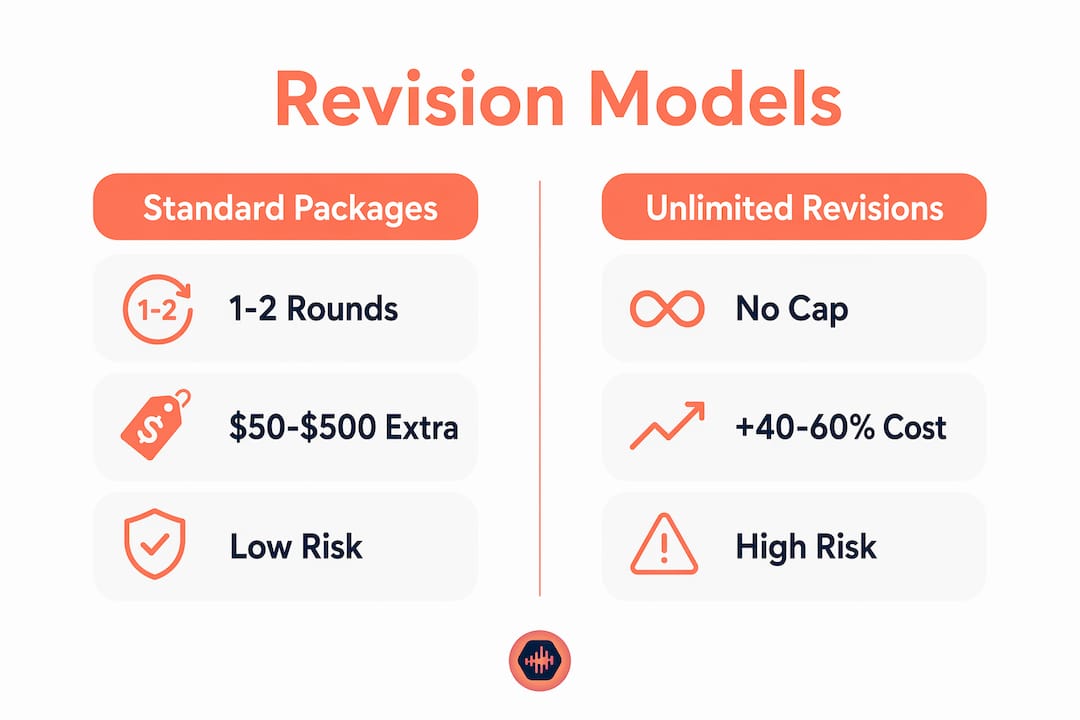
The standard answer is 1–2 complimentary revision rounds. For-hire songwriting packages typically include this range in their quoted price, with additional rounds billed separately. This structure is not arbitrary. It reflects how long a client genuinely needs to consolidate feedback before a song is ready to finalize.
Beyond those included rounds, revision fees typically range from $50 to $500 depending on scope and the songwriter’s rate. A lyrical tweak costs far less than a full structural rework. That price gap matters because it gives clients a real incentive to send organized, complete feedback the first time rather than drip-feeding requests across five separate emails.
Setting this limit upfront also signals professionalism. Clients who understand the revision structure from day one are less likely to treat the project as an open-ended creative experiment at your expense.
Pro Tip: State the revision count and the per-round fee in the contract before any work begins. Verbal agreements on revisions almost always lead to disputes.
Here is what a clear revision structure looks like in practice:
- Round 1: Client receives the first full draft and submits all feedback in one consolidated document or session.
- Round 2: Songwriter addresses that feedback and delivers a revised version. Client reviews and approves or flags remaining issues.
- Additional rounds: Billed at the agreed rate per round or per hour, depending on scope.
- Final delivery: Locked once the client approves or once paid revision rounds are exhausted.
How do internal revisions differ from client revision rounds?
Internal revisions and client-facing revision rounds are fundamentally different things. Professionals may complete dozens of internal rewrites before a client ever hears a single version. Those internal passes are part of the creative process, not billable events.
“Major worship anthems have required up to 15 internal revisions before reaching their final form. Iconic songs have gone through 80–150 draft verses over years of development.”
Songwriting Secrets Behind Major Worship Anthems
That number is striking. It means the polished song a client hears as “draft one” may already represent months of internal work. Client revision rounds, by contrast, are formalized feedback points within the contract. They are structured, limited, and tied to deliverables.
Here is how the two types of revision differ in practice:
- Internal revisions: You rewrite a chorus because it feels flat. You swap a rhyme scheme. You restructure the bridge. None of this is visible to the client.
- Client revision round 1: The client hears the song, notes that the pre-chorus melody feels too similar to the verse, and asks for a lyrical shift in the second verse. You address all of it in one pass.
- Client revision round 2: The client reviews the updated version and requests one final adjustment to the hook. You deliver the revised file.
- Sign-off: The client approves. The project closes.
The distinction matters because revisions are where songs actually get made. The first draft is a diagnostic starting point. Real creative value builds during revision. But that creative work happens internally, not through unlimited client rounds.
Why unlimited revisions hurt both songwriters and clients

Unlimited revision clauses feel generous at the proposal stage. They become a liability the moment a client cannot make up their mind. Industry experts advise capping complimentary revisions at 2–3 rounds and switching to hourly billing afterward. The reason is simple: unlimited revisions create feedback loops with no natural endpoint.
Pro Tip: If a client keeps requesting revisions that circle back to earlier versions, that is a sign the brief was unclear from the start. Pause and clarify the creative direction before writing another note.
The table below shows how revision structures compare across common contract types:
| Contract type | Revisions included | Additional cost | Risk level |
|---|---|---|---|
| Standard package | 1–2 rounds | $50–$500 per round | Low |
| Premium package | 3 rounds | Higher upfront cost | Medium |
| Unlimited revisions | Unlimited within timeframe | 40–60% higher upfront | High |
| Hourly rate | N/A | Billed per hour | Variable |
The unlimited revision model increases upfront project cost by 40–60% and suits only a narrow group of clients with genuinely evolving creative visions. For most projects, it creates uncertainty on both sides. The client never knows when the song is “done.” The songwriter never knows when the project ends.
Burnout is a real consequence. When a song lingers at 80% complete through endless small tweaks, it blocks your calendar and your creative energy. The principle that done is better than perfect is not a compromise. It is a professional standard that keeps your work moving forward.
How to structure revision clauses in songwriter-client contracts
A revision clause fails when it is vague. The contract must define what counts as a revision, how many rounds are included, and what happens when the client exceeds that limit. Vague language is the single biggest cause of scope creep in songwriting agreements.
Contracts should clearly state revision limits and define what constitutes a revision to avoid misunderstandings. Beyond included rounds, revisions should be billed hourly to incentivize consolidated feedback. That billing structure is not punitive. It rewards clients who come prepared.
A well-drafted revision clause covers these points:
- Definition of a revision: Specify whether a revision includes lyrical changes only, melody adjustments, structural reworks, or all of the above. A client asking to change one word is different from a client asking to rebuild the song’s structure.
- Number of included rounds: State the exact count. “Up to 2 revision rounds” is clear. “A few revisions” is not.
- Deadline for revision requests: Set a window, such as 7 days after delivery, for the client to submit feedback. Requests outside that window may be treated as a new project.
- Cost for additional rounds: List the per-round fee or hourly rate explicitly. Clients are less likely to request unnecessary changes when they know the cost.
- What triggers a new project: If a client changes the song’s genre, theme, or core concept after work has begun, that is a new project, not a revision.
For a deeper look at how mixing engineers handle revision pricing, the same structural logic applies across audio disciplines. The principles transfer directly to songwriting contracts.
Best practices for managing revisions in the songwriting workflow
Clear contracts set the rules. Good workflow habits make those rules work in practice. The songwriter collaborative process breaks down most often not because of bad contracts but because of scattered communication.
Pro Tip: Send clients a simple feedback template after each delivery. Ask them to rate specific elements like melody, lyrics, and structure on a scale of 1–5, then write their notes. This forces organized thinking before they hit send.
Practical habits that keep revision rounds productive:
- Consolidate all feedback into one pass. Tell clients upfront that you address all notes together, not one at a time. This prevents the drip-feed problem where a client sends 12 separate messages over three days.
- Set milestones before revisions begin. Agree on what “approved” means at each stage. A client who approves the lyrical direction before you record the demo cannot later request a full lyrical rewrite.
- Use version tracking. Label every file clearly (V1, V2, V3) and keep all versions accessible. Clients sometimes want to return to an earlier version, and having that history saves time.
- Know when to call it done. If a song has gone through two full revision rounds and the client is still uncertain, the problem is usually the brief, not the song. Revisit the creative direction rather than writing a third version.
Managing revisions well also means knowing when a project is genuinely complete versus when a client is stalling. The client revision management guide from Audome covers this distinction in detail for audio professionals across disciplines.
Key Takeaways
For-hire songwriters who include 1–2 revision rounds in their contracts, define revisions clearly, and bill for additional rounds protect their time, their income, and their creative output.
| Point | Details |
|---|---|
| Standard revision count | Include 1–2 rounds in your quoted price; bill $50–$500 per additional round. |
| Internal vs. client revisions | Internal rewrites are your creative process; client rounds are formal, contract-bound events. |
| Unlimited revisions risk | Unlimited clauses increase costs by 40–60% and create open-ended feedback loops. |
| Contract clarity | Define what counts as a revision, set deadlines, and specify fees for extra rounds. |
| Workflow discipline | Consolidate feedback, track versions, and set milestones to keep projects moving forward. |
Where I’ve landed on revision limits after years of watching projects stall
The hardest lesson in managing revisions is that the number of rounds matters less than the quality of the brief. I have seen two-round contracts spiral into chaos because the client never knew what they wanted. I have also seen five-round contracts close cleanly because the songwriter asked the right questions before writing a single word.
The authenticity of the creative relationship between songwriter and client shapes how revisions actually play out. When both sides are honest about the creative direction from the start, two rounds is almost always enough. When the brief is vague, no number of revision rounds will save the project.
My honest position: set 2 rounds as your standard, charge clearly for anything beyond that, and invest your energy in the brief rather than the revision count. Patience in the early stages, asking detailed questions about tone, theme, audience, and reference tracks, eliminates most revision problems before they start. The goal is not to limit creativity. The goal is to protect the space where real creative work happens. Endless client-facing revisions do not produce better songs. They produce exhausted songwriters and uncertain clients.
— Kreg
Audome keeps your revision process organized from day one
Managing revisions across email threads, voice notes, and shared folders creates confusion fast. Audome is built specifically for audio professionals who need one place to handle every stage of client collaboration.

With Audome, you can set the number of free revision rounds included in a project, then automatically charge clients for additional rounds through integrated Stripe Connect payments. Clients leave timestamped feedback directly on the waveform, so you know exactly what they mean without a back-and-forth email chain. Version history stays organized, and clients can access their project without creating an account. If you want a cleaner revision workflow for songwriters, Audome removes the friction that makes revision management feel harder than the writing itself.
FAQ
How many revisions do most for-hire songwriters include?
Most for-hire songwriters include 1–2 revision rounds in their standard package price. Additional rounds are billed separately, typically ranging from $50 to $500 depending on scope.
What counts as a revision in a songwriting contract?
A revision is any client-requested change to a delivered draft, including lyrical edits, melody adjustments, or structural reworks. Contracts should define this clearly to prevent disagreements about what qualifies.
Should I offer unlimited revisions to attract more clients?
Unlimited revision clauses increase upfront project costs by 40–60% and often create open-ended feedback loops. Capping revisions at 2–3 rounds and billing hourly afterward is the more sustainable approach.
How do I handle a client who keeps requesting changes?
Switch to hourly billing after the included rounds are exhausted. This incentivizes clients to consolidate their feedback and make decisive choices rather than sending incremental requests.
How is the songwriter revision process different from internal rewrites?
Internal rewrites are part of your creative process and are not billable. Client revision rounds are formal, contract-defined feedback points. A song may go through dozens of internal passes before a client hears the first draft.