
“Unlimited collaborators” usually means unlimited viewers or guests, not unlimited billable seats. Most platforms still charge per editor, writer, or admin, and free plans often cap the total number of people on a workspace regardless of role. For studios juggling freelancers and clients, Audome is built around unlimited collaborator access without the seat math.
TL;DR:
- Trello’s free Workspaces cap access at 10 collaborators across all boards, and pending invitations or deactivated accounts may still occupy slots.
- Billing often follows permissions: viewers may be free, while editors incur seats, and some platforms automatically bill users as soon as they write.
- Audit the full member list, including guests and pending invites; default new accounts to viewer or commenter, disable automatic seat approvals, and remove stale logins.
- Audome’s Studio and Pro plans pair unlimited uploads with timestamped waveform feedback and client review without logins, useful when projects involve rotating freelancers.
Table of Contents
- What counts as a collaborator, member, or guest?
- Common limits you’ll hit on free and entry-level plans
- How pricing models treat your collaborator count
- A quick admin checklist to avoid surprise seat charges
- How Audome handles unlimited collaborators for studio teams
- Why fluid teams benefit from unlimited collaborator access
- Try an unlimited-collaborator workflow built for audio studios
- FAQ
- Sources
What counts as a collaborator, member, or guest?
Vendors use overlapping terms that hide very different billing outcomes. A member is typically a full account holder on a workspace or team. A guest might be scoped to a single board or project, or they might count against the whole workspace, depending on the platform. A viewer or reader can usually see content but not edit it. An editor or contributor can change files or data, and an admin manages settings and billing.
The mapping that matters most: write access tends to cost money, and view access often doesn’t.
- Members, editors, and admins typically consume a paid seat because they can create or change content.
- Guests and viewers often sit outside the seat count, though some platforms count workspace-level guests differently than single-board guests.
- Pending invites, deactivated accounts, and legacy logins can still appear in a collaborator total on some systems, inflating counts you didn’t expect.
Before trusting an “unlimited” label, check whether it refers to unlimited view-only access or unlimited people who can actually write to a project. Those are two different promises.
Common limits you’ll hit on free and entry-level plans
Free tiers are where collaborator limits show up first, and they rarely apply the way people assume. A cap might apply to an entire workspace, or it might reset per board or per project, which changes how fast you hit it.
- Free-plan caps apply at different scopes. Some tools cap collaborators per workspace, while others only cap people on a single board, so a small team can spread across boards to avoid the ceiling. Trello’s support documentation describes a 10-collaborator limit on free Workspaces that counts everyone added across all boards in that workspace.
- Hitting the cap changes access, not just visibility. Once a free workspace is over its limit, new boards may become view-only or invites may get blocked until the team upgrades or removes members.
- Inactive accounts still count. Pending invitations, deactivated users, and old logins can occupy a slot in the collaborator count, which is why a team that feels small can still bump against a 10-person limit.
Upgrading to a paid plan typically removes the workspace-wide cap entirely, which is where unlimited collaborator licensing starts to mean something real.
How pricing models treat your collaborator count
Three billing patterns show up across collaboration software, and knowing which one a vendor uses tells you whether adding people will raise your bill.
- Seat-based billing charges per licensed user, so every teammate you add increases the subscription cost regardless of how active they are.
- Role-based billing only charges for people with write access. Seat-management documentation from GitLab explains that billable seats are tied to permission level, so a viewer costs nothing but an editor does.
- “Unlimited” plans almost always mean unlimited guests or viewers on a paid tier, not unlimited billable users. Read the fine print for whether “unlimited collaborators” excludes anyone with write access.
Some platforms also auto-convert a user from read-only to a billable seat the moment they perform a write action, which can silently raise your invoice. Vendors that anticipate this offer controls like grace periods before access drops, auto-approve toggles for new seats, and restricted access settings that block new billable users until an admin signs off.
Pro Tip: Before adding a teammate as an “editor,” check whether a “commenter” or “viewer” role gives them what they actually need. It often does, and it rarely costs extra.
A quick admin checklist to avoid surprise seat charges
Most surprise bills trace back to accounts nobody remembered to remove or permissions nobody meant to grant. A short recurring audit catches both.
- Pull the full members list, including pending invites and guest accounts, not just active editors.
- Turn off auto-approve for new seats so a write-access request needs manual sign-off before it bills you.
- Set default roles to viewer or commenter for new invitees, and upgrade to editor only when needed.
- Remove deactivated or legacy accounts that still occupy a collaborator slot.
- Schedule a recurring audit, monthly or quarterly, and set a manual approval step for any billing change.
Restricted access and user-cap features, as described in GitLab’s seat management docs, exist specifically to block new billable users from being added without admin approval, which is the single most common cause of mid-cycle billing surprises.
How Audome handles unlimited collaborators for studio teams
We built our platform around a different assumption: audio projects involve a rotating mix of clients, mix engineers, and freelancers, and gating that access by seat count gets in the way of getting work done. Projects and collaborators on our plans are unlimited, so you’re not auditing roles every time a new client signs on.
- Unlimited high-resolution uploads, so file size never forces a workaround.
- Timestamped feedback directly on the waveform, which keeps revision notes attached to the exact moment they apply.
- Client access without login, so clients review and approve work without creating an account or counting against anything.
- Automatic version tracking and integrated payment features that let you charge for extra revisions and lock downloads until paid.
Pro Tip: If your studio works with short-term freelancers on a per-project basis, unlimited collaborator access means you stop paying for seats that only exist for two weeks.
This setup fits studios managing many client revisions at once, teams that bring on short-term freelance engineers project by project, and anyone delivering high-resolution audio where file caps or per-seat pricing would otherwise slow the handoff.
Why fluid teams benefit from unlimited collaborator access

Per-seat friction punishes exactly the teams that need flexibility most. A mixing engineer who brings in a mastering specialist for one song, or a studio that onboards a seasonal intern, shouldn’t have to weigh that decision against a subscription bill.
The real payoff of unlimited collaborator access is speed: clients leave feedback the moment they hear something, revisions move without an email thread, and nobody waits on an admin to free up a seat. My take is simple: audit which roles on your current platform actually bill you, then weigh whether a studio-focused tool removes that friction entirely instead of just raising the cap.
— Kreg
Try an unlimited-collaborator workflow built for audio studios
Collaborator limits exist because most platforms were built for generic teams, not for studios juggling clients, freelancers, and file versions on every project. Our Studio and Pro plans include unlimited collaborators and unlimited uploads, so the only thing you’re managing is the music, not the membership list.
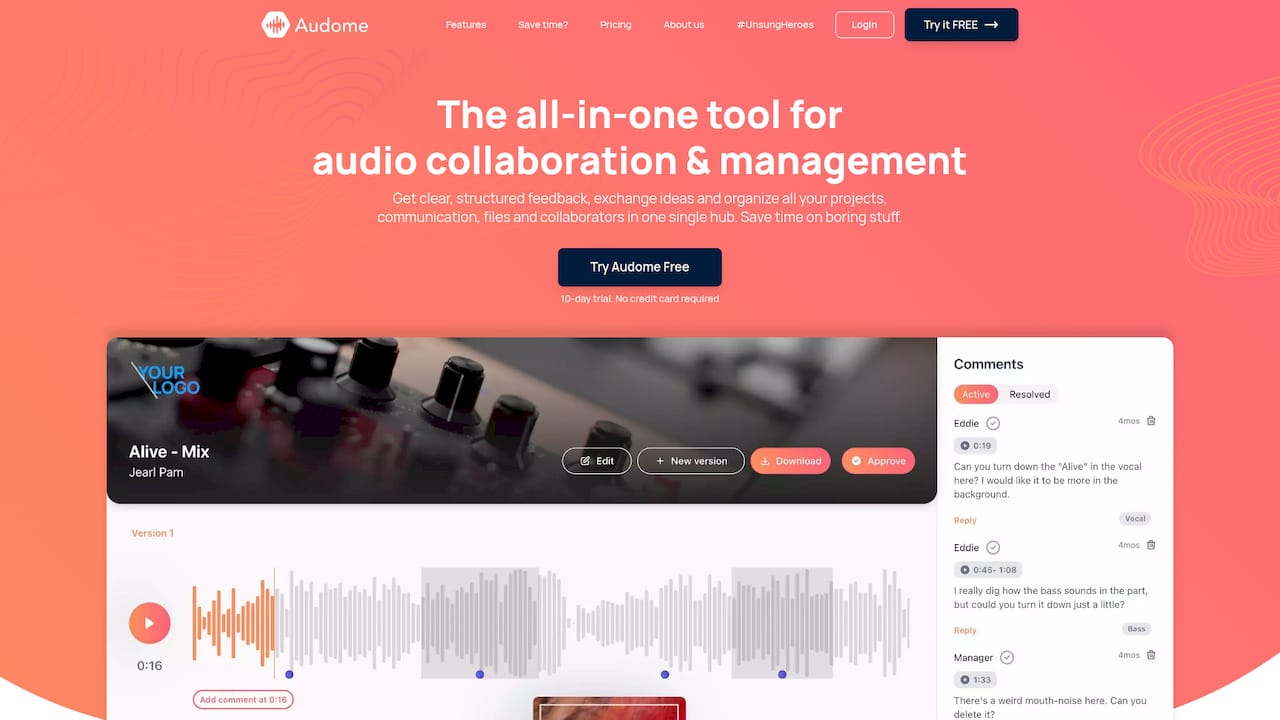
- Pricing details for plans including Studio and Pro are available on the pricing page.
Both plans include unlimited collaborators, timestamped feedback, and no-login client review. If you’re currently running three to five active projects and feeling the pinch of per-seat pricing elsewhere, our guide on switching to unlimited projects walks through when that upgrade pays for itself. Visit our pricing page to compare plans and start a trial.
FAQ
How do I invite someone for collaboration?
Most platforms let you invite a collaborator by email or shareable link from the project or workspace settings, where you also choose their role. On Audome, you can invite clients and freelancers without requiring them to create an account at all, which removes the signup step entirely.
What are the 9 types of collaborators?
There’s no single, universal list of nine collaborator types; role definitions vary by platform and typically include some mix of owner, admin, editor, commenter, viewer, and guest. Check the specific tool’s documentation, since the same label can carry different permissions and billing implications across vendors.
What does it mean to be a collaborator?
A collaborator is anyone granted access to a shared project, file, or workspace, with permission levels ranging from view-only to full editing rights. Whether that access costs the account owner anything depends on the platform’s billing model and the specific role assigned.
Why don’t I have the invite collaborator option?
This usually means your current plan has reached its collaborator limit, your role lacks admin permissions, or the project itself restricts who can send invites. Checking your plan’s workspace limit, as described in Trello’s support documentation, is a good first step before assuming it’s a permissions bug.