
TL;DR:
- Producer collaboration tools centralize communication, file sharing, and project tracking specifically designed for audio workflows. They improve project velocity by reducing friction, eliminating email chaos, and integrating audio metadata, DAW compatibility, and version control. Using audio-specific platforms like Audome, teams can maintain better organization, prevent errors, and sustain creative momentum across remote collaborations.
Producer collaboration tools are specialized software platforms designed to consolidate music and audio production teams’ communication, asset sharing, and project tracking into one place. If you’re still managing a podcast or audio project through a mix of Google Drive links, email threads, and voice memos… you already know how bad it gets. Tools like t0ggles, StemHub, and Muse exist specifically to kill that chaos. The best ones combine project management, real-time feedback, and file sharing built around how audio actually works, not how a generic project manager thinks it should work.
1. What makes producer collaboration tools worth using
The difference between a good collaboration tool and a great one comes down to whether it was built for audio or just adapted to it. Generic tools like Trello or Notion are fine for marketing teams. For audio pros, they fall apart fast.
The features that actually matter are project boards that track production stages, multi-user access with permission tiers, and feedback loops with timestamped comments. Centralized asset storage with real-time commenting eliminates the lost feedback and version confusion that kills email-based workflows. That’s not a small thing. That’s the difference between a clean release and a missed deadline.
Cross-DAW compatibility is non-negotiable since producers on a single project might be running Ableton, Logic Pro, and FL Studio simultaneously. A tool that forces everyone into one ecosystem is a tool half your team won’t use. The best collaborative production software handles DAW-agnostic file management so the workflow doesn’t stop because of a format mismatch.
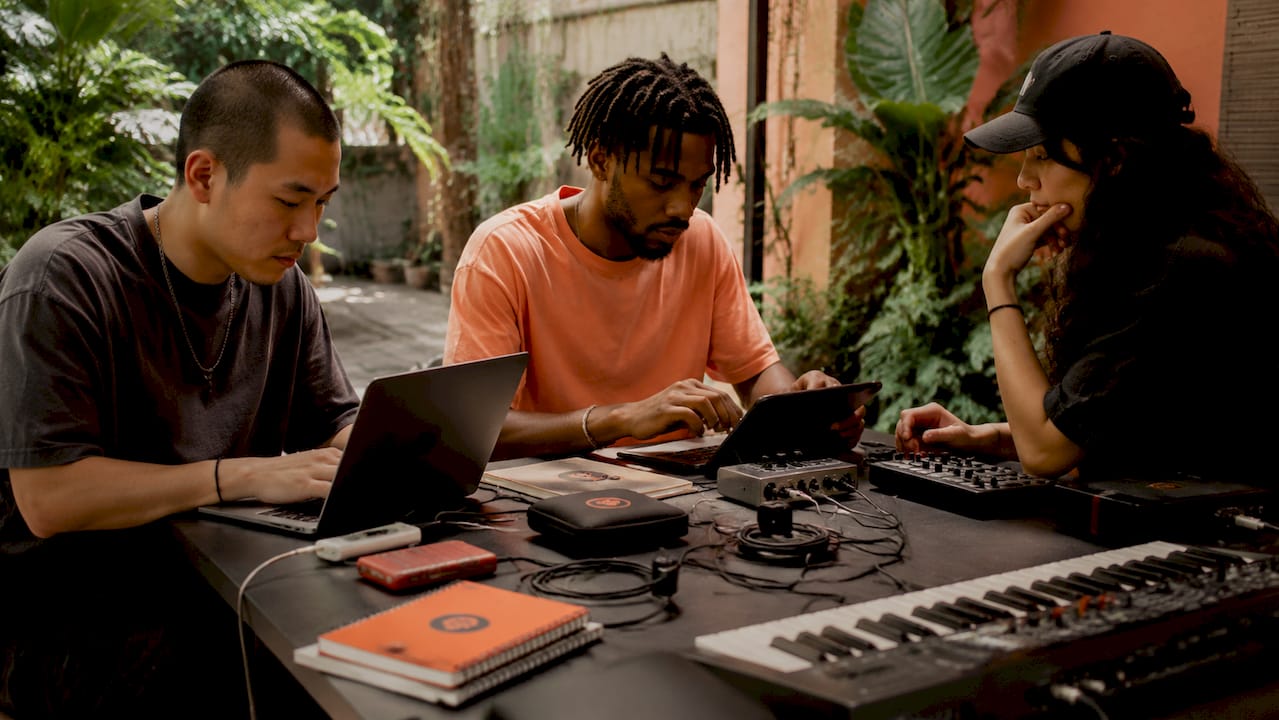
Music-specific metadata support is another separator. Embedding ISRC codes and release deadlines directly into project records means your release pipeline and your production pipeline live in the same place. General tools don’t do this. Producers who switch to audio-specific platforms report fewer duplicated workflows and better team alignment across the board.
Pro Tip: Look for tools that support automation triggers. When a track moves from mixing to mastering, the right tool should notify the mastering engineer automatically, not wait for you to send a message.
2. Top producer collaboration tools for 2026
Here’s a no-fluff breakdown of the tools worth your time right now.
t0ggles
t0ggles is built specifically for music production workflows. Multi-project Kanban boards give you color-coded visibility across every track from idea to release. Guest user access and view-only permission tiers keep collaborators in the loop without giving them the ability to accidentally delete your stems. Pricing starts at $5 per user per month, which makes it one of the more accessible options for independent producers and small podcast teams. Automation triggers notify collaborators when tasks hit new production stages, which cuts down on the “where are we at?” messages significantly.
StemHub
StemHub uses Git-style version control with branching, which means you can experiment with alternate mixes or episode structures without creating a folder full of files named “final_v3_REAL_THIS_ONE.” Commit, branch, and merge workflows replace the old naming convention nightmare. It integrates with DAWs and is particularly strong for producers who work iteratively and need a clear history of every change made to a project.
Muse
Muse focuses on studio-like real-time collaboration through any DAW. It’s designed for producers who want the feel of being in the same room even when they’re not. The interface prioritizes creative flow over administrative overhead, which makes it a strong pick for smaller teams where the producer and artist are the same two people every time.
Prisma Music
Prisma Music handles project management with catalogue metadata integration baked in. ISRC codes, release dates, and rights information live alongside your production tasks. For podcast producers managing multiple shows or music producers with active release schedules, this kind of metadata integration is the thing that keeps your catalogue from becoming a mess six months in.
Flow Production Tracking by Autodesk
AI-driven scheduling in Flow Production Tracking adjusts timelines dynamically when assets are waiting on external review or approval. That bottleneck, the one where a mix sits for four days because a client hasn’t responded, is one of the biggest killers of project velocity in complex productions. Flow addresses it directly by flagging delays and suggesting timeline adjustments before they compound.
| Tool | Best for | Standout feature | Pricing |
|---|---|---|---|
| t0ggles | Independent producers, podcast teams | Kanban boards with automation | From $5/user/month |
| StemHub | Iterative producers, engineers | Git-style version control | Open source |
| Muse | Small creative teams | Real-time DAW collaboration | Contact for pricing |
| Prisma Music | Labels, active release schedules | Metadata and catalogue management | Contact for pricing |
| Flow Production Tracking | Large productions, post-production | AI scheduling and resource planning | Subscription-based |
Pro Tip: Don’t pick a tool because it has the most features. Pick the one your whole team will actually open every day. Adoption beats capability every time.
3. How these tools improve project velocity and creative flow
Speed in audio production rarely comes from working faster. It comes from removing the friction between steps. Here’s where collaboration tools make the biggest difference.
- Replacing email chains with dashboards. A centralized project board shows every task, file, and comment in one place. Nobody has to dig through 40 emails to find the approved mix.
- Reducing status update overhead. Visual Kanban boards eliminate the “where’s my track at?” message entirely. The status is visible to everyone, all the time.
- Cutting external review bottlenecks. The biggest threat to production velocity is assets sitting idle while waiting on external approval. AI scheduling tools flag these delays and adjust timelines before they cascade.
- Preventing file chaos. Version control systems that use branching replace the “final_v2_FINAL” naming disaster with a clean commit history. You always know what changed and when.
- Protecting project integrity. Guest-only and read-only permission tiers mean collaborators can review and comment without touching anything they shouldn’t.
“The tool doesn’t make the music. But the wrong tool will absolutely stop the music from getting made.”
The shift from scattered digital tools for music collaboration to a single structured platform is less about convenience and more about protecting your creative momentum. Every interruption to find a file, clarify a task, or chase an approval is a context switch. Those add up fast.
4. Pitfalls to avoid when using collaboration tools in audio production
Most producers don’t fail because they picked the wrong tool. They fail because they set it up wrong and never fixed it.
- Permission creep is a real problem. When everyone on a project has edit access, someone will eventually delete or overwrite something critical. Guest-only permission tiers exist for a reason. Use them from day one, not after the disaster.
- Using non-audio-specific tools creates blind spots. A general project manager won’t know what to do with a 96kHz WAV file or an ISRC code. You’ll end up building workarounds that defeat the purpose of having a system at all.
- Skipping metadata standards kills your catalogue. If you don’t standardize how files are named, tagged, and dated from the start, you’ll spend hours untangling it later. Set a template and enforce it.
- Ignoring version control leads to creative conflicts. Two producers working on different versions of the same file without a branching system will eventually overwrite each other’s work. It’s not a question of if. It’s when.
- Overbuilding the workflow. The most common mistake is adding every feature a tool offers and creating a system so complex nobody uses it. Keep the structure simple. Add complexity only when a specific problem demands it.
Pro Tip: Build a project template before you start any new production. Set the stages, assign the permission levels, and define the file naming convention before a single file gets uploaded. Ten minutes of setup saves hours of cleanup.
Key takeaways
The best producer collaboration tools combine audio-specific features like version control, metadata support, and DAW compatibility with practical project management to protect both creative flow and release timelines.
| Point | Details |
|---|---|
| Audio-specific tools win | Generic project managers lack ISRC support, DAW compatibility, and audio metadata fields. |
| Permission tiers prevent disasters | Guest-only access stops accidental edits and deletions before they happen. |
| Version control replaces file naming chaos | Git-style branching in tools like StemHub eliminates “final_v3_REAL” folder nightmares. |
| AI scheduling kills bottlenecks | Tools like Flow Production Tracking adjust timelines dynamically when approvals stall. |
| Simple setups get used | Overly complex workflows get abandoned. Build lean and add structure only when needed. |
What I’ve actually learned using these tools in the real world
I’ve been in sessions where a project fell apart not because the music was bad, but because nobody knew what version was current. Three producers, two engineers, one shared Dropbox folder, and zero version control. By the time we figured out which mix was the approved one, we’d wasted a full day and burned two relationships.
The tools I’ve seen work best are the ones that fit the team’s actual behavior, not the ones with the most impressive feature list. t0ggles works for a lot of independent producers because it’s simple enough that everyone actually opens it. StemHub is powerful but it requires a team that’s willing to learn a new mental model. If your collaborators won’t commit to the system, the system is useless.
Automation is genuinely useful… but it’s not a substitute for clear communication. I’ve seen producers set up elaborate trigger systems and then ignore the notifications. The tool can’t fix a team that doesn’t talk to each other.
The thing I keep coming back to is guest access. Every producer I know who runs clean remote projects uses view-only or comment-only roles for clients and external collaborators. It sounds like a small thing. It is not a small thing. It’s the difference between a controlled session and a free-for-all.
Pick the tool that your whole team will actually use. Set it up with real structure before the project starts. And for the love of everything, use version control.
— Kreg
Why Audome belongs in your audio collaboration stack
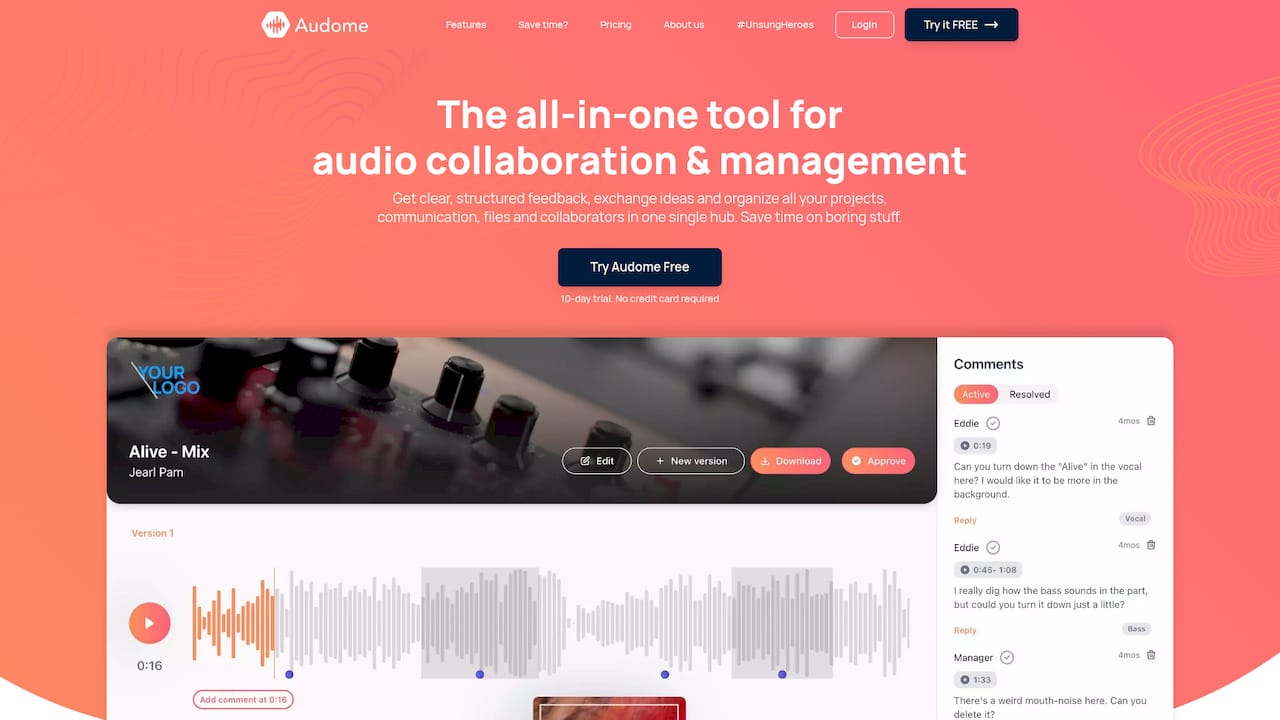
Audome is built specifically for audio professionals who need more than a generic file-sharing app. It combines project tracking, timestamped feedback, and lossless file sharing up to 96kHz/24-bit in one place, so nothing gets lost between your DAW and your collaborators. Guest access requires no login from clients or external reviewers, which removes one of the most common friction points in remote audio production workflows. Version control, private collaborator spaces, and password-protected sharing give you full ownership of your assets without the chaos. If you’re managing a podcast, a music release, or a post-production project with multiple stakeholders, Audome replaces the stack of fragmented tools you’re currently duct-taping together. Try Audome and see what a purpose-built platform actually feels like.
FAQ
What are producer collaboration tools?
Producer collaboration tools are software platforms that centralize project management, file sharing, and feedback collection for music and audio production teams. They replace scattered email chains and generic apps with audio-specific workflows.
How do I choose the best tool for music producers?
Choose based on your team’s actual workflow and DAW compatibility, not feature count. A tool your whole team uses consistently beats a feature-rich platform nobody opens.
Do collaboration tools work across different DAWs?
Yes, the best online collaboration tools for producers are DAW-agnostic, meaning they handle file management regardless of whether your team uses Ableton, Logic Pro, or FL Studio.
What is version control in music production?
Version control in music production uses Git-style branching to track every change to a project, replacing chaotic file naming conventions like “final_v2_REAL” with a clean, searchable commit history.
Why does permission control matter in audio collaboration?
Permission creep leads to accidental edits and deleted files. Guest-only or view-only roles protect project integrity by limiting what external collaborators can touch.