
TL;DR:
- Sound engineering project management merges technical audio skills with organized planning and stakeholder communication. It ensures timely delivery and prevents chaos in multi-person audio workflows by acting as a technical translator and coordinator. Strong upfront scope, version control, and specialized tools are essential for successful project completion.
Most people hear “sound engineering project management” and picture someone adjusting faders and calling it a day. That’s not even close. What is sound engineering project management is actually a discipline that sits right at the intersection of technical audio knowledge and real project coordination. It covers planning, scheduling, stakeholder communication, version control, and keeping a multi-person audio workflow from turning into a complete disaster. You need both halves. Without the technical side, you can’t speak the language. Without the management side, nothing ships on time, and everyone’s pissed.
Table of Contents
- Key takeaways
- What sound engineering project management really involves
- Common pitfalls that wreck sound projects
- Best practices for managing sound projects
- Tools that support sound engineering workflows
- Integrating project management into daily practice
- My honest take on what actually matters
- Manage your audio projects with Audome
- FAQ
Key takeaways
| Point | Details |
|---|---|
| It’s more than gear and knobs | Sound engineering project management combines technical audio skill with structured planning, communication, and delivery. |
| The “translator” role is critical | Someone must bridge the gap between clients, artists, and technical teams or projects fall apart at the seams. |
| Version control is a unique pain | Audio projects require specialized naming protocols and feedback tracking that generic tools simply can’t handle. |
| Map your workflow before picking tools | Identify friction points in your process first, then select tools that fix those specific bottlenecks. |
| Scope creep kills audio timelines | Lock in acceptance criteria, revision limits, and deliverable specs before a single file gets recorded. |
What sound engineering project management really involves
The standard industry term for this work is audio production project management, though you’ll hear “sound engineering project management” used interchangeably on the ops and PM side. Either way, the job is planning and coordinating audio delivery while balancing technical requirements against real-world constraints like budgets and deadlines.
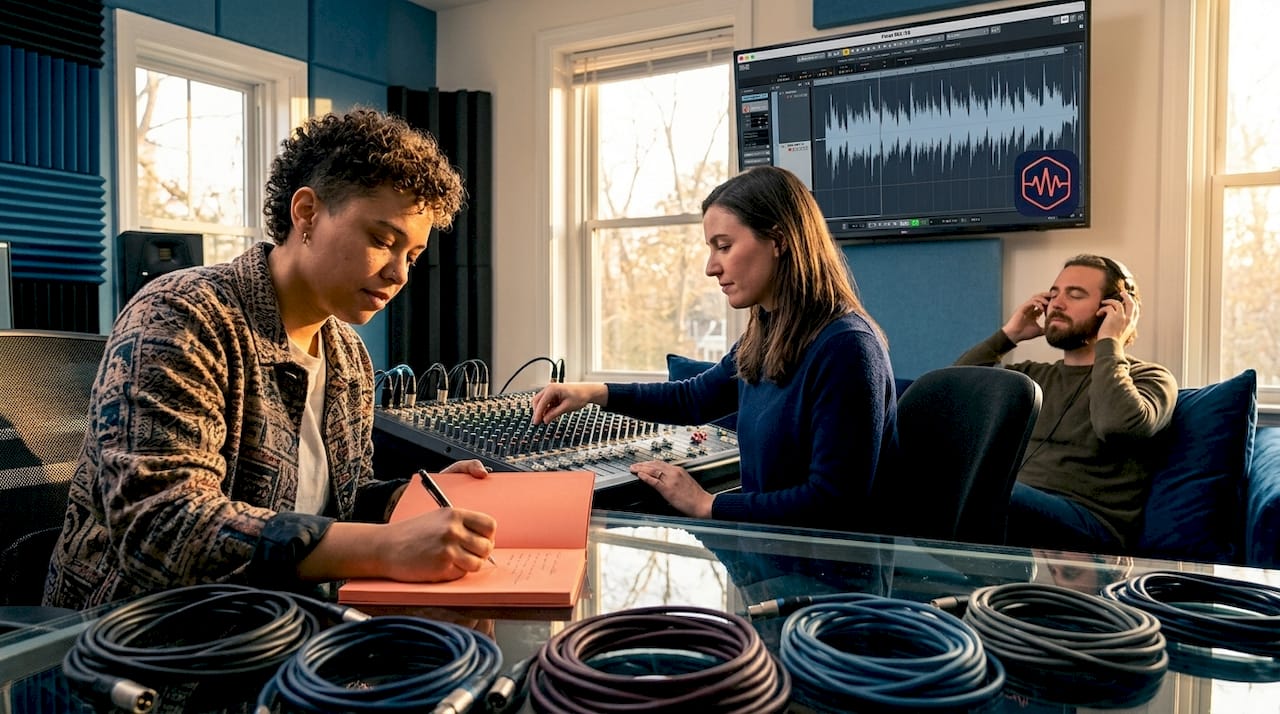
What does a sound engineer do in a managed project context? A lot more than most job descriptions suggest. The technical work is only part of it. The other part is coordination. Think of it like being an air traffic controller. You’re not flying the planes. You’re making sure none of them crash into each other.
Here’s what the actual scope looks like across different project types:
- Recording projects: Session scheduling, tracking revisions, communicating artist feedback to mixing engineers
- Broadcast audio: Real-time coordination with directors, video teams, and venue tech staff
- Post-production: Managing dialogue editing, sound design, music, and mix stages as interdependent tasks
- Acoustical construction: Translating between clients, consultants, architects, and contractors to make sure acoustic requirements survive every design decision
That last one is where the “translator” role becomes almost painfully obvious. An architect doesn’t think in RT60 times. A contractor doesn’t care about noise floor specs unless someone makes them care. The PM in a sound project is the person who keeps the technical requirements alive throughout every handoff.
Pro Tip: Write your sonic requirements into the project brief the same way a structural engineer writes load specs into construction drawings. If it’s not documented, it will get ignored.
The importance of sound engineering in this context isn’t just about audio quality. It’s about keeping the whole project from unraveling. Communication skills with producers, artists, and stakeholders are as load-bearing as any piece of gear in the signal chain.
Common pitfalls that wreck sound projects
Let me be direct. Most sound projects don’t fail because of bad audio. They fail because of bad communication, undefined scope, and zero version control. I’ve seen it happen dozens of times.
Here are the patterns that show up again and again:
- Undefined sonic deliverables: Nobody agreed on what “done” sounds like. Is it -14 LUFS integrated? Specific file formats? A certain number of revisions included? Without clear acceptance criteria locked in upfront, you end up in endless feedback loops that eat your margin.
- Multi-stakeholder chaos: The artist wants one thing, the label wants another, and the sync licensing team wasn’t even looped in until week three. Asynchronous, multi-stakeholder workflows require dependency tracking or everything stalls.
- Version control nightmares: Someone sent “final_mix_v3_ACTUALLYFINAL.wav” and now nobody knows which session file matches it. Generic coding version control systems are poorly suited for audio binaries. You need hybrid approaches with naming protocols, changelogs, and audio-specific platforms.
- Scope creep on creative projects: The client “just wants to hear one more version.” Then another. Then a full arrangement change. Without revision limits baked into your scope, creative projects bleed time like a bad edit.
- No handoff documentation: When you pass a project between stages, like from tracking to mixing, if there’s no written context about what changed and why, the next engineer is starting blind.
“Without centralized tracking, tasks stall and issues only surface after they’ve already become crises.” — Audome, on audio post-production workflows
That quote lands because it’s true in every format. Film post. Album production. Podcast editing. Doesn’t matter. The pattern is the same. No structure equals chaos at the worst possible moment.
Best practices for managing sound projects
This is where sound project management basics get practical. Good intentions don’t save a timeline. Process does.
-
Map your full workflow before anything else. Start to finish. Intake, tracking, editing, mixing, mastering, delivery. Mapping the entire audio workflow shows you exactly where things bottleneck before they actually bottleneck.
-
Set clear acceptance criteria at the start. Not vague stuff like “sounds great.” Specific stuff. Target loudness specs, deliverable formats, how many revision rounds are included, and what constitutes a completed milestone. This protects everyone.
-
Implement centralized version tracking. Use a system that tracks not just file names but feedback. Timestamped comments and A/B comparisons are worth more than a changelog full of filenames.
-
Build feedback loops into the schedule. Don’t treat client feedback as a disruption. Plan for it. Assign specific review windows so it doesn’t randomly blow up your mix week.
-
Assign task ownership, not just task existence. Every item needs a name attached. Not “mix needs to be done.” “Maria is delivering the rough mix by Thursday at noon.”
-
Enforce file naming conventions from day one. Pick a protocol. Make everyone use it. Sounds tedious. Saves hours.
Here’s how audio-specific and generic project management tools stack up in practice:
| Feature | Generic PM tools | Audio-specific platforms |
|---|---|---|
| Timestamped audio feedback | No | Yes |
| Lossless file support | No | Yes |
| Version control for audio | Limited | Full |
| Client review without login | No | Yes |
| Task tracking | Yes | Yes |
Pro Tip: Don’t pick your PM tools based on what’s popular with software developers. Pick them based on what actually breaks in your current workflow. Then find the tool that fixes that specific thing.
Tools that support sound engineering workflows
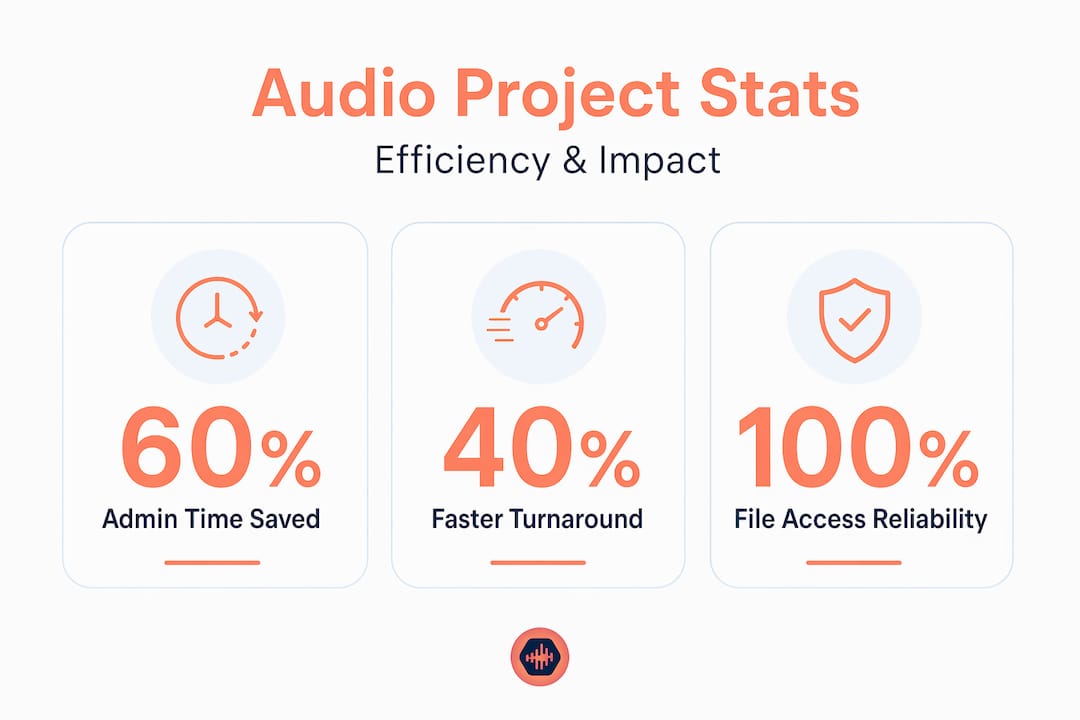
Structured project tracking reduces admin time by 60% and speeds turnaround by 40% in audio post-production environments. Those numbers matter when you’re running a studio on thin margins.
Generic tools like spreadsheets and standard task apps can handle basic scheduling. But they fall apart fast when audio gets involved. You can’t leave a timestamped comment on a Gantt chart. You can’t compare two versions of a mix in a shared document.
Audio teams working asynchronously across time zones with multiple stakeholders need tools built for that exact situation. Things to look for:
- Lossless audio support (96kHz/24-bit or better)
- Timestamped, in-context feedback on audio files
- Version history without the mess of renamed files
- Client access that doesn’t require them to create accounts
- Private workspaces with permission controls
The right audio collaboration tools bring file storage, versioning, timestamped feedback, and client access under one roof. That combination reduces back-and-forth and cuts the “wait, which version are we on?” conversations that drain everyone’s time.
For podcast-focused projects, understanding your gear setup matters too. A solid handle on podcast mixer options helps you spec projects correctly before management even starts.
Integrating project management into daily practice
Theory is fine. But here’s what it actually looks like when you try to run a real audio project with real people involved.
The key is discipline without rigidity. Creative audio work needs room to breathe. But it also needs guardrails or it never finishes. Here’s how you do both:
- Daily standups beat weekly check-ins. A five-minute sync at the start of each session catches blockers before they compound. Weekly meetings turn small problems into big ones.
- Protect the revision cap. Every time you give a free extra round of changes, you’re teaching the client that the cap is negotiable. It isn’t. Respect your own terms.
- Separate creative feedback from technical feedback. “I don’t like the vibe” is creative. “The low end is masking the kick at 80Hz” is technical. Both are valid. They require completely different responses, and mixing them up creates confusion.
- Use async communication for non-urgent things. Not every question needs a phone call. Timestamped notes on audio files handle 80% of feedback without scheduling anything.
- Document decisions. When a client says “let’s go with this version,” get that in writing. Email, comment, message. Doesn’t matter. Undocumented decisions become disputed decisions the moment anything goes sideways.
Learning how to handle revisions like a pro is one of the fastest ways to protect your time and your sanity on any audio project.
My honest take on what actually matters
I’ve been in sessions where everything went wrong. Not because the engineer was bad. Because nobody agreed on what we were making before we started making it.
The part that nobody talks about enough is the translator piece. You need someone on every serious audio project who can walk into a room full of non-technical stakeholders, hear the word “warm,” and immediately know that means “boost around 200Hz and ease off the top end.” Then walk back to the engineer and say exactly that. If that person doesn’t exist on your project, you’re playing telephone with six people in the chain and wondering why the final mix sounds nothing like what the client asked for.
Most project management advice written for audio pros sounds like it was copied from a corporate IT manual. It doesn’t account for the fact that creative people resist rigid structure. They push back on timelines because inspiration doesn’t follow a Gantt chart. I get that. But here’s the uncomfortable truth… the projects that respect creative flow AND hit their deadlines aren’t the ones with the loosest structure. They’re the ones with the clearest upfront agreements. When everyone knows what “done” looks like on day one, there’s actually more creative freedom in the middle because nobody’s second-guessing whether they’re heading in the right direction.
Using audio-specific workflow tools changed how I manage projects. Not because they’re fancy. Because they cut the ambiguity. Timestamped feedback on the exact moment of a mix is worth ten email threads. Version history that actually makes sense is worth hours of file archaeology.
The engineers and PMs who figure this out early don’t just deliver better projects. They sleep better.
— Kreg
Manage your audio projects with Audome
If any of this sounds like your current workflow… you’re not alone. Most audio teams are still juggling files over email, tracking revisions in a notes app, and hoping the client remembers which version they approved last week.
Audome is built specifically for this. It consolidates audio project management into one platform: lossless file sharing up to 96kHz/24-bit, timestamped feedback, version control, and private collaborator spaces with no login required for clients. Structured audio post-production tracking shows you exactly where your project stands without the admin chaos. If you’re serious about fixing your sound engineering workflow, start with Audome and see what a purpose-built platform actually feels like.
FAQ
What is sound engineering project management?
Sound engineering project management is the process of planning, coordinating, and delivering audio projects on time and within budget. It combines technical audio knowledge with structured communication, scope management, and workflow coordination across all project stakeholders.
What does a sound engineer do in project management?
A sound engineer in a PM context acts as a technical translator, managing signal flow, session logistics, and stakeholder communication simultaneously. Strong communication skills are as critical as technical ability for project success.
Why is version control so hard in audio projects?
Audio files are binary and large, which makes standard code-based version control tools nearly useless. Hybrid approaches using audio-specific versioning tools with naming conventions and timestamped feedback work best.
How do you prevent scope creep on audio projects?
Lock in acceptance criteria before work begins. This means specifying deliverable formats, loudness targets, and the number of included revisions. Upfront scope documentation stops open-ended feedback loops before they start.
What tools work best for managing sound engineering projects?
Audio-specific platforms that combine lossless file sharing, timestamped feedback, and version control outperform generic PM tools for audio workflows. Comparing platforms built for mixing engineers helps you find the right fit for your team.