
TL;DR:
- Privacy in studio collaboration is essential to safeguard unreleased IP, preserve client trust, and prevent legal or security breaches. Shadow AI and adversarial audio attacks pose significant risks when unapproved tools are used, requiring strict access controls, vendor reviews, and vigilant monitoring. Building a privacy-first culture with approved tools and clear protocols enhances creativity, speeds workflows, and protects valuable work effectively.
Most producers and engineers don’t think about privacy until something goes sideways. A session leaks. An unreleased record shows up somewhere it shouldn’t. A client finds out their stems were fed into an AI tool they never approved. The role of privacy in studio collaboration is not a checkbox you tick before a session. It’s the difference between a project that ships clean and one that ends in legal drama or a burned relationship. And in 2026, with AI tools everywhere and collaboration happening across twelve time zones, the risks are real… and most studios are not ready.
Table of Contents
- Key takeaways
- Why privacy matters in studio collaboration
- Core technologies that protect privacy
- Recognizing advanced threats in audio workflows
- Building a privacy-first collaboration culture
- Choosing tools that support privacy without friction
- My honest take on all of this
- How Audome keeps your work protected
- FAQ
Key takeaways
| Point | Details |
|---|---|
| Shadow AI is a real threat | Unapproved AI tools can expose unreleased audio and scripts to third-party servers without anyone noticing. |
| Access control is non-negotiable | Permissions need to be set, audited, and cleaned up after each project milestone. |
| Privacy enables creativity | When collaborators trust the environment, they take bigger creative risks and work faster. |
| AI tools need vendor review | Every AI tool used in a session should go through approval like any other external vendor. |
| Platform selection matters | Choosing tools with built-in privacy features protects your work without killing your workflow. |
Why privacy matters in studio collaboration
Let’s just be blunt about it. The stakes are high and most people don’t realize it until money or reputation is on the line.
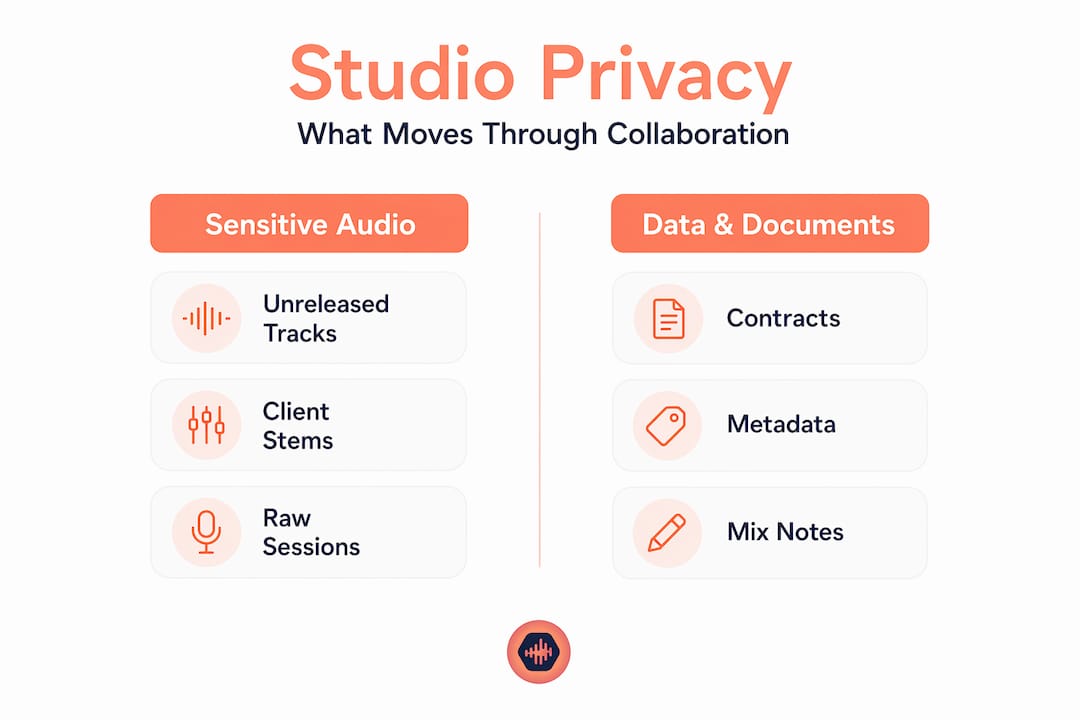
Think about what actually moves through your studio’s collaboration pipeline. Unreleased recordings. Client stems. Unmastered mixes. Film scores tied to NDAs. Voice sessions for advertising campaigns. All of this is confidential IP, and once it leaves your controlled environment, you can’t un-ring that bell.
The most common way this goes wrong right now is shadow AI. That’s when someone on your team… an editor, a mixing assistant, a remote contractor… pastes a script, drops an audio file, or uploads stems into a public AI tool without anyone approving it. Scripts or audio pasted into public AI can be stored and used by those platforms without your permission, instantly leaking confidential IP. It doesn’t feel like a breach. It feels like someone trying to work faster. That’s what makes it so dangerous.
The legal side is catching up fast too. SAG-AFTRA agreements now include specific AI clauses around voice and likeness. Union contracts increasingly require explicit consent for AI use on covered work. Using an unapproved tool mid-production is not just a privacy risk. It can blow up your contract.
Here’s what poor privacy controls actually cost you in practice:
- Unreleased music leaks before the campaign drops, killing marketing momentum
- Client trust is damaged permanently, even when the breach was accidental
- Legal exposure from violating NDA terms or union AI clauses
- Creative paralysis because collaborators stop sharing freely when they don’t trust the environment
- Project delays from incident response and damage control
The impact of privacy on creativity is one of the most underappreciated angles here. When people don’t feel safe sharing rough ideas, they hold back. That kills the collaborative spark that makes great work possible.
Core technologies that protect privacy
Understanding the tools is half the battle. You don’t need to be a security engineer, but you do need to know what’s available and why it matters.
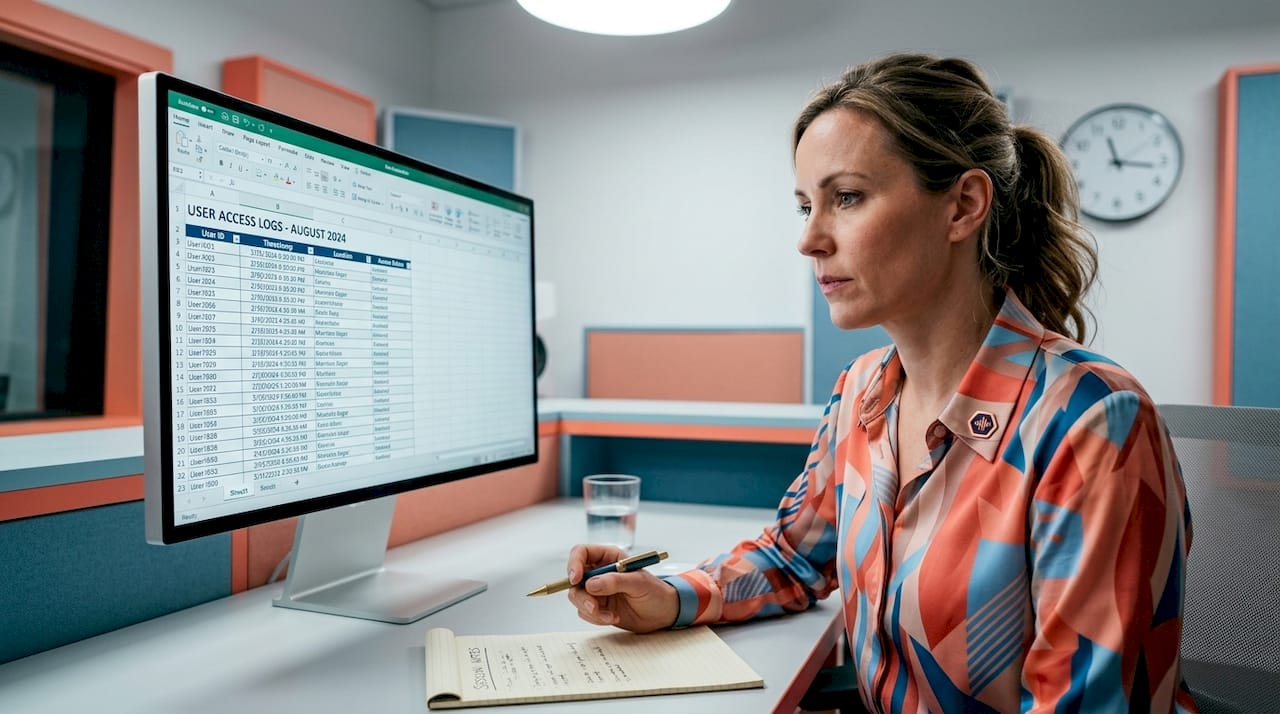
Access controls and auditability are the foundation. Every person who touches a project should have only the access they need, nothing more. When a vocal session wraps, that session vocalist does not need ongoing access to the full project. Removing stale permissions and logging usage are core practices that go well beyond just writing a policy doc. This is actual enforcement.
Data clean rooms are worth understanding even if you never build one yourself. The concept is that multiple parties can collaborate and run analysis on shared data without ever directly exposing the raw files to each other. Snowflake’s Data Clean Rooms support this kind of privacy-first, multi-party collaboration. For studios working on licensed content with multiple rights holders, this model is increasingly relevant.
On-device processing is another area where audio privacy is moving forward fast. Privacy-preserving speech architectures keep raw audio on the device instead of uploading it to external servers, using federated learning and differential privacy to still improve models collectively without ever centralizing your raw recordings. This matters a lot for voice work and podcast production.
Here’s a quick comparison of the main approaches:
| Approach | What it protects | Best for |
|---|---|---|
| Role-based access control | File and project access | All studio types |
| Data clean rooms | Raw file exposure in multi-party deals | Label and licensing work |
| On-device processing | Voice and audio data uploads | Podcasting, voice sessions |
| Audit logging | Unauthorized access detection | Large teams and agencies |
| Encrypted asset storage | File interception during transfer | Remote collaboration |
Pro Tip: Set a calendar reminder at every major project milestone to review access lists. Don’t wait until the project wraps. Revoke access as you go, not all at once at the end.
Recognizing advanced threats in audio workflows
Here’s something most people have not heard of yet, and it’s worth knowing because it’s only going to get worse.
Adversarial audio attacks are a real and documented threat. These are audio clips that contain hidden signals specifically designed to manipulate AI model behavior. Audio-embedded attacks can hijack AI tools with a success rate between 79 and 96 percent, and they work even on tools built with privacy protections in place.
What does that mean practically? If your studio workflow involves AI-assisted transcription, noise reduction, or voice cloning, a malicious audio file introduced into that workflow could manipulate the AI’s outputs in ways you would never catch during a normal review. Someone with bad intent, or even a compromised file from an untrusted source, could mess with your sessions at the model level.
“Even privacy-conscious tools must protect against malicious or adversarial audio inputs aiming to manipulate model behavior.” — IEEE Spectrum
The defense is not complicated but it is intentional:
- Only process audio files through AI tools from verified, approved sources
- Monitor for unexpected behavior in AI-assisted outputs, especially in voice work
- Apply file integrity checks before ingesting third-party audio into AI-connected workflows
- Treat any AI tool in your pipeline as part of your security perimeter, not just a productivity plugin
Privacy concerns in joint projects go beyond who can see a file. The actual content of the audio can become a vector for compromise. That’s the reality in 2026.
Building a privacy-first collaboration culture
Technology alone won’t save you. The real work is behavioral. You need a culture where privacy is the default, not the exception.
Here’s a concrete process that actually works in studio environments:
- Create an approved tools list and make it visible to every contractor, engineer, and client-facing team member before a session starts. Not after. Before. Unapproved AI use is a security incident, not a productivity choice, and people need to understand that clearly going in.
- Run a quick privacy briefing at project kickoff. It does not need to be formal. Five minutes covering what tools are approved, what files stay in the approved environment, and what the consequences are for stepping outside that. Most people comply when they understand the stakes.
- Review access logs at every milestone. Not just at project close. Mid-project access reviews catch problems early. Access creep is a silent killer in studio workflows, and the only way to stop it is to check.
- Add AI tool approval to your standard contract review. Before any new AI tool gets used on a client project, it goes through your legal check. Full stop. Vendor audits and contract reviews are how you protect IP and prevent legal breaches before they happen.
- Build privacy into your templates. Project folders, session setups, collaborator invites. If your starting template already has the right permission structure, you are not relying on people to remember to set it up correctly every time.
Pro Tip: When onboarding a new remote collaborator, share a one-page “house rules” document that covers approved tools, file handling expectations, and how to flag anything that feels off. Keep it short. People read short things.
How privacy affects teamwork is a two-sided story. Done poorly, it slows everything down and frustrates people. Done right, it actually speeds things up because everyone knows the boundaries and operates confidently within them. The project collaboration workflow becomes tighter and faster when there’s no confusion about what’s allowed.
Choosing tools that support privacy without friction
Not all collaboration tools are built the same, and for audio pros the stakes of a bad choice are higher than for most industries.
When evaluating any platform for audio collaboration tools, these are the features that actually matter from a privacy standpoint:
- Granular permissions: Can you control access at the file level, not just the project level?
- Audit logs: Can you see who accessed what and when?
- Password protection on shared links: Not optional. This is basic.
- Download controls: Can you prevent a collaborator from downloading assets they shouldn’t be taking offsite?
- No forced AI training on your content: Read the terms. Some free tools feed your uploads into their models.
- Version control: Can you track changes and revert without opening access to previous versions unnecessarily?
Free tools almost always come with a privacy cost that isn’t obvious on the surface. Enterprise collaboration tools with fine-grained permission settings and audit logs give administrators real control over who sees or edits what. That’s what protecting a professional workflow actually requires.
For audio specifically, you also need to think about metadata and transcripts. Raw audio is just the start; transcripts, metadata, and derived outputs all need the same privacy controls across their full lifecycle.
My honest take on all of this
I’ve seen what happens when a studio treats privacy as an IT problem. Somebody hands a contractor login credentials to a shared drive, that contractor uses a sketchy AI transcription tool “just to speed things up,” and three weeks later an unreleased single is floating around in a Discord server nobody can trace.
The thing that bothers me most is how avoidable it always is. The issue is never the technology. It’s that nobody sat down and said, “here’s what we expect from everyone who touches this project.” That conversation costs fifteen minutes. The fallout costs months.
My real take on the role of privacy in audio collaboration is this: privacy is not security theater. It’s trust infrastructure. When your collaborators know that your environment is locked down and governed, they bring their best work into it. They share rough ideas. They push harder. The creative output goes up when the anxiety goes down.
The studios that treat AI tools like vendors, with actual approval workflows and vendor reviews, are the ones that don’t end up on the wrong end of a cease-and-desist. That’s not paranoia. That’s just how you protect work that took months to build.
Build the culture first. Pick the right tools second. The technology supports the behavior, not the other way around.
— Kreg
How Audome keeps your work protected
If you’ve been nodding along to everything in this article, Audome is built exactly for this kind of thinking. It’s a purpose-built platform for audio professionals that consolidates file sharing, project management, and client feedback into one secure environment. Password-protected sharing links, download toggling, private collaborator spaces, version control, and no forced client logins. Everything is logged. Everything stays yours.
You don’t have to choose between moving fast and staying protected. Audome was built to do both, specifically for producers, engineers, and sound professionals who know that security is part of the job. Explore Audome’s privacy-first platform and see how much cleaner your collaboration workflow can be.
FAQ
What is the role of privacy in studio collaboration?
Privacy in studio collaboration protects unreleased IP, maintains client trust, and prevents unauthorized access to sensitive audio assets. It also creates the psychological safety that lets creative teams do their best work without holding back.
What is shadow AI and why does it matter in a studio?
Shadow AI refers to unapproved AI tools that team members use on their own, often routing confidential audio or scripts to external servers without authorization. It’s one of the fastest-growing privacy risks in film, TV, and music production in 2026.
How do I prevent access creep in a collaborative project?
Review access permissions at every major project milestone, not just at the end. Remove collaborator access as soon as their contribution to a specific phase is complete, and use a platform with audit logs so you can track who has been in your files.
Can audio files themselves be a security threat?
Yes. Adversarial audio attacks embed hidden signals that can manipulate AI tools used in your workflow, with documented success rates up to 96%. Only process audio from verified, trusted sources through any AI-connected tool.
What features should a privacy-smart audio collaboration tool have?
Look for granular file-level permissions, audit logging, password-protected share links, download controls, and terms that explicitly prohibit using your content to train their AI models. Version control with access restrictions is also critical for managing complex multi-contributor projects.