
TL;DR:
- Multi-stakeholder audio collaboration involves coordinated contributions with clearly defined roles, permissions, and approval workflows to prevent chaos. Governance, including stakeholder reviews and decision documentation, is essential, especially in safety-critical projects like public alerts. Proper tools support role management, version control, and shared project states, ensuring effective and compliant collaborative workflows.
Multi-stakeholder audio collaboration is a structured process where musicians, producers, engineers, researchers, and reviewers each contribute to shared audio projects with defined roles, permissions, and approval workflows. It is not just two people swapping stems over email. It is a coordinated system where different contributors have different levels of access, different responsibilities, and different sign-off authority. Get this wrong and you end up with five versions of the same mix, nobody knows which one is final, and your client is furious. This guide breaks down exactly how it works, why governance matters more than most people admit, and what tools actually support it.
What is multi-stakeholder audio collaboration and how does it work?
Multi-stakeholder audio collaboration is the industry term for any audio project where multiple contributors with distinct roles coordinate contributions, feedback, and approvals through a shared system rather than ad-hoc file exchanges. Think of it like a construction site. The architect draws the plans, the electrician runs the wires, the inspector signs off. Nobody just wanders in and starts hammering. Audio projects with multiple stakeholders work the same way… or at least they should.
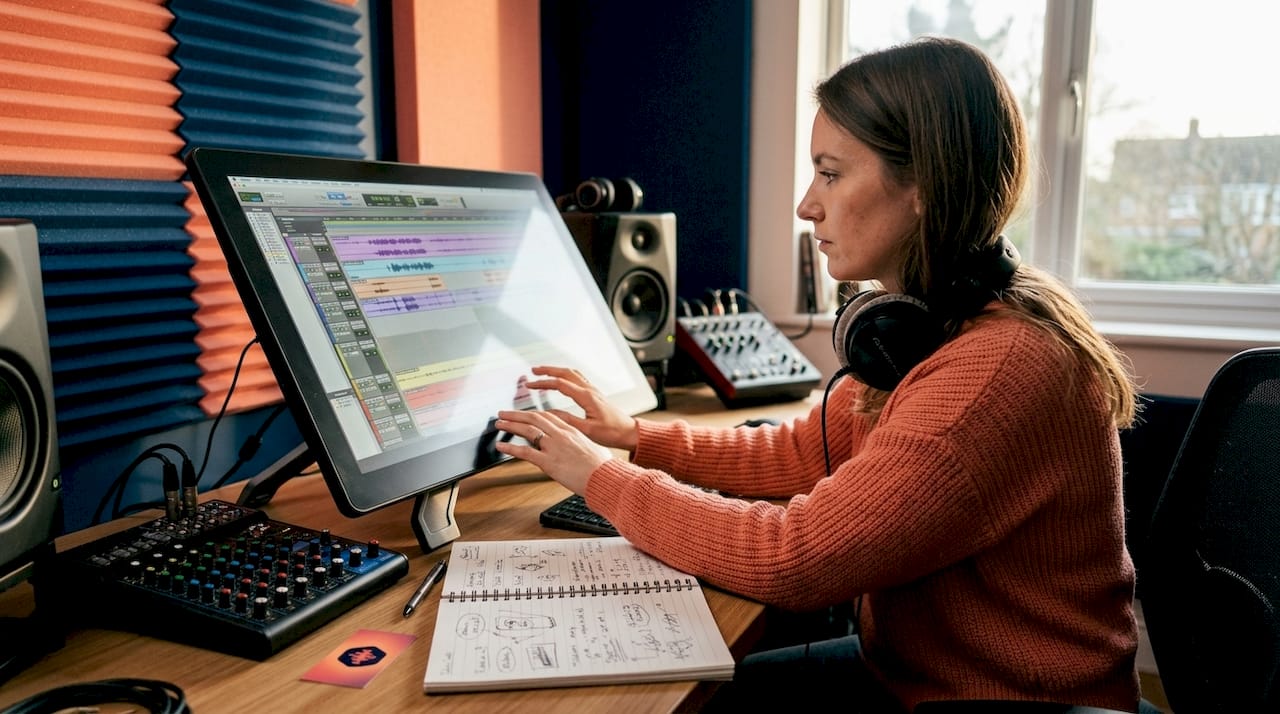
The Hi-Audio platform is a strong real-world example of this structure. It supports asynchronous browser-based contributions with hierarchical roles and visibility levels, meaning a musician can record and submit without ever touching the producer’s session directly. Each contributor operates within their lane. That structure is what separates a functional multi-stakeholder workflow from a chaotic group chat with audio attachments.
Here is what a typical workflow looks like in practice:
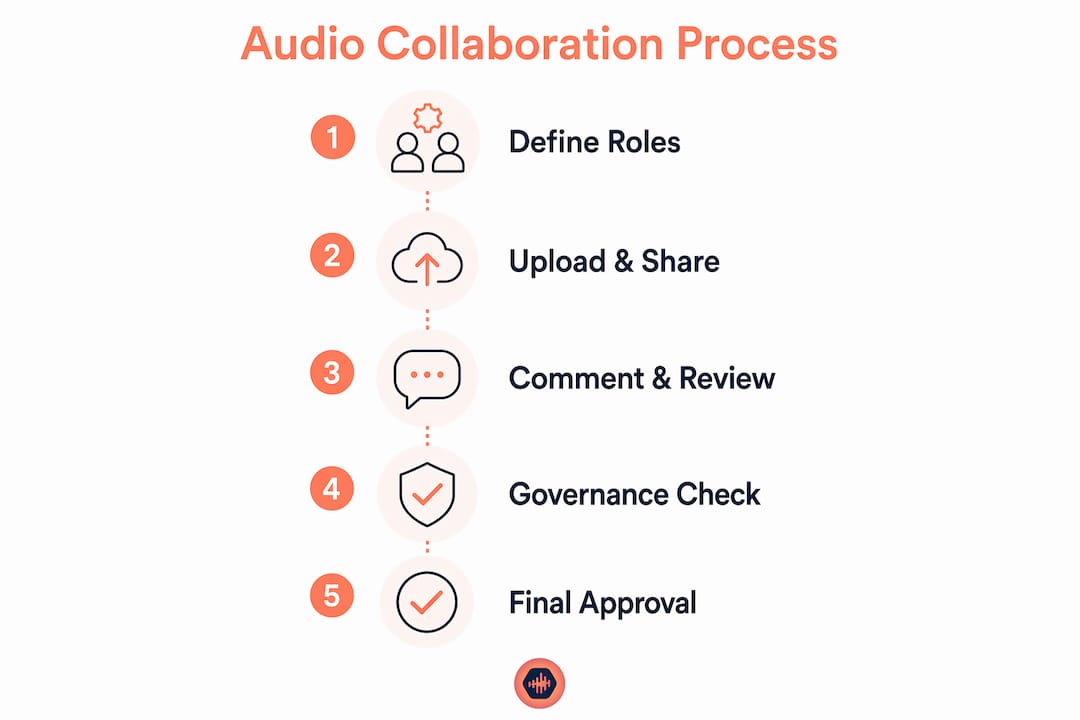
- Contribution phase: Musicians, voice actors, or field recordists submit audio artifacts to a shared project space with defined upload permissions.
- Review phase: Producers or engineers access those contributions, annotate with timestamped feedback, and flag revisions.
- Approval phase: Designated reviewers, which might include legal, accessibility, or product stakeholders depending on the project, sign off before anything moves forward.
- Version control: Every iteration is tracked so nobody is working off a stale file without knowing it.
The reason simple stem exchange workflows fail at scale is that they have no canonical project state. You end up with silent version conflicts where two people edited different copies and neither knows it. A structured multi-stakeholder system solves this by maintaining one shared source of truth.
Pro Tip: Define roles before the project starts, not after the first conflict. Assign who can upload, who can comment, who can approve, and who has final say. Write it down. Send it to everyone. This one step prevents about 80% of the chaos.
How does governance work in multi-stakeholder audio projects?
Governance is the part of audio stakeholder collaboration that most teams underestimate until it bites them. It is the formal process of getting the right people to review, approve, and sign off on audio work before it ships or goes public. And it is a lot more involved than most producers expect.
Speakers.cloud guidelines lay out exactly who needs to be in the room for audio feature approvals. The list is longer than you think:
- Product owner: Confirms the audio feature meets the original brief and user experience goals.
- Engineering lead: Verifies technical implementation is correct and stable.
- Legal reviewer: Checks for rights clearance, licensing, and liability exposure.
- Privacy stakeholder: Confirms no user data is captured or processed without consent.
- Accessibility reviewer: Validates that audio works for users with hearing impairments or assistive technology needs.
- Business owner or sponsor: Signs off on brand alignment and commercial viability.
The key distinction between blocking and advisory reviewers is what separates functional governance from a bottleneck nightmare. A blocking reviewer can halt the project until their concern is resolved. An advisory reviewer gives input but cannot stop the ship. If you do not define this upfront, every reviewer thinks they are blocking and nothing ever gets approved.
Governance work is consistently underestimated in audio collaborations, especially where compliance with privacy, accessibility, rights, and safety is critical. The fix is not more meetings. It is better-structured meetings with documented decision flows and clear ownership.
Pro Tip: Run a governance kickoff at the start of every project. Identify every stakeholder, label them blocking or advisory, set a review cadence, and document who made each decision and why. That paper trail saves you when someone disputes a call six months later.
Why safety-critical audio projects demand diverse stakeholder input
Some audio projects are not just creative. They are public safety infrastructure. The best example of this is Acoustic Vehicle Alerting Systems, known as AVAS, which are the sounds electric and hybrid vehicles emit at low speeds so pedestrians know they are there.
Transport for NSW’s AVAS sound design process is a textbook case of mandatory multi-stakeholder collaboration. The sound had to satisfy bus operators, jurisdictional regulators, vulnerable road user groups including people who are blind or have low vision, and international compliance standards under UN Regulation 138. No single audio engineer could have made those calls alone. The stakeholder diversity directly shaped the effectiveness and public trust in the final sound.
This is where collaborative audio projects in regulated or public-facing contexts differ fundamentally from studio work. The table below shows how stakeholder roles and outcomes compare across project types.
| Factor | Safety-critical audio (e.g., AVAS) | Creative audio (e.g., album production) |
|---|---|---|
| Stakeholder types | Regulators, operators, disability advocates, engineers | Artists, producers, A&R, mixing engineers |
| Approval authority | Jurisdictional compliance bodies | Label, artist, or executive producer |
| Primary risk | Public safety failure or legal non-compliance | Creative misalignment or missed brief |
| Review cadence | Formal, documented, mandatory | Flexible, often informal |
| Outcome measure | Regulatory certification and public effectiveness | Artistic satisfaction and commercial performance |
The lesson here is not that creative projects need bureaucratic governance. It is that the type of stakeholder input should match the stakes of the project. A podcast episode does not need a legal reviewer. A voice alert system for a public transit fleet absolutely does.
- Vulnerable user groups must be consulted, not just considered, in public audio deployments.
- Jurisdictional requirements can override creative preferences entirely.
- Compliance standards like UN Regulation 138 are non-negotiable constraints, not suggestions.
What tools actually support multi-stakeholder audio collaboration?
The right tool for multi-stakeholder audio work does three things: it manages roles and permissions, it maintains a single shared project state, and it tracks feedback and versions without requiring everyone to be online at the same time.
The Hi-Audio platform handles asynchronous multitrack recording through a browser with only a microphone required. It uses a shared composition object model that prevents the silent version conflicts that kill projects done over email. That is a smart architectural choice. It means contributors can work independently without accidentally overwriting each other’s work.
For audio professionals managing collaborative audio projects across production, post-production, or sound design, the tool requirements look like this:
- Role-based access control: Not everyone should be able to download the final mix or delete a version. Permissions need to match responsibilities.
- Timestamped feedback: Generic comments like “fix the low end” are useless without a timestamp. Precise feedback tied to a specific moment in the audio is what actually moves revisions forward.
- Version history: Every iteration needs to be saved and labeled. You will need to go back. You always need to go back.
- No-login access for clients: Requiring clients or external reviewers to create accounts kills adoption. The tool needs to work without friction for people outside your organization.
- Lossless audio support: If the platform compresses your files, it is not a professional audio tool. Full stop.
Audome checks all of these boxes. It supports lossless audio up to 96kHz/24-bit, offers timestamped comments, version control, and private collaborator spaces, and does not require clients to create an account to leave feedback. For teams managing audio version control across multiple stakeholders, that combination is hard to beat. You can also explore types of audio collaboration tools to see how different platforms stack up for different workflow needs.
Key takeaways
Multi-stakeholder audio collaboration works only when roles, permissions, and governance are defined before the first file is shared.
| Point | Details |
|---|---|
| Define roles before starting | Assign upload, review, and approval authority in writing before any contributor touches the project. |
| Governance is not optional | Blocking vs. advisory reviewer roles must be explicit to prevent approval bottlenecks. |
| Safety-critical projects need diverse input | Public audio deployments require stakeholder groups like regulators and disability advocates, not just engineers. |
| Tools must maintain a shared project state | Platforms without version control and role-based access create silent conflicts that derail projects. |
| Lossless quality is non-negotiable | Any platform that compresses audio is not built for professional multi-stakeholder work. |
Where most teams actually fall apart
Here is the honest truth about multi-stakeholder audio projects… most of them fail not because of bad audio. They fail because nobody agreed on who was in charge of what.
I have seen sessions where three producers all thought they had final say on the mix. I have seen governance reviews where every single reviewer was labeled “blocking” and the project sat in approval hell for six weeks. I have seen engineers spend two days working off the wrong version because someone emailed an updated file instead of updating the shared project. These are not rare edge cases. This is Tuesday.
The thing people miss is that tools do not fix broken workflows. Audome, Hi-Audio, or any other platform you throw at a disorganized team will just give that team a fancier way to be disorganized. The process has to come first. Clear roles, documented decisions, a defined review cadence, and someone with actual authority to say “this is done.” That is the foundation. The tool is just where you do the work.
What I have found actually works is treating the governance setup like a pre-production session. You would not walk into a recording session without a session plan. Do not walk into a multi-stakeholder project without a collaboration plan. Write down every stakeholder, their role, whether they are blocking or advisory, and when their review window is. It takes 30 minutes and it saves weeks.
— Kreg
Manage your multi-stakeholder audio projects with Audome
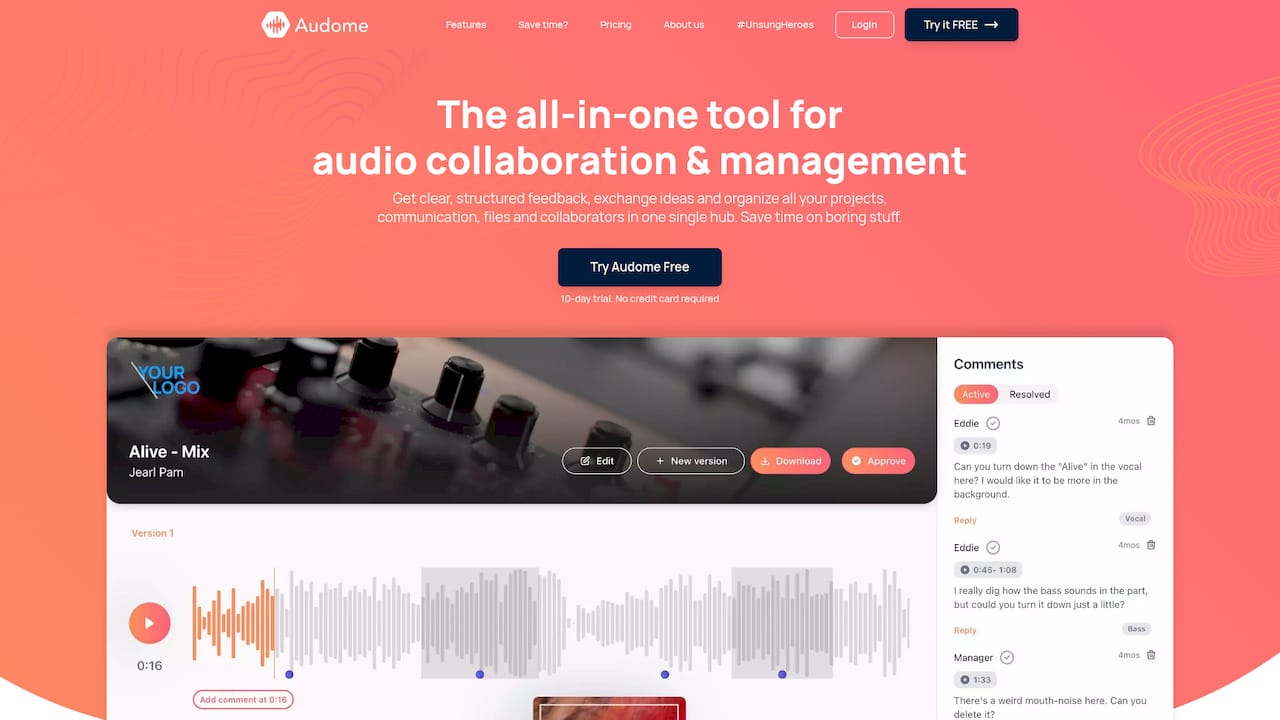
If you are running audio projects with multiple contributors, reviewers, and approvers, you need a hub that keeps everything in one place without the chaos. Audome is built specifically for audio professionals managing complex, multi-role workflows. It handles lossless file sharing up to 96kHz/24-bit, timestamped feedback, version control, and private collaborator spaces, all without requiring your clients or external reviewers to create an account. No more email chains. No more “which version is final?” conversations. Just a clean, organized project space where everyone knows what they are working on. Try Audome and see how much cleaner your next collaborative project can run.
FAQ
What is multi-stakeholder audio collaboration?
Multi-stakeholder audio collaboration is a structured process where contributors with distinct roles, such as musicians, producers, engineers, legal reviewers, and accessibility stakeholders, coordinate asynchronously on shared audio projects with defined permissions and approval workflows.
How is this different from regular audio collaboration?
Regular audio collaboration often means two or three people sharing files informally. Multi-stakeholder audio collaboration involves formal role assignments, governance processes, version control, and sign-off authority across a broader group of contributors and decision-makers.
Why do audio projects need governance reviews?
Governance reviews confirm that audio work meets technical, legal, accessibility, and business requirements before it ships. Without them, projects risk compliance failures, rights disputes, or releasing work that does not meet the original brief.
What tools support multi-stakeholder audio workflows?
Platforms like Hi-Audio support asynchronous browser-based multitrack recording with hierarchical roles. Audome supports multi-role audio projects with lossless file sharing, timestamped comments, version control, and no-login access for external reviewers.
Do all audio projects need this level of structure?
No. A simple podcast episode does not need a legal reviewer. But any audio project involving public deployment, regulatory compliance, brand voice, or multiple internal departments benefits significantly from defined roles, documented approvals, and a shared project state.