
TL;DR:
- Client-free collaboration allows audio teams to complete creative and editing phases internally, avoiding premature client feedback.
- This structured workflow speeds production, enhances creative focus, and maintains privacy using specialized tools like WebRTC and CRDTs.
Client-free collaboration is an internal workflow where your team works through creative and editing phases without client participation, cutting out approval bottlenecks before the work is ready to be heard. It’s not about hiding things from clients. It’s about protecting the creative process from the noise that kills momentum. Audio engineers and project managers are increasingly separating live capture sessions from client-facing review, using tools like Audome, WebRTC-based peer connections, and CRDT-powered local sync to keep internal work fast, private, and clean. If you’ve ever lost a great take because a client jumped in too early… you already know why this matters.
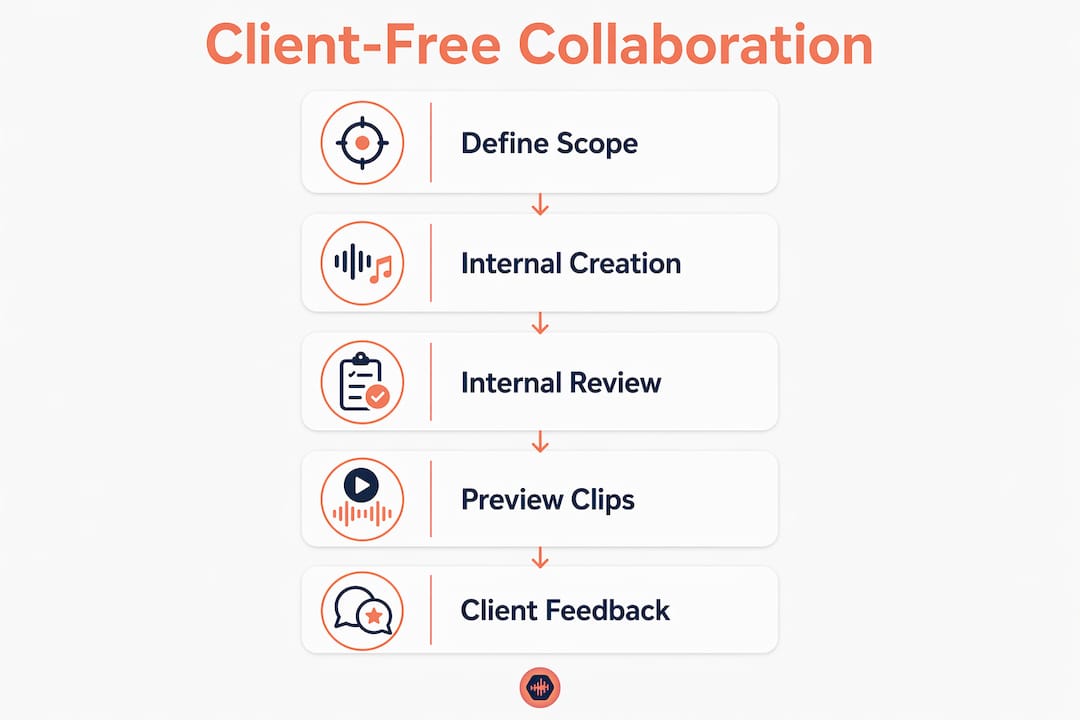
What is client-free collaboration and why audio teams use it
Client-free collaboration, sometimes called internal-only or clientless project management, is the practice of removing client participation from workflow stages like creative capture, rough editing, and early mixing. The client doesn’t disappear from the project. They just don’t get a seat at the table until the work is actually ready for outside ears.
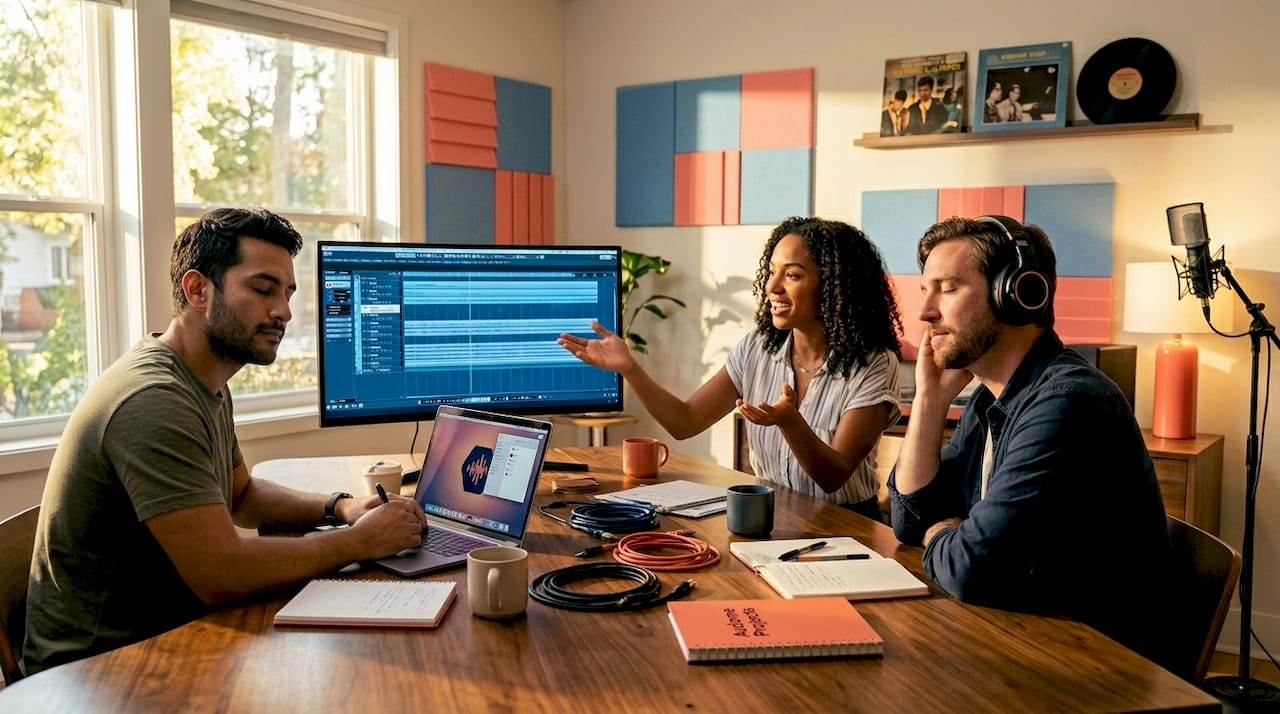
In audio production specifically, this matters more than in almost any other creative field. A client hearing a rough mix at 40% completion doesn’t give useful feedback. They panic. They start asking for changes to things that were never meant to be permanent. You end up chasing notes on a version that was never the real version, and suddenly you’re three revisions deep on a mix that didn’t need to exist.
The standard industry term for this kind of workflow is internal iteration or async internal review. Client-free collaboration is the broader concept that wraps around it. Both describe the same core idea: your team locks the door, does the work, and opens it when there’s something worth showing.
Remote audio teams have been doing this informally for years by just… not sending links until they’re ready. The difference now is that purpose-built tools make it a structured, repeatable process instead of a gut-feel decision.
How client-free workflows speed up production and protect creative control
The biggest practical benefit of collaboration without clients in the room is speed. Not because you’re cutting corners. Because you’re cutting interruptions.
Here’s what a typical client-facing workflow looks like in practice:
- You finish a rough edit
- You send it to the client
- The client listens three days later
- They send back notes that are half about the rough and half about the final vision
- You revise based on mixed signals
- You send again
- Repeat until everyone is exhausted
That cycle can eat two weeks on a project that should take four days of actual work.
Client-free teamwork breaks that cycle by keeping early-stage work internal. Sharing 30 to 90 second preview clips internally for quick team approvals is one of the fastest ways to iterate without waiting on large uploads or client schedules. Your team hears the section, drops a timestamped note, and you move. No email thread. No “let me loop in my business partner.”
The other major win is creative focus. When engineers know a client isn’t watching every move, the work gets bolder. You try the weird reverb. You push the low end further than you normally would. You make a decision instead of hedging. That’s where the best work comes from.
Pro Tip: Set a hard internal review gate before any client link goes out. Decide upfront: this mix doesn’t leave the room until it passes your team’s own ears first. Audome’s private collaborator spaces make this easy to enforce without awkward conversations.
Isolating real-time creative capture from async detailed review is the single most effective way to prevent feedback churn. Live sessions are for capturing energy. Async review is for making decisions. Mixing those two phases is where version confusion starts.
What technology makes client-free collaboration actually work
This is where it gets interesting, and where a lot of teams don’t dig deep enough.
Client-free workflows depend on the right technical architecture. Not just the right app. The architecture itself.
| Approach | How it works | Privacy level | Best for |
|---|---|---|---|
| Centralized cloud storage | Files stored on provider servers | Low to medium | Client-facing sharing |
| WebRTC peer-to-peer | Data flows device to device, no server storage | High | Internal real-time collaboration |
| Local-first with CRDTs | Edits stored locally, merged without central server | Very high | Offline and async internal work |
| Self-hosted tools | Team controls the server entirely | Very high | Studios with IT resources |
WebRTC peer-to-peer editing means your content flows directly between devices. The signaling server that helps peers find each other sees only connection metadata, not the actual audio or document content. Think of it like a secure messaging app. The server knows you connected, but it can’t read what you said.
CRDTs, or Conflict-free Replicated Data Types, take this further by removing the need for a central coordinator entirely. Each device holds its own version of the truth. When two engineers make edits offline and reconnect, the CRDT merges those edits without conflict or data loss. No one has to “win” the merge. It just works.
Local-first sync uses devices as truth sources and relies on CRDTs to merge edits later, which means your team can keep working through a bad internet connection without blocking on connectivity. For a studio session at 2am in a building with spotty wifi… that’s not a small thing.
The privacy angle here is real. P2P architectures restrict data flow strictly between peers after connection setup, which means third-party servers never hold your stems, your session files, or your unreleased material. For audio pros working on anything commercially sensitive, that matters.
How does client-free collaboration compare to traditional client-facing workflows?
Traditional client-facing workflows aren’t bad by design. They just weren’t built for the pace and privacy that modern audio production demands. Here’s where they break down:
- Approval bottlenecks. Every version that goes to a client creates a waiting period. Multiply that by five rounds of revision and you’ve lost a week to inbox latency.
- Premature feedback. Clients give notes on rough work as if it’s final work. That’s not their fault. It’s a workflow design problem.
- Version confusion. When clients have access to multiple versions, they start mixing notes from different stages. “Can we go back to the way it sounded in version three?” is a sentence that should never exist.
- Creative compromise. When engineers know a client is watching every save, they self-censor. The bold choices don’t get made.
Client-free teamwork doesn’t eliminate client communication. It restructures when it happens. The hybrid approach that works best for most audio teams is this: internal iteration first, then a single curated client review at a defined milestone. You control what they hear and when they hear it.
The tradeoff is transparency. Some clients want to feel involved throughout the process. That’s a real relationship consideration. The fix is setting expectations upfront, not abandoning the workflow. Tell them: “We’ll send you a review link at [milestone]. Before that, we’re heads down.” Most clients respect that more than they let on.
Practical tips for running client-free audio projects
Getting this right takes more than just not sending links early. Here’s what actually works:
- Define your internal review gates. Before the project starts, decide exactly which milestones trigger an internal review versus a client review. Write it down. Put it in your project brief.
- Use a unified platform. Fragmented tool stacks create failure points at every handoff. Audome consolidates file sharing, timestamped feedback, and version control in one place, which means your internal review process doesn’t fall apart because someone’s Dropbox link expired.
- Keep client access toggled off by default. Audome’s download toggling and password protection let you share a link without giving full access. Turn client visibility on when you’re ready. Not before.
- Use timestamped comments for internal notes. Vague feedback like “the chorus feels off” wastes time. Timestamped comments at the exact moment in the file cut that back-and-forth in half.
- Don’t cut clients out too late either. If you’re 90% done and the client hears it for the first time, you’ve created a different problem. They feel excluded and they’ll overcompensate with notes. Bring them in at a real milestone, not at the finish line.
Pro Tip: When you’re ready to send a mix to a client, check out the mix delivery guide on the Audome blog. It covers how to frame the handoff so clients give you useful feedback instead of emotional reactions.
The types of audio collaboration tools you choose matter as much as the process. A tool that requires clients to create accounts just to leave a comment is going to create friction that kills the workflow before it starts.
Key takeaways
Client-free collaboration works because it separates internal creative iteration from client review, protecting both the work and the timeline.
| Point | Details |
|---|---|
| Define it correctly | Client-free means no client involvement during creative capture and editing, not permanent exclusion. |
| Speed comes from structure | Internal micro-review cycles using short preview clips cut revision time significantly. |
| Technology matters | WebRTC and CRDT-based tools keep internal work private and conflict-free without central server storage. |
| Hybrid is the goal | The best workflows use client-free phases internally, then bring clients in at defined milestones. |
| Unified tools win | Fragmented stacks break at every handoff; one platform for files, feedback, and version control holds it together. |
Why I think most audio teams are doing this backwards
Here’s my honest take after years of watching sessions fall apart: most teams aren’t protecting their creative process. They’re just hoping clients don’t ruin it.
That’s not a strategy. That’s luck.
I’ve been in sessions where a client got a Dropbox link to a rough mix at 11pm and sent back seventeen voice notes by 8am. The engineer spent the next two days chasing feedback on a version that was never meant to leave the room. The final mix suffered. The relationship suffered. And nobody talked about why it happened.
The answer isn’t to be secretive. It’s to be deliberate. Client-free collaboration isn’t about keeping clients in the dark. It’s about respecting the work enough to finish a real thought before you ask someone else to react to it.
What I’ve found is that clients actually trust you more when you control the process. They hired you because you know what you’re doing. When you send them a polished internal review instead of a rough idea, they give better notes. They feel more confident. The whole thing moves faster.
The pitfall I see most often is teams going too far the other way. They lock clients out for so long that by the time the client hears anything, the project has drifted from the original vision. That’s on the team, not the client. The fix is a clear milestone structure, not vibes.
If you’re managing audio projects and you haven’t built a formal internal review process yet… start there. Everything else follows.
— Kreg
How Audome makes client-free workflows real
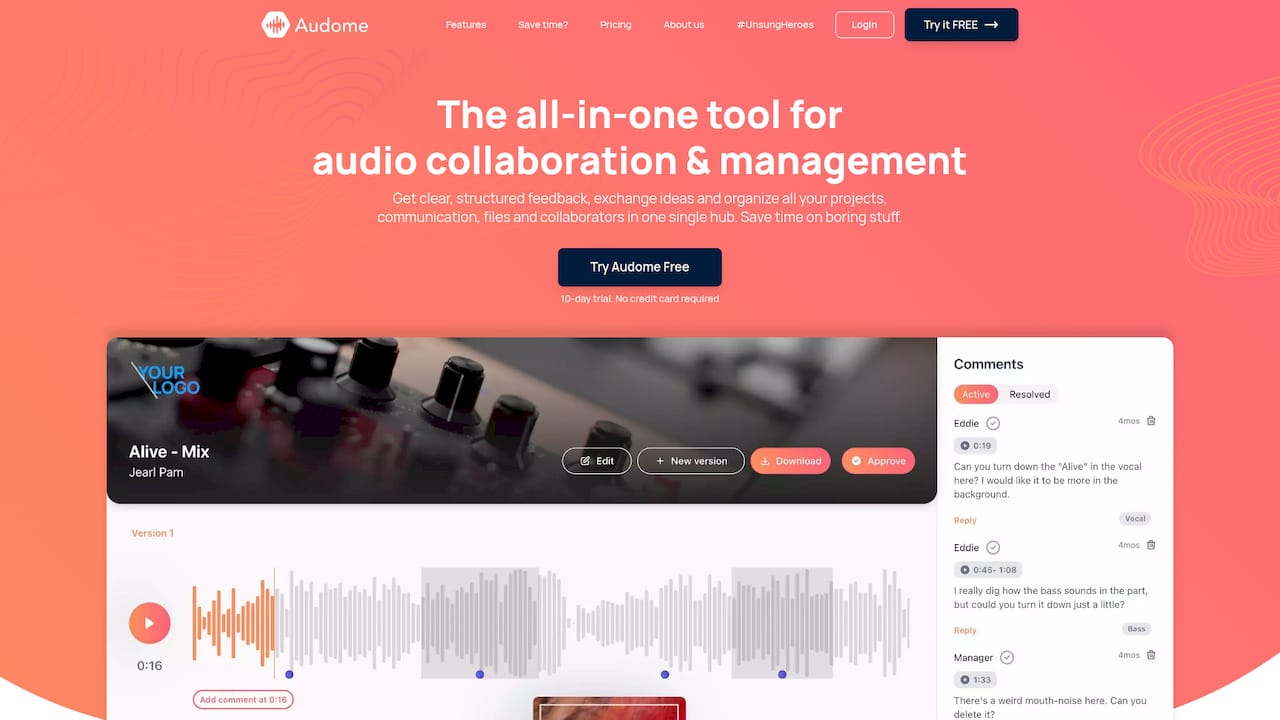
Audome is built for exactly this kind of work. It’s a single platform where audio teams handle file sharing, version control, and feedback collection without stitching together four different apps. You get private collaborator spaces where internal review happens before any client ever sees a link. Timestamped comments keep feedback precise. Download toggling and password protection mean you control access at every stage.
No client logins required. No compression on your 96kHz/24-bit files. No wondering if someone downloaded the wrong version.
If you’re ready to stop managing your workflow through email threads and expired links, start with Audome and see what a purpose-built audio collaboration platform actually feels like.
FAQ
What is client-free collaboration in audio production?
Client-free collaboration is an internal workflow where audio teams complete creative and editing phases without client involvement, preventing premature feedback from disrupting the production process. Clients are brought in at defined milestones rather than throughout every stage.
How does client-free teamwork differ from just not sharing files?
It’s a structured process, not just withholding access. Client-free teamwork includes defined internal review gates, micro-review cycles, and version control so the team iterates deliberately before any client-facing handoff.
What tools support client-free audio collaboration?
Audome is purpose-built for this, offering private collaborator spaces, timestamped comments, version control, and toggled client access. WebRTC-based tools and CRDT-powered platforms also support private internal workflows without third-party server storage.
When should you bring clients back into the workflow?
Bring clients in at a real creative milestone, not at the rough stage and not at the finish line. A single curated review at 60 to 70 percent completion gives clients enough context to give useful notes without derailing the creative direction.
Does client-free collaboration hurt client relationships?
No. Setting clear expectations upfront about when clients will hear the work builds more trust than giving them access to every rough version. Most clients prefer receiving polished previews over watching every iteration in real time.