
TL;DR:
- Fragmented project management causes inefficiency, mistakes, and miscommunication in audio production workflows. Centralization consolidates standards, asset tracking, and approvals, enhancing consistency and visibility across projects. A hybrid approach balances structure with creative autonomy, optimizing both speed and quality in studio environments.
Scattered session files on three different drives, a client approval buried in an email chain from two weeks ago, and a mix revision that went to the wrong version — if this sounds familiar, you already know the cost of fragmented project management. Audio production is complex by nature, involving multiple collaborators, dozens of file iterations, and tight deadlines that leave zero room for miscommunication. Project centralization offers a direct fix: one system, one source of truth, and one set of standards that every person on your team follows from session prep to final delivery.
Table of Contents
- What is project centralization?
- Key benefits of project centralization for audio teams
- Drawbacks and limitations: when centralization can backfire
- Hybrid models: combining structure and creative freedom
- Putting project centralization into practice: action steps
- Why flexible centralization beats rigid structures in audio production
- Centralize your next audio project with Audome
- Frequently asked questions
Key Takeaways
| Point | Details |
|---|---|
| Centralization defined | Project centralization means one team governs processes, tools, and standards for all studio projects. |
| Main advantages | Centralized systems improve consistency, asset management, and approval workflows for audio teams. |
| Biggest pitfalls | Excess bureaucracy can slow urgent creative decisions and frustrate producers. |
| Hybrid approaches | Studios often combine centralized standards with decentralized creative choices for maximum agility. |
| Practical steps | Implement centralization incrementally, starting with templates and version tracking in your audio workflow. |
What is project centralization?
Project centralization means consolidating authority, governance, and workflow standards into a single function or system. According to the project management world, this is often handled by a Project Management Office, or PMO. As Quay Consulting explains, “project centralization typically means concentrating project authority, governance, and standardized practices (processes, tools, templates, reporting/metrics) into a single central function such as an Enterprise PMO.”
For audio professionals, the translation is practical: centralization means every project uses the same session templates, the same folder naming conventions, the same approval chain, and the same tool for tracking file versions. Decentralization, by contrast, lets each producer or engineer run their own process, which creates flexibility but also unpredictability.
Good music collaboration workflows almost always depend on some level of centralized structure. Without it, you end up with duplicated effort, conflicting versions, and confused clients. Platforms built for essential studio tools often reflect this philosophy by standardizing how assets move through a project.
“Centralization concentrates decision authority and standardized practices into a single function, providing consistent governance across all projects.” — Quay Consulting
Centralized vs. decentralized: a quick comparison
| Feature | Centralized | Decentralized |
|---|---|---|
| Workflow standards | Uniform across all projects | Varies by team or producer |
| File and asset tracking | Single shared system | Individual systems per project |
| Approval process | Structured, governed | Ad hoc, case by case |
| Reporting and visibility | Real-time, portfolio-wide | Fragmented, manual |
| Creative flexibility | Structured, constrained | High, unregulated |
| Onboarding speed | Faster with templates | Slower without shared standards |
The table above shows why so many studios, post-production houses, and podcast networks are moving toward centralized models. You can also explore tools designed for central project management for creatives to see how other creative industries are solving this same problem.
Key characteristics of a centralized audio project setup include:
- Standardized session templates used by every engineer on every project
- Unified asset tracking that logs every file upload, edit, and version change
- Structured approval gates that move projects from draft to review to delivery
- Role-based access so collaborators only see what’s relevant to their work
Key benefits of project centralization for audio teams
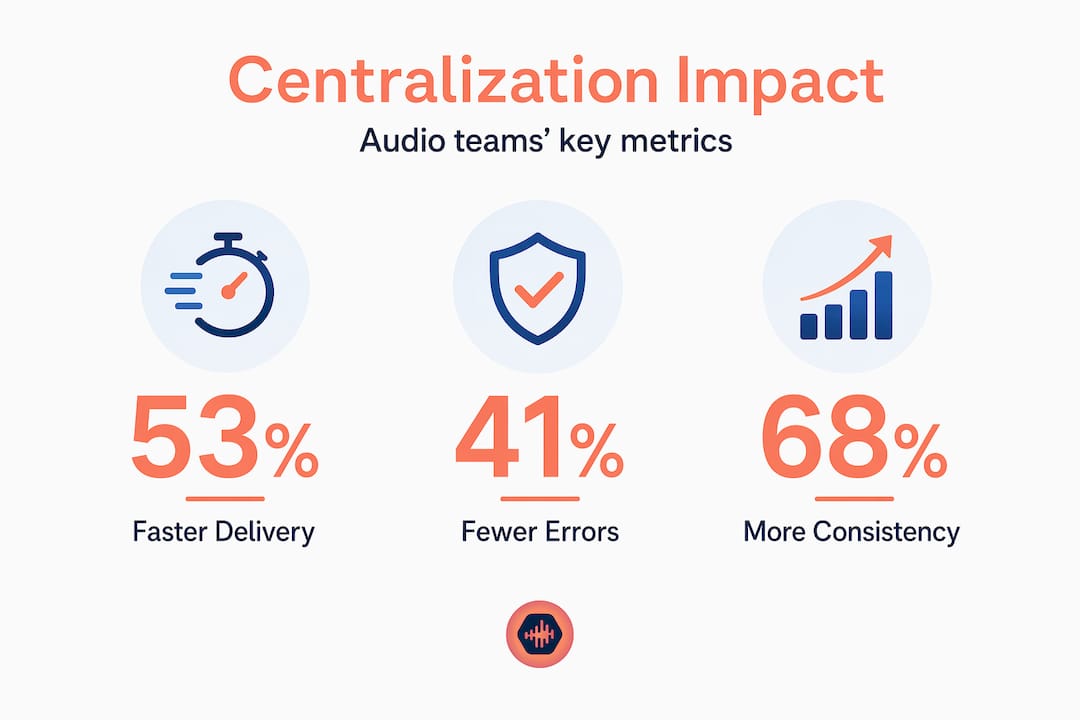
Once you understand what centralization actually means, the practical advantages for studios and remote audio teams become obvious. The most immediate benefit is consistency. When every project follows the same template and naming structure, new collaborators onboard faster, errors drop, and quality stays predictable.
A centralized model is often justified “when you need consistent standards and a single source of project data for portfolio visibility and evidence-based executive reporting.” For a studio managing eight active projects simultaneously, that kind of visibility is not a luxury. It is how you avoid missing deadlines or delivering the wrong mix to the wrong client.
Strong project tracking strategies and reliable audio version control are two areas where centralization pays off most visibly. When every version is logged in one place and every status update is visible to the whole team, you eliminate the “which mix is the final one?” conversation that wastes time on every project.

Benefits vs. common challenges
| Benefit | Challenge it solves |
|---|---|
| Single source of truth | Eliminates duplicate or conflicting file versions |
| Standardized templates | Reduces onboarding time for new collaborators |
| Structured approval gates | Prevents revisions from falling through the cracks |
| Real-time dashboards | Gives producers and clients accurate project status |
| Portfolio-wide visibility | Helps studio owners allocate resources efficiently |
The numbers support this approach. Organizations that adopt centralized project data systems report significant improvements in reporting accuracy and stakeholder alignment, because everyone is pulling from the same live data rather than individual spreadsheets or email threads.
Pro Tip: Create one master asset repository for your studio, even if it starts simple. A single shared folder with clear naming conventions and version numbering will immediately reduce confusion and make centralization feel less intimidating.
Drawbacks and limitations: when centralization can backfire
Centralization is not a perfect solution. For fast-moving creative teams, the structure that makes centralization powerful can also make it slow. When a producer needs to approve a last-minute vocal tweak at midnight, routing that request through a formal approval chain creates friction that kills momentum.
The core tension is well documented. As Quay Consulting notes, “approvals and key decisions tend to flow through senior leadership/central governance, which can improve consistency and control but may slow responsiveness and add escalation/bureaucracy.” In audio production, where creative decisions are often made in real time and client feedback can arrive at odd hours, this bottleneck is a real problem.
“Central bodies can become bureaucratic, and their major weakness is a tendency toward bureaucracy.” — Quay Consulting
The biggest pitfalls for audio producers who implement rigid centralization without planning:
- Approval delays on time-sensitive revisions. A mix that needs a quick EQ adjustment should not require three sign-offs. When every small change goes through a formal review, momentum dies and frustration builds.
- Over-engineered templates that stifle session creativity. Locking down every parameter of a session template can prevent engineers from adapting their workflow to the specific needs of a track or artist.
- Collaborator resistance. If your freelance engineers and session musicians feel like they are filling out forms instead of making music, they will find ways to work around your system, defeating the purpose entirely.
Smart remote collaboration advice consistently points to the importance of balancing structure with autonomy. Similarly, effective seamless mix approvals depend on a process that is structured enough to be reliable but simple enough that clients actually use it.
Pro Tip: Use a hybrid approach. Centralize your standards and documentation, but give your audio teams real autonomy over day-to-day creative decisions. Reserve formal approval gates for deliverables, not every minor session change.
Hybrid models: combining structure and creative freedom
The most effective studios do not choose between centralization and decentralization. They build hybrid models that apply structure where it matters most while leaving creative space untouched. This is the approach that scales without sacrificing quality.
As Quay Consulting describes, “organizations often use a hybrid model where standards/data/governance are centralized while delivery ownership or domain decisions remain more decentralized.” In audio terms, this means your studio has one master template system, one approval workflow, and one asset repository, but your producers still decide how they build their signal chains, how they sequence their mixing process, and how they approach a unique creative brief.
The Metagyre Blog reinforces this clearly: “if projects require frequent, fast-changing decisions that depend on local creative judgment, full centralization can create bottlenecks — many teams centralize governance/standards but delegate day-to-day delivery decisions.” This is exactly the balance that professional studios need.
Collaborative sound design is one context where the hybrid model works especially well. A sound designer working on a film score needs freedom to experiment, but the producer and director still need clear visibility into progress, versions, and approvals.
Hybrid model best practices for audio studios
- Centralize your file naming conventions and folder structures so every project is navigable by any team member from day one
- Standardize your delivery formats and export specs to eliminate confusion at the end of every project
- Keep creative decisions decentralized — producers and engineers should own their session builds and signal flow
- Use version control and timestamps for all deliverables without requiring sign-off on every internal session save
- Set defined checkpoints such as rough mix review, final mix approval, and mastered file sign-off, and make these the only formal gates in your workflow
Pro Tip: Write a one-page “rules of engagement” document for each studio project. Define exactly where standardized process applies and where your engineers have full creative freedom. This prevents confusion and removes the resentment that rigid systems tend to generate.
Putting project centralization into practice: action steps
Theory is useful, but what actually moves a studio from chaos to clarity is a concrete implementation plan. The good news is that you do not need to overhaul everything at once. Centralization works best when introduced incrementally, starting with the areas where fragmentation costs you the most time and money.
Project centralization for audio professionals means “one owner sets workflow templates, asset/version tracking, and standardized approval gates.” Designate one person or role as your workflow owner before you build anything else. Without ownership, even the best system gets ignored.
Here are five concrete steps to get started:
- Audit your current project fragmentation. List every tool, folder, cloud service, and communication channel your team currently uses. Identify where files get lost, where approvals stall, and where version confusion happens most often.
- Define your non-negotiable standards. Choose the folder structures, naming conventions, session templates, and export specs that every project must follow. Keep this list short and practical.
- Pick one central platform for file tracking and approvals. The goal is to eliminate the need for email chains and scattered feedback. Your audio management tool should support version history, timestamped feedback, and role-based access at minimum.
- Onboard collaborators with a simple orientation. A ten-minute walkthrough of how files move through your system is enough for most freelancers. The simpler your system, the faster they adapt.
- Review and iterate after your first two projects. Centralization is not a one-time setup. Evaluate what worked and what created unnecessary friction, then adjust your standards accordingly.
Pro Tip: Start with session prep and version tracking before you centralize anything else. These two areas generate the most confusion and offer the fastest, most visible return on your investment in structure.
Why flexible centralization beats rigid structures in audio production
Here is a perspective that does not get enough attention in project management conversations: the studios that struggle most with centralization are not the ones that adopted it too early. They are the ones that applied it too rigidly. Rigid centralization treats every decision as if it carries equal weight, which is a mistake in any creative environment and a particularly damaging one in audio production.
The best engineers and producers are not resistant to structure. They are resistant to unnecessary structure. When you require formal sign-off on a bus routing change or make a producer submit a change request to rename a session file, you are not managing projects. You are managing frustration. That frustration compounds, and eventually your most talented collaborators either disengage or leave.
Flexible centralization, by contrast, earns respect because it is clearly purposeful. Your team understands why the approval gate exists at the final mix stage. They understand why version control matters when a client claims they never approved the edit you delivered. They follow the standards not because they were told to, but because the standards make their work easier and their results more consistent.
Project tracking insights consistently show that tracking works best when teams see direct benefits from using it, not when compliance is enforced from the top. Build a centralized system that your engineers and clients actually want to use, and you will not have to police it.
The studios that get this right think modularly. They ask: what must be centralized for quality and accountability, and what should be left to the individual for speed and creativity? That question, asked honestly for each part of your workflow, will produce a better system than any rigid framework ever could.
Centralize your next audio project with Audome
Bringing centralization principles into your studio workflow is significantly easier when your tools are purpose-built for the job.
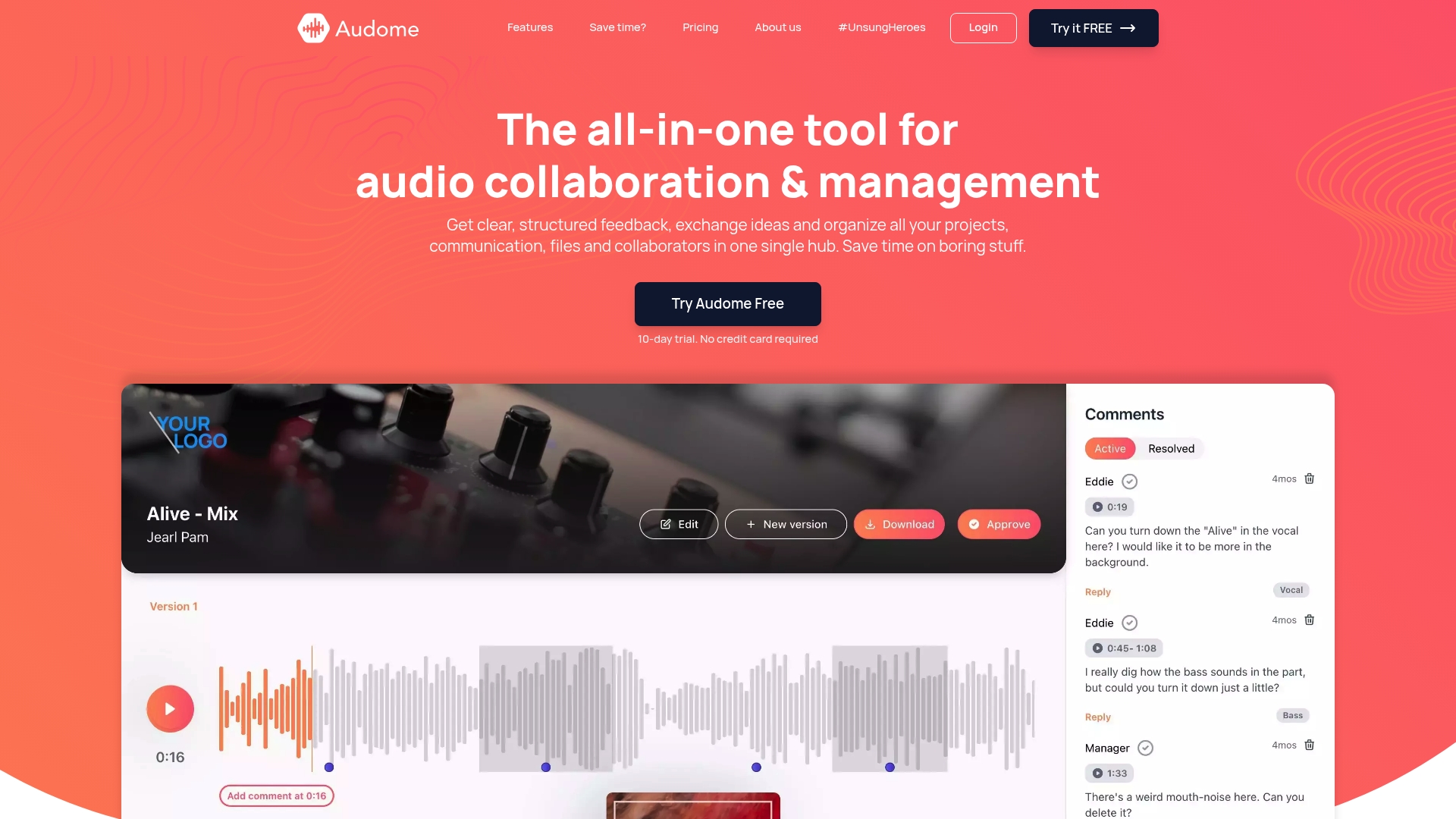
Audome is designed specifically for audio professionals who need one secure hub for file sharing, project management, and feedback collection. The platform supports lossless audio up to 96kHz/24-bit, so your files stay full quality through every revision cycle. Timestamped comments, version control, private collaborator spaces, and password-protected sharing give you the structure of a centralized system without the bureaucratic overhead that kills creative momentum. No client logins required, no fragmented email threads, and no compression artifacts. Whether you are running a hybrid model or a fully centralized studio workflow, Audome gives you the infrastructure to do it cleanly.
Frequently asked questions
What are the biggest challenges of project centralization for audio teams?
Bureaucracy and slower decision-making are the most common friction points, particularly for mix revisions and last-minute creative changes. As Quay Consulting notes, central governance bodies have “a tendency toward bureaucracy” that can slow fast-moving teams.
How does centralization affect asset management and version control in studios?
Centralization creates a unified system for tracking all assets and versions, reducing the risk of lost files and miscommunication. Centralized collaborative systems integrate issue tracking, real-time collaboration, and role-based access to support better decision-making across the project team.
Can studios use hybrid project management models?
Yes, and many of the best studios already do. A hybrid model centralizes governance and standards while keeping creative delivery decisions decentralized, giving teams both consistency and flexibility.
How do approval gates work in centralized audio project management?
Approval gates are structured checkpoints that move a project through defined stages such as rough mix review, final mix approval, and mastered file sign-off. Standardized approval gates keep all collaborators aligned and prevent deliverables from moving forward without the right sign-off.