
Effective client onboarding for studios comes down to four moves: a one-page intake form paired with a deposit, timestamped feedback with labeled file versions, and a hard lock on final files until payment clears. Studios that skip any of these tend to spend more hours chasing notes and invoices than mixing. Audome builds these controls into its workflow, and the practices below reflect how working engineers like Kreg apply them day to day.
TL;DR:
- Studios should require a deposit of 25% to 50% to secure booking and clearly communicate cancellation windows of 48 to 72 hours within the intake form.
- Technical riders and session logistics must be detailed upfront, including DAW versions, gear list, and file format specifications, to reduce disputes.
- Remote sessions need testing 24 to 48 hours before to verify network stability, plugin licenses, and backup communication channels to prevent failures.
- Feedback should be timestamped and linked to specific waveform moments, with versions clearly labeled and prior versions archived to prevent confusion and repeated revisions.
- Final files must remain locked until payment clears, using signed signoff forms and automated systems to prevent unpaid delivery and ensure smooth project closure.
Table of Contents
- 1. Priority onboarding checklist for a clean first session
- 2. Reservation and intake form fields that prevent disputes
- 3. Testing remote sessions before you ever hit record
- 4. Turning feedback into a system instead of a guessing game
- 5. Getting paid and closing the project cleanly
- 6. Why the studios that enforce these rules work less
- How Audome turns this checklist into a workflow
- Templates and guides worth bookmarking
- Sources
- FAQ
1. Priority onboarding checklist for a clean first session
A first session goes sideways when a studio skips a step, not when the client is difficult. Run these five in order and most disputes never happen.
- Capture the lead’s name, project type, and rough scope in the first reply.
- Send a reservation form and technical rider before confirming any date.
- Collect a deposit and lock the room and time only after it clears.
- Run a remote or in-person dry run to catch technical problems early.
- Verify gear, files, and headphone mixes the day of the session.
State revision limits, the cancellation window, and the file retention period on the same form so nobody discovers them later. List realistic turnaround times too: a same-day mix note is not a same-day mix. Setting these expectations upfront does more to protect your schedule than any amount of goodwill during the session.
2. Reservation and intake form fields that prevent disputes
The intake form is the contract before the contract. Get the fields wrong and you will spend the project reacting to problems the form should have caught.
- Contact and billing: legal name, email, phone, and billing address, so invoices and signoffs never stall on a wrong address.
- Session logistics: date, time, estimated duration, room preference, and headcount for performers and guests.
- Technical rider: DAW and plugin versions, target file formats, sample rate and bit depth, gear list, and plugin licensing seats.
- Financial terms: deposit percentage, cancellation window, and overtime billing increments.
- Liability and retention: equipment handling rules, file retention period, and a reference to the studio agreement or copyright assignment.
A recording studio reservation form typically sets the deposit at 25% to 50% of the project cost and a cancellation window of 48 to 72 hours, with file retention running 30 to 90 days after final delivery. Money and retention are where most disputes start, so writing these numbers into the form instead of explaining them by email later saves both sides a headache. A recording studio agreement template is a reasonable starting point for the ownership, confidentiality, and equipment clauses that back up the form. Audome’s copy-ready intake workflow lays out a similar field order if you want a template to adapt directly.
3. Testing remote sessions before you ever hit record
Remote and hybrid sessions fail for predictable reasons: an untested connection, a plugin the client doesn’t have, or nobody deciding what to do when the feed drops. Test everything at least 24 to 48 hours out, never the morning of.
- Test your preferred low-latency tool (Source-Connect, Audiomovers, or another audio-over-IP option) and confirm a fallback like Zoom or FaceTime works too.
- Check network stability and confirm sample rates match on both ends before the session starts.
- Verify plugin seats and licenses so a missing authorization doesn’t stall the room mid-take.
- Send stems or a Pro Tools session ahead of time whenever the workflow allows it.
The Recording Academy’s guide to remote sessions points to redundancy and a clear chain of command as the two strongest defenses against a session falling apart. Decide in advance who makes the call to pause or push through when something breaks, and agree on a backup channel, a phone number or a group text, that everyone checks the moment the primary connection fails. On the day itself, confirm the patch list, headphone mixes, and slate or take numbering before the client logs on. Audome’s guide to faster studio sessions walks through a similar day-of sequence if you want to build a checklist around it.
4. Turning feedback into a system instead of a guessing game
Vague notes are the single biggest source of wasted revision time. “Make it punchier” costs you a round trip; “more attack at 1:42” doesn’t. Require timecoded notes for every revision request, and never accept feedback through a channel you can’t search later.
Set a labeled versioning convention from the first delivery: v1, v2-clientnotes, v2-final, and so on, so nobody is ever guessing which file is current. State the included revision count in the contract along with the paid-revision rate for anything beyond it, and hold every request to the same documented channel, whether that’s a shared workspace or a single email thread. Keep prior versions archived rather than overwritten. A typical workflow runs: client leaves a timestamped note, engineer delivers a labeled revision, client confirms or signs off. Mastering pros interviewed by iZotope make a related point: sending clear delivery specs matters more than exhaustive direction, since too much detail can crowd out the engineer’s judgment.

Pro Tip: Attach every revision note to the exact waveform moment it refers to. A timestamped comment ends the back-and-forth that a text message starts.
5. Getting paid and closing the project cleanly
Payment problems are almost always onboarding problems that surfaced late. Structure deposits so the date itself is the incentive: no deposit, no hold on the calendar, which cuts down on no-shows before they cost you a session slot.
- Collect a deposit at booking and trigger the final invoice on delivery of the last approved version.
- Lock final masters until payment clears, and document the unlock condition as signed signoff plus cleared payment.
- Use a one-page signoff form with an acceptance checkbox, the final file list, invoice number, date, and a client signature or e-signature.
- Offer clear final delivery options and state the file retention period in the same document, including when files get deleted.
Audome’s studio approval process automates this exact sequence: files stay locked until payment is confirmed, and the signoff step closes the project without a separate email chain.
6. Why the studios that enforce these rules work less
Studios that hold the line on intake forms and paid-revision limits spend far less time on admin and almost never end up disputing a bill after delivery. Locking final files until payment clears also shortens the gap between finishing a mix and getting paid for it, which matters more to a freelance operation’s cash flow than any single client relationship.
— Kreg
How Audome turns this checklist into a workflow
Audome maps directly onto every control described above. Studios get unlimited high-resolution uploads up to 96kHz/24-bit, timestamped feedback collected right on the waveform, automatic version tracking, and Stripe Connect payments that gate downloads until a client pays.
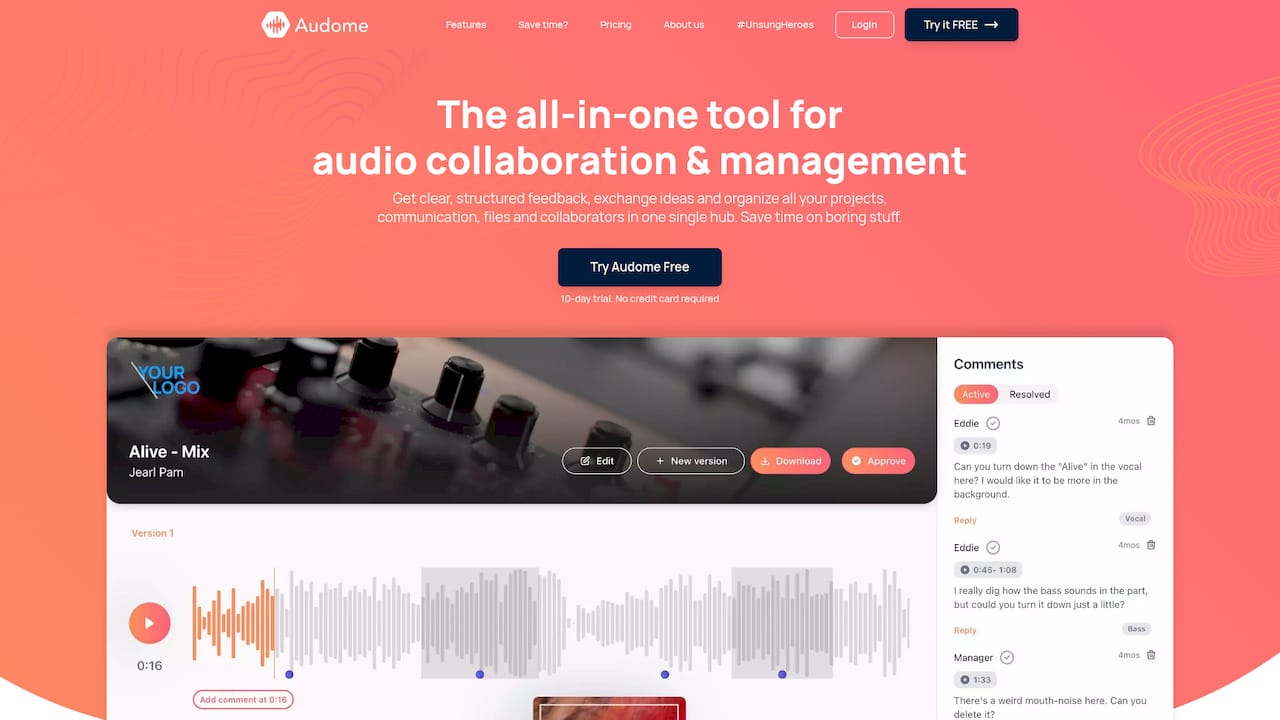
That combination removes the manual work this guide walks through by hand: no more chasing feedback across email and text, no more remembering which file is the approved one, no more releasing a master before an invoice clears. Clients never need to create an account to leave notes or download final files, so the process stays frictionless on their end while the studio keeps full control. Review the Studio and Pro plans or start from the product page to see how the workflow fits your own onboarding process.
Templates and guides worth bookmarking

For deeper reference, pull a reservation-form structure from LegalClarity’s reservation form guide, remote-prep steps from the Recording Academy’s remote session guide, and Audome’s producer workflow guide or mastering workflow guide for role-specific onboarding steps.
Sources
- Working With a Mastering Engineer: Tips from the Pros
- Remote (Controlled): The Recording Academy’s Guide To Recording Music Remotely With A Producer & Engineer
- How to Fill Out and Submit a Recording Studio Reservation Form – LegalClarity
FAQ
What should a studio intake form include?
A studio intake form should collect legal name, contact and billing details, session logistics, and a technical rider covering DAW versions, file formats, and gear. It should also state the deposit percentage, cancellation window, and file retention period, which a recording studio reservation form guide recommends setting at 25% to 50% for the deposit and 48 to 72 hours for cancellation.
How much deposit should a studio charge for a session?
Deposits commonly run between 25% and 50% of the project cost, collected before the date is confirmed on the calendar, according to reservation form guidance. The exact figure depends on project size and how far out the booking sits, but the deposit is what actually secures the date.
How do studios stop clients from requesting endless revisions?
Studios limit revision abuse by stating the number of included revisions in the contract up front and charging for anything beyond that limit. Platforms can automate this by capping free revisions and billing paid ones automatically through payment integration, so the limit enforces itself instead of relying on an awkward conversation.
Should final audio files be released before payment clears?
No. Locking final masters until payment clears and documenting the unlock condition, typically a signed signoff plus cleared payment, protects the studio from doing free work. Audome’s studio approval process builds this lock directly into file delivery.
How should studios prepare for remote recording sessions?
Test your primary connection tool and a fallback like Zoom at least 24 to 48 hours before the session, and confirm sample rates and plugin licenses match on both ends. The Recording Academy’s remote session guide also recommends agreeing on a chain of command in advance, so one person is clearly responsible for the call if the connection drops.