
Approval before download means final mixes, stems, and masters stay locked until the client gives written sign-off or clears payment, whichever the contract requires first. The strongest version of this pairs a defined approval trigger with a technical download lock, so no file leaves the studio’s control by accident. Platforms like Audome build this directly into delivery, tying a portal checkbox or Stripe Connect payment to the moment a file actually unlocks.
TL;DR:
- Implementing a fixed review window and written acceptance reduces scope creep and makes project deadlines and payments more predictable.
- Using technical locks like signed URLs or integrated payment systems ensures files stay locked until the client approves or pays, protecting studio rights.
- Clear contract clauses about review period, payment triggers, and signed-off versions enforce approval procedures and prevent disputes.
- Delivering mixes in small batches and conducting live review sessions can speed up approval time and improve accuracy.
- Pairing detailed checklists with automated controls minimizes misunderstandings and streamlines final delivery, payment, and file security.
Table of Contents
- Why approval before download matters for quality control, IP protection, and cashflow
- Step-by-step workflow: contract to final unlock
- The mix approval checklist to attach to every delivery
- Technical controls you can use to lock files until approval or payment
- Contract clauses and payment triggers that make approval enforceable
- Why disciplined approvals protect a studio’s time and margins
- How Audome implements approval before download
- Quick links: templates and how-to posts
- FAQ
Why approval before download matters for quality control, IP protection, and cashflow
Without a lock in place, a client can grab a rough mix from a shared folder, treat it as final, and disappear before the invoice clears. That single habit drives most of the unpaid work studios chase after the fact. A defined review window and clear acceptance criteria, set before work even begins, keep both sides honest about what “done” means and when payment is owed.
The risk isn’t just money left on the table. It’s scope creep dressed up as feedback, endless “one more pass” requests with no real deadline, and files circulating in versions nobody agreed to release.
- Uncontrolled downloads make it easy for a client to treat a work-in-progress file as final.
- Defined review windows protect studio schedules and give invoicing a clear trigger point.
- A written acceptance step creates a record if a dispute over scope or payment comes up later.
Download controls and payment integration features exist specifically to close this gap, keeping files locked until the studio decides otherwise.
Step-by-step workflow: contract to final unlock
A repeatable process removes the guesswork from every delivery, and it starts long before the final mix is bounced.
- Pre-project: Lock down scope, deposit amount, included revision count, and the acceptance criteria in writing before any audio is recorded or mixed.
- On delivery: Attach a mix approval checklist, set a review window (commonly seven business days), and include specific listening prompts so the client knows what to check first.
- During review: Collect feedback as timestamped comments tied to the waveform, consolidate every version into one thread, and hold the client to the response deadline in the contract.
- Post-approval: Invoice immediately, unlock the final downloads once payment clears or written sign-off arrives, and archive the version history for future reference.
A short live listening session at final delivery, about 20 minutes, tends to resolve more questions than a week of back-and-forth email ever does, and it often speeds up sign-off considerably.
Pro Tip: Deliver mixes in small batches of three to five files rather than dumping a whole album at once. It keeps client attention focused and makes each approval decision easier to make.
Skipping any one of these steps is usually where studios lose track of who approved what, and when. The fix isn’t more emails. It’s a single place where the checklist, the feedback, and the unlock decision all live together.
The mix approval checklist to attach to every delivery
Every final delivery should travel with a checklist covering five areas: sonic acceptance, technical specs, playback testing, delivery and metadata, and a written sign-off naming the approver and version number.
- Sonic acceptance: balance, tonal character, and automation moves match what the client asked for.
- Technical specs: correct sample rate and bit depth, adequate headroom, and loudness within the agreed target.
- Playback checks: the mix holds up on at least two or three different systems, including earbuds and a phone speaker.
- Delivery and metadata: file names, folder structure, and metadata follow the studio’s standard convention.
- Written sign-off: the client names the specific version approved and the date, not a vague “sounds good.”
Pairing the checklist with direct listening prompts, such as checking vocal level at the chorus or low end on earbuds, points clients toward the decisions that actually matter instead of vague notes about “energy.” Keeping session files and stems for a minimum of 90 days after delivery gives the studio something to pull from if a client comes back with a late request or a dispute.
Technical controls you can use to lock files until approval or payment
A checklist sets the standard, but a technical lock is what actually stops a file from leaving before that standard is met. Studios have a few practical options, ranging from quick fixes to more durable systems.
- Password-protected links or portal pages are the fastest to set up and work fine for casual client relationships with low dispute risk.
- Signed URLs grant per-file, time-limited access, which suits studios that need an audit trail or handle higher-value masters.
- Per-file permissions let a studio release a rough reference mix while keeping the final master locked, all within the same project.
- Integrated payments, such as Stripe Connect, automatically unlock the final download the moment the client’s balance clears, removing the manual step of emailing a link after a bank transfer shows up.
Password protection alone is easy to bypass once someone has the link, since anyone with the password can redistribute it. Signed URLs and per-file permissions close that gap by tying access to a specific file and window rather than a shared link. For studios without in-house development resources, a platform that bundles these controls into the delivery workflow removes the need to string together separate tools for hosting, passwords, and invoicing.
Contract clauses and payment triggers that make approval enforceable
None of this holds up without contract language that spells out what happens if a client goes quiet or disputes a charge later. The clause matters as much as the checklist.
- Review window clause: name a specific number of business days for feedback, and state that silence after that window counts as approval, preventing a project from stalling indefinitely.
- Payment trigger clause: tie download permissions to milestone payments, so the final balance invoice is what unlocks the last set of files, not a verbal “looks good.”
- Sign-off format: require the approver’s name and the exact file version in writing, so there’s no ambiguity about which mix was accepted.
Pro Tip: Send the final invoice the same day you deliver the mix, not after the client approves it. Waiting for approval before invoicing is one of the most common reasons final payments slip for weeks.
A studio that invoices on delivery and links the unlock to that invoice, rather than to a client’s mood on a given day, spends far less time chasing payment after the fact.
Why disciplined approvals protect a studio’s time and margins

Running a studio without a defined approval step means every project ends the same way: chasing a reply, chasing a payment, or both at once. Treating approval as a scheduled step rather than an afterthought changes that math directly. A locked file isn’t a trust issue with the client, it’s a boundary that protects the hours already spent on the mix.
Timestamped feedback tied to a waveform cuts down the guessing that comes with a vague email note, and a payment unlock tied to Stripe Connect removes the awkward step of asking for money after the fact. Those aren’t features for their own sake, they’re the difference between a studio that gets paid on schedule and one that spends its evenings sending follow-up messages.
— Kreg
How Audome implements approval before download
Studios that build this workflow by hand usually end up stitching together a file host, a separate invoicing tool, and an email thread for feedback. Some platforms put all three in one place, so a client reviews a mix, leaves timestamped notes directly on the waveform, and only gets the final download once the studio marks it approved or payment clears through a payment integration.
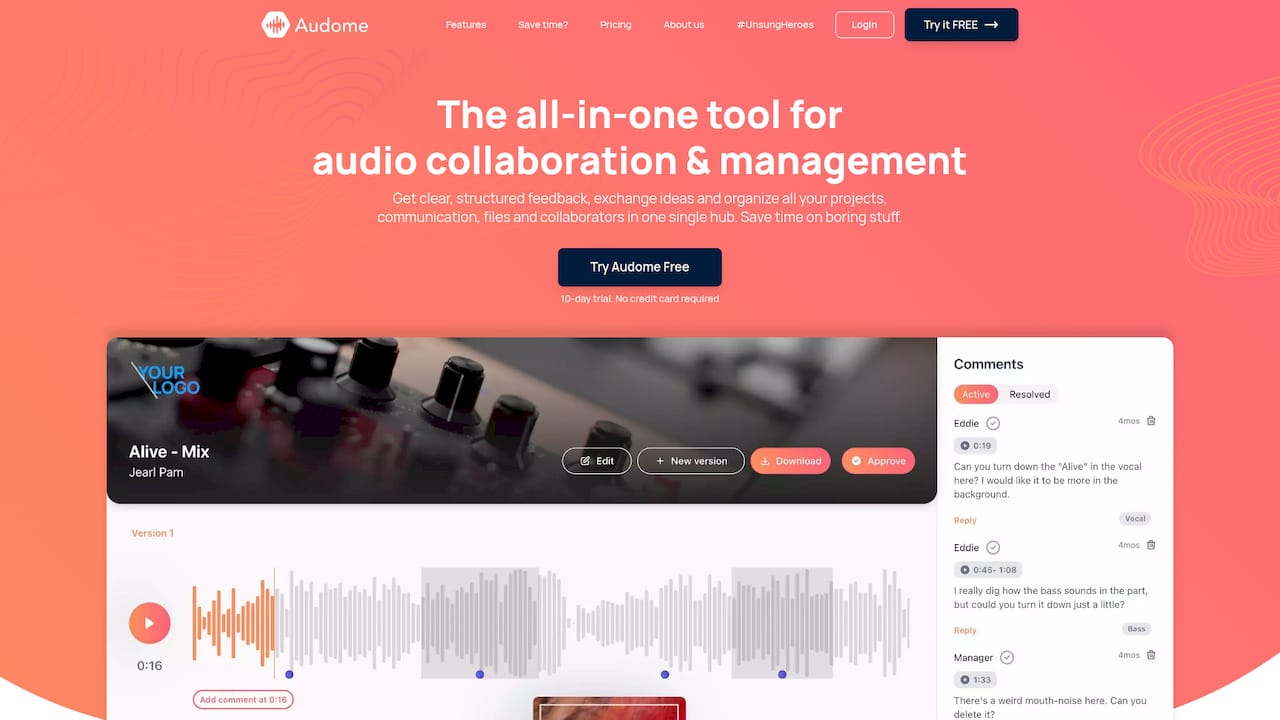
Version history can track every round automatically, so there’s no digging through old email attachments to find which file the client actually signed off on. Signed URLs and per-file permissions let a rough reference go out while the final master stays locked, and a branded, password-protected project page keeps the whole exchange looking professional without asking the client to create an account.
Studio and Pro plans are listed on the Audome pricing page, and checking current plan details is the fastest way to see which tier fits a given workload.
Quick links: templates and how-to posts
- The mix approval checklist covers sonic, technical, and sign-off requirements in one printable format.
- The studio approval process guide walks through locking final files until payment clears.
- The password-protected downloads comparison breaks down quick options versus signed-URL security.
FAQ
What does approval before download mean for a studio?
It means a client cannot access the final mix, stem, or master file until the studio confirms written approval or receives payment. The lock is usually enforced through a password, a signed URL, or a payment integration tied to the project page.
How long should a client review window be?
A common standard is seven business days from delivery, after which many contracts treat silence as approval to keep the project moving. The exact window should be stated in the contract before work begins.
What should a mix approval checklist include?
A solid checklist covers five areas: sonic acceptance, technical specs like sample rate and loudness, playback testing across systems, delivery and metadata conventions, and a written sign-off naming the approver and version.
Can final downloads be tied directly to payment?
Yes, some platforms use payment integrations so the final download unlocks automatically once the client’s balance clears, removing the need to manually send a link after payment arrives.
What’s the difference between a password link and a signed URL?
A password-protected link is quick to set up but can be shared freely once someone has it. A signed URL grants time-limited, per-file access, making it a stronger option for high-value final masters.