
TL;DR:
- Collaborative audio review involves sharing, annotating, and critiquing projects with a shared team environment to ensure aligned feedback and improved sound quality. Effective tools provide timestamped comments linked directly to audio, supporting both asynchronous and real-time collaboration, which helps mitigate issues caused by varying listening environments and personal tastes. Establishing shared reference tracks, structured checklists, clear deadlines, and a centralized platform like Audome enhances consistency, streamlines workflows, and fosters productive team communication.
Collaborative audio review is the coordinated process of sharing, annotating, and critiquing audio projects in a shared environment so your whole team lands on the same page about what sounds right. Whether you’re working with Wipster, Notetracks, or a community like Revolution808, the goal is the same: get aligned feedback that actually improves the mix instead of just creating noise. The challenge is real though. Everyone’s listening on different gear, in different rooms, with different taste… and that’s where things fall apart fast.
What are the main tools for collaborative audio review?
The right platform is the difference between feedback that moves a project forward and a thread of voice notes nobody can act on. Tools built specifically for audio collaboration give your team the ability to leave timestamped comments synced directly to playback. That means instead of “the chorus feels off,” a collaborator can drop a note at exactly 1:42 and say “kick is masking the vocal here.” That’s a note an engineer can actually use.
Wipster and Notetracks both offer inline timestamped annotations that improve feedback clarity by tying every comment to a specific moment in the audio. Audome takes this further by combining file sharing, version control, and private collaborator spaces into one hub that supports lossless audio up to 96kHz/24-bit. No compression. No quality loss. No login required for clients or collaborators.
The distinction between asynchronous and real-time tools matters more than most people think. Real-time tools like live session calls work well for fast decisions and hot-seat feedback. Asynchronous platforms like Audome work better when collaborators are in different time zones or need time to listen critically before responding.
| Tool | Key feature | Best for |
|---|---|---|
| Wipster | Timestamped video and audio comments | Post-production teams |
| Notetracks | In-browser audio annotation | Music producers and podcasters |
| Audome | Lossless file sharing, version control, no login required | Full-cycle audio project management |
| Live coaching calls | Real-time hot-seat feedback | Mix critique and skill development |
Why does team audio feedback go sideways so often?
Here’s the honest answer: because everyone in the room is hearing something different, and nobody’s talking about the same thing. Listener preferences cause wide variability in feedback unless a common benchmark is established first. One person’s “too bright” is another person’s “finally some air.” Without a shared reference point, you’re not getting a group critique. You’re getting five separate opinions from five separate listening environments.
The playback gear problem is massive and underappreciated. Someone reviewing on AirPods in a kitchen is not hearing the same mix as someone on Focal Twins in a treated room. Cross-checking mixes across different listening environments is the only way to get feedback that holds up. If your reviewer’s setup is coloring the sound, their notes are colored too.
Then there’s the personal taste versus technical quality confusion. A reviewer might say the mix “feels flat” when what they actually mean is the low-mids are cluttered. Those are very different problems with very different fixes. Blurring that line wastes everyone’s time.
“Improving consistency is not just a matter of experience, but of developing a shared frame of reference by regularly comparing work against high-quality commercial benchmarks.” — Skippy Studio, Mixclub ’22
Disagreement in group review isn’t always a problem. It’s actually an opportunity to understand where perspectives diverge and why. The issue is when nobody has the vocabulary or the reference point to make that disagreement productive.
Pro Tip: Before any group review session, agree on two or three reference tracks everyone will use as a benchmark. Pick tracks that are well-known in your genre and technically solid. This one step cuts vague feedback in half.
Best practices to improve consistency in group audio critique
Getting better feedback from your team is not about finding smarter people. It’s about building a better process. Here’s what actually works.
-
Establish a shared reference track. Pick a commercially released track that represents the target sound. Play it before every review session. Shared reference tracks significantly improve alignment in team reviews because they give everyone the same sonic baseline to measure against.
-
Use a structured checklist. Vague feedback is useless feedback. Structured checklists covering tonal balance, dynamics, stereo image, and vocal clarity push reviewers toward specific, technical observations instead of gut reactions. Build one and use it every time.
-
Do side-by-side comparisons, not isolated listening. Listening to a track in isolation invites emotional reactions. Listening to it next to a reference track invites analysis. That’s the mode you want your team in.
-
Cross-check on multiple systems. Listen on studio monitors, then headphones, then a laptop speaker, then a phone. If the mix holds up on all four, the feedback you’re getting is reliable. If it falls apart on one, that’s the note worth acting on.
-
Separate taste from technique in every note. Train your team to label feedback as either technical (“the 3kHz range is harsh”) or subjective (“I personally prefer less reverb on the snare”). Both are valid. But they require different responses from the engineer.
-
Set a feedback deadline. Open-ended review windows invite procrastination and last-minute pile-ons. Give your team 48 hours. Consolidate notes before the next revision.
Pro Tip: Create a simple feedback template with fields for tonal balance, dynamics, stereo width, vocal clarity, and one “personal preference” note. Share it with every reviewer before they listen. You’ll get notes you can actually act on.
For more on building a feedback process that holds up under pressure, the feedback collection workflow guide from Audome is worth your time.
How to apply a collaborative review workflow that actually works
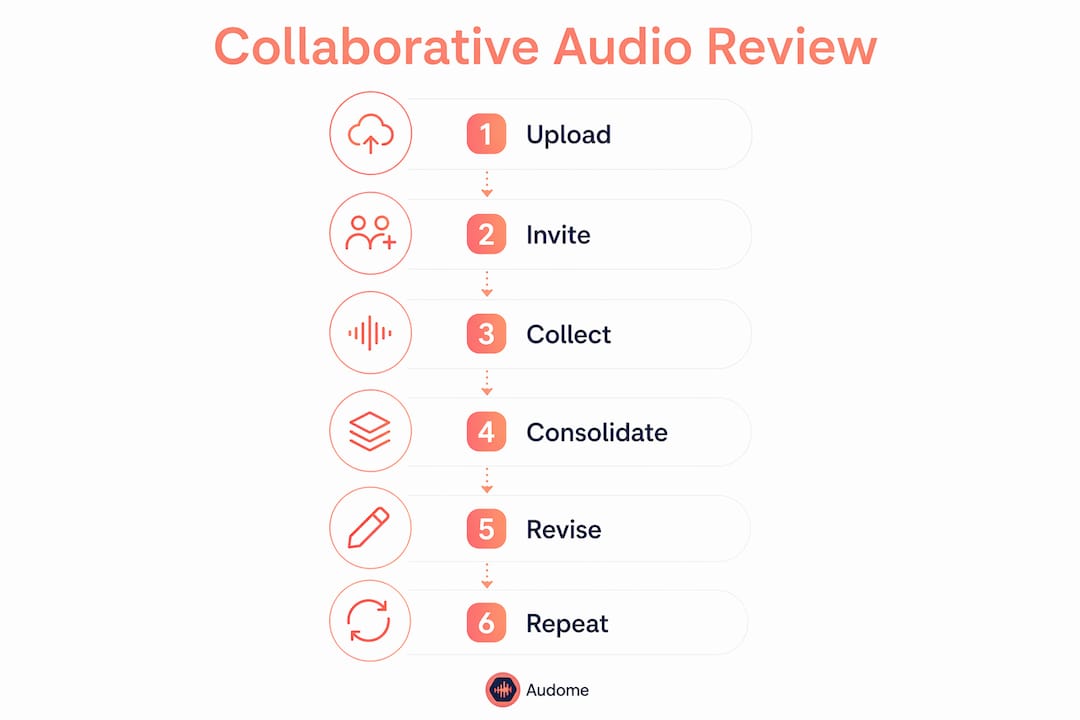
The workflow that works looks like this: upload, invite, collect, consolidate, revise, repeat. Simple in theory. Messy in practice unless everyone knows their role.

The producer owns the vision. They define what “done” sounds like and set the criteria for the review. The mix engineer owns the technical execution. They need specific, timestamped notes they can act on without a phone call to decode what someone meant. A QA reviewer, if you have one, checks the final output against the brief and the reference track before anything goes out.
Communities like Revolution808 show how iterative feedback cycles work in practice. Producers upload work-in-progress tracks, request specific feedback, revise, and repeat until the track is release-ready. The key word is specific. Asking “what do you think?” gets you nowhere. Asking “does the low end translate on your headphones?” gets you a note you can use.
Platforms like Audome centralize the whole cycle. Files, comments, version history, and collaborator access all live in one place. No more digging through email threads to find which version had the note about the snare. No more wondering if your client is listening to v3 or v7.
Common pitfalls and how structured workflow fixes them:
- Version confusion. When there’s no version control, teams end up reviewing the wrong file. Audome’s version management eliminates this entirely.
- Feedback pile-ons. When everyone dumps notes at once without structure, the engineer gets contradictory instructions. Consolidating feedback through a single point of contact before passing it to the engineer fixes this.
- No deadline, no progress. Projects without review deadlines stall. Build the deadline into the workflow from day one.
- Unclear scope. If reviewers don’t know whether they’re evaluating the mix or the arrangement, they’ll comment on both and create confusion. Define the scope before each round.
Weekly 60-minute coaching calls with rotating hot-seat sessions, like those used at Frightbox Recording Academy’s Elite Production Hive, show that real-time group feedback accelerates skill development and mix quality when the format is structured. The format matters as much as the frequency.
For a deeper look at building this kind of process end to end, the project collaboration workflow guide from Audome lays it out clearly.
Key takeaways
Effective collaborative audio review requires shared reference points, structured feedback protocols, and a platform that keeps files and comments organized in one place.
| Point | Details |
|---|---|
| Use shared reference tracks | Agree on benchmark tracks before every session to align the team’s sonic expectations. |
| Structure every feedback round | Checklists covering tonal balance, dynamics, and stereo image produce notes engineers can act on. |
| Separate taste from technique | Label feedback as technical or subjective so engineers know what requires a fix versus a conversation. |
| Cross-check on multiple systems | Listening on monitors, headphones, and consumer devices reveals mix issues that single-system reviews miss. |
| Centralize with the right platform | Audome keeps files, timestamped comments, and version history in one place to prevent workflow breakdown. |
What I’ve learned from watching good projects fall apart
I’ve been in sessions where a mix was genuinely great and the feedback process killed it. Not the mix. The process. Too many opinions with no shared reference. Notes that contradicted each other. An engineer who had no idea which version to work from. The track never made it out.
The tool is not the problem. I’ve seen teams wreck projects using every platform out there, and I’ve seen teams do excellent work with nothing but a shared Google Doc and a Dropbox folder. The culture around the review matters more than the software. Effective collaboration requires cultivating openness and disciplined listening among team members, not just picking the right app.
What actually breaks things is unclear direction and no shared reference point. When the producer hasn’t defined what “done” sounds like, every reviewer fills that gap with their own taste. You end up with five mixes in one conversation and zero consensus.
The fix is boring and it works: set the reference track, define the scope, give everyone the same checklist, set a deadline. Do that consistently and your review sessions stop feeling like a committee argument and start feeling like a real production process.
One more thing… honest feedback is a gift. Blunt notes from someone who actually listened carefully are worth ten times more than polite non-answers. Build a team culture where that’s normal and your output will show it.
— Kreg
How Audome makes collaborative audio review less painful
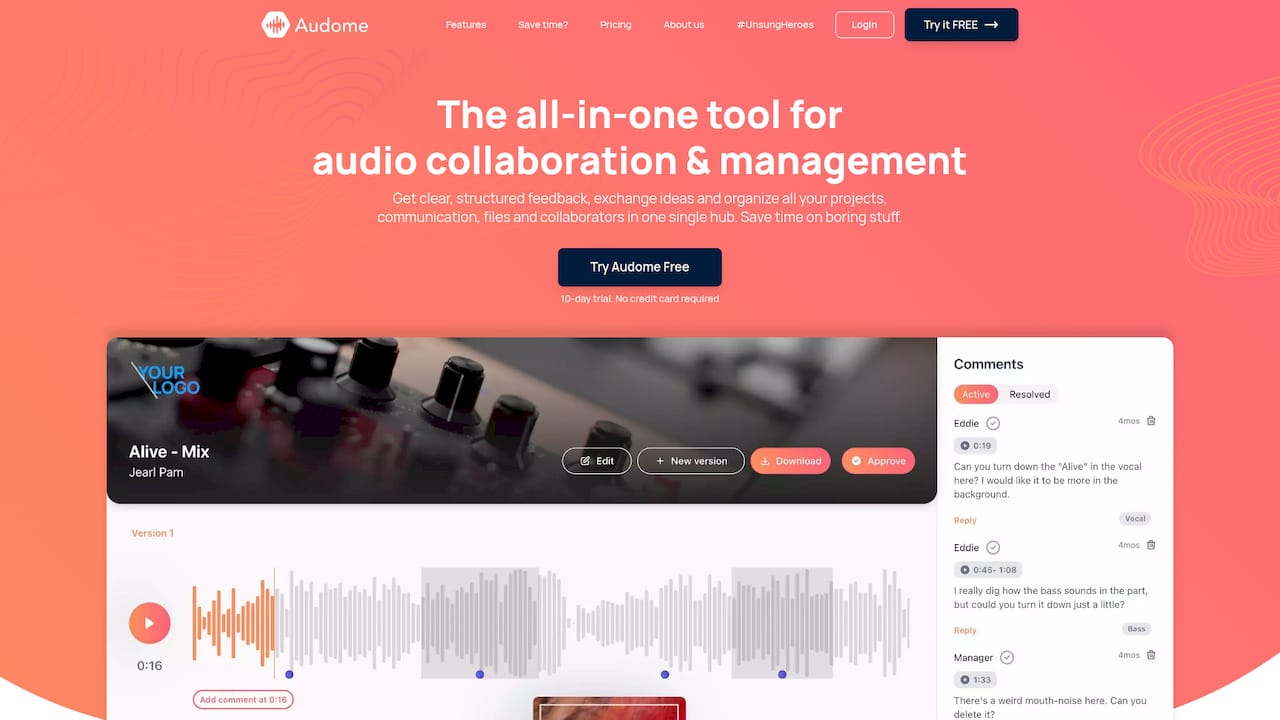
If you’ve ever lost a note in an email thread, sent the wrong version to a client, or tried to explain a mix note without a timestamp… you already know the problem Audome solves. Audome is built specifically for audio professionals who need one place for files, feedback, and version history without the chaos of stitching together three different tools.
Lossless audio up to 96kHz/24-bit. Timestamped comments. Version control. No login required for collaborators. It’s the kind of setup that makes your audio collaboration workflow actually work the way it should. Stop managing the process and start managing the sound.
Try Audome and see how much cleaner your review cycles get.
FAQ
What is collaborative audio review?
Collaborative audio review is the process of sharing audio files with a team and collecting structured, timestamped feedback to refine and improve the final sound. It can happen in real time or asynchronously using platforms like Audome, Wipster, or Notetracks.
Why is team audio feedback so inconsistent?
Inconsistent feedback usually comes from reviewers using different playback systems and lacking a shared reference track. Without a common sonic benchmark, each reviewer evaluates the mix against their own taste rather than a defined standard.
What tools are best for online audio collaboration?
Audome, Wipster, and Notetracks are the most widely used platforms for peer audio review. Each offers timestamped comments tied to audio playback, which is the single most useful feature for turning group feedback into actionable notes.
How do you separate personal taste from technical feedback?
Train reviewers to label every note as either technical (a specific, fixable element like frequency balance or dynamic range) or subjective (a personal preference). This distinction tells the engineer what needs a fix and what needs a conversation.
How many review rounds should a typical audio project have?
Most professional projects go through two to four structured review rounds before sign-off. Using a platform with version control and a defined feedback deadline keeps each round focused and prevents the process from dragging on indefinitely.