
TL;DR:
- A structured mix approval process streamlines audio sign-offs, reducing cycle time by 61 percent through clear roles and formal states. Using dedicated platforms with timestamped comments and parallel routing enhances feedback efficiency and prevents scope creep. Establishing an official approval record before delivery safeguards against unapproved revisions and delays.
A structured mix approval process is a step-by-step system that gets your audio signed off fast, with less back-and-forth and zero mystery about where the project stands. Most mix delivery problems aren’t technical. They’re process problems. Scattered emails, text threads, vague feedback, and no clear “yes” or “no” from the client… sound familiar? Structured approval workflows cut total cycle time from 4.7 days down to 1.8 days compared to unstructured methods like email. That’s a 61% reduction. Platforms like Audome are built specifically to handle this for audio pros, using timestamped comments, version control, and login-free client links to keep everything in one place.
What are the essential components of a mix approval workflow?
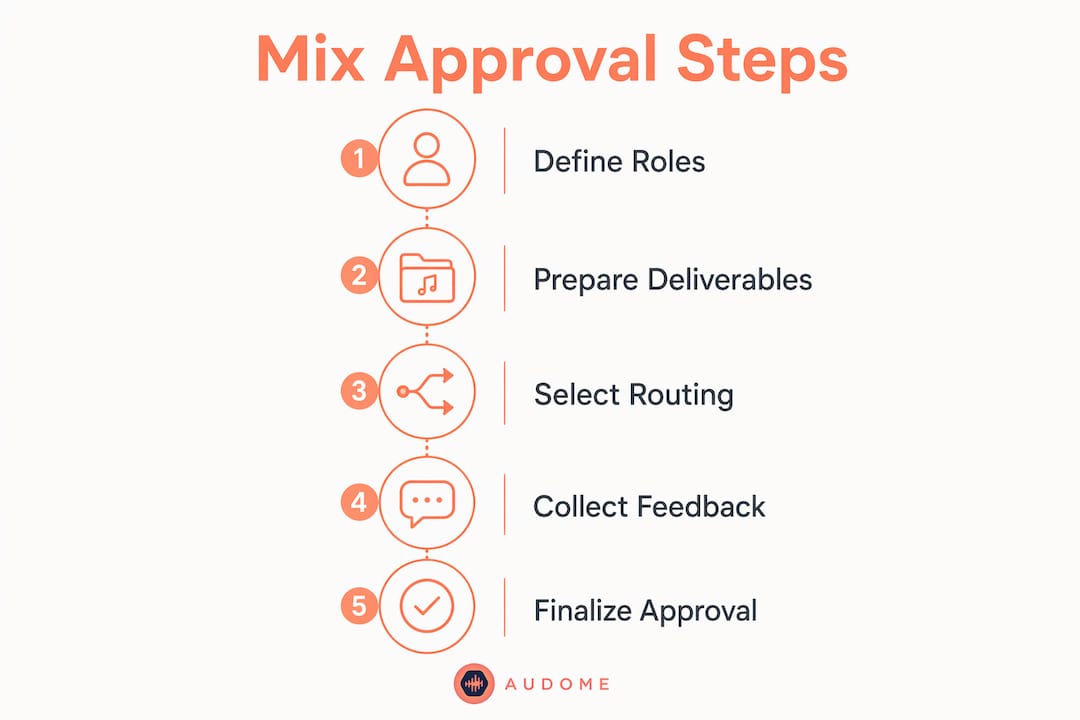
The mix approval workflow is the industry term for what most engineers just call “getting the client to say yes.” It has real structure, and when you skip that structure, you pay for it in revision hell.

Core roles you need to define
Every approval chain has four roles. Get clear on who fills each one before you send a single file.
- Requester: The engineer or producer uploading the mix for review.
- Reviewer(s): Anyone giving feedback. Could be the artist, A&R, music supervisor, or podcast host.
- Approver: The person with final say. One person. Not three people who all think they have final say.
- Escalation contact: Who you call when the approver goes dark for two weeks.
Skipping the escalation contact is the mistake everyone makes until a project stalls out and nobody knows what to do next.
Sequential vs. parallel routing
| Routing type | How it works | Best for |
|---|---|---|
| Sequential | Reviewers approve one at a time, in order | Projects where each reviewer’s notes affect the next |
| Parallel | All reviewers approve at the same time | Independent stakeholders with separate concerns |
Parallel routing lets multiple reviewers work simultaneously, which cuts cycle time when their decisions don’t depend on each other. A music supervisor and a label rep can both review the same mix at the same time. They don’t need to wait on each other.
Approval states and decision criteria
Vague approvals are a trap. “Sounds good” in a text message is not an approval. Define your states upfront: Approved, Revise, or On Hold. Nothing else. Defining measurable decision criteria upfront prevents approvals driven by whoever yells loudest or changes their mind on a Tuesday.
Pro Tip: Label your approval states in writing inside your project space before you upload anything. “Approved” means no more changes. “Revise” means specific notes are attached. If a client can’t click one of those two buttons, the conversation isn’t done yet.
How to set up a step-by-step mix approval process that actually works
Here’s the sequence. Five steps. Do them in order and stop improvising.
-
Create a dedicated project space. Not a shared Google Drive folder. Not a Dropbox link dumped in a text. A real project space with a name, a client, and a defined scope. Audome gives you private collaborator spaces built for exactly this.
-
Upload with consistent file naming. Every file needs a name that tells the story: artist, song title, version number, date. Something like “SmithJones_NeonDreams_v3_20260612.” If your client is downloading “Final_FINAL_v2_USE THIS ONE.wav,” you’ve already lost control of the project.
-
Enable timestamped commenting. This is where the magic happens. Timestamped comments increase feedback speed and precision compared to email threads. Instead of “the chorus feels off,” your client says “at 1:42, the snare is too loud.” That’s a note you can actually act on.
-
Use formal Approve or Revise status buttons. This is non-negotiable. A formal documented approval protects you when a client comes back three months later claiming they never signed off. You have a record. The conversation is over.
-
Send a login-free client link. Clients don’t want to create accounts. They don’t want to download apps. Login-free review portals with timestamped commenting cut friction and speed up the whole process. Less friction means faster approvals.
Chunk your deliverables into batches. Don’t dump 14 stems, 3 mix versions, and a reference track into one upload and ask for feedback. Break it into focused rounds. Rough mix first. Then the vocal balance. Then the master. Each round has a clear scope and a clear approval gate.
Pro Tip: Set natural checkpoints at the end of each batch. Send the files, give the client a 48-hour window, and follow up once. If they miss it, that’s on them. Document it. Move on.
What are the most common pitfalls in mix approvals?
These are the mistakes that kill momentum. Most of them are embarrassingly avoidable.
-
Using generic file sharing. Dropbox, Google Drive, and WeTransfer were not built for audio approval. They lack version control, context commenting, and formal approval states, which leads to project delays and confusion. You end up with five versions of the same file and no idea which one the client actually heard.
-
Missing or vague approval states. If your process doesn’t have a formal “approved” button, you don’t have a process. You have a hope. Clients will change their minds. Without a record, you have no ground to stand on.
-
Unclear roles. When three people think they’re the final approver, nothing gets approved. Define it once, in writing, at the start of the project.
-
Sequential routing where parallel would work. If your A&R rep and your mix engineer are reviewing the same file one after the other for no reason, you’re wasting a week. Put them in parallel.
-
Scope creep from undefined criteria. Without clear decision criteria, every revision round becomes a free-for-all. The client starts asking for things that weren’t in the original brief because nobody drew a line.
The single most expensive mistake in audio project management is treating approval as a conversation instead of a decision. Conversations never end. Decisions do.
Slow or unresponsive reviewers are a separate problem. The fix is simple: build a deadline into the project space, not just into an email. When the deadline lives inside the platform, it’s harder to ignore.
What are the best collaborative methods for stakeholder approvals?
The best collaborative approval methods for audio pros combine parallel routing, timestamped feedback, and a centralized platform. That combination alone eliminates most of the chaos.
Why parallel routing changes everything
Most engineers run sequential approval by default because it’s what they know. But parallel routing lets independent stakeholders review simultaneously. A podcast sponsor, a show host, and a sound designer can all leave timestamped notes on the same episode mix at the same time. You collect all the feedback in one place and address it in one revision pass. That’s not just faster. It’s cleaner.
Platform comparison for audio approval workflows
| Feature | General project tools (e.g., Asana) | Audome |
|---|---|---|
| Lossless audio playback | No | Yes (up to 96kHz/24-bit) |
| Timestamped comments | No | Yes |
| Formal approve/revise status | No | Yes |
| Login-free client access | No | Yes |
| Version control | Limited | Yes |
| Audio-specific project spaces | No | Yes |
Asana is excellent for task management, but it was not built to play a 24-bit WAV file and let a client drop a comment at 2:34. Audome was. For collaborative audio review, the platform matters as much as the process.
Keeping feedback organized and searchable
Timestamped comments inside a dedicated platform mean every note is tied to a specific moment in the audio. No more digging through a three-page email chain trying to figure out what “the part around the bridge” means. Every comment has a timestamp, a version number, and a name attached to it.
Pro Tip: Never accept feedback over text or DM. Respond with your project link every time. “Drop that note in the project space so I don’t lose it.” Say it enough times and clients will start doing it automatically.
For managing mix revisions across multiple stakeholders, version control is the other piece most engineers skip. Every upload should be a new version, not a replacement of the old file. You need the history.
Key takeaways
A structured, centralized mix approval process with defined roles, formal approval states, and dedicated audio tools cuts cycle time by 61% and eliminates the communication chaos that kills projects.
| Point | Details |
|---|---|
| Define roles before you start | Assign requester, reviewer, approver, and escalation contact on every project upfront. |
| Use formal approval states | “Approved” and “Revise” buttons create a documented record that protects you from scope creep. |
| Choose parallel routing when possible | Independent reviewers working simultaneously cuts approval time without sacrificing quality. |
| Ditch generic file sharing | Platforms without timestamped comments and version control cause fragmented feedback and delays. |
| Minimize client friction | Login-free review portals speed up approvals because clients actually use them. |
The part nobody talks about: client psychology in approvals
I’ve been in sessions where a mix was done. Like, actually done. Everyone in the room agreed it was done. And then two weeks later, the client came back with a list of changes because they played it for their cousin at a barbecue.
That’s not a mixing problem. That’s a process problem. There was no formal approval. No record. No locked decision. Just a vibe and a handshake.
The truth is, most clients don’t know what they want until you give them a clear path to say yes or no. When you send a Dropbox link with no instructions and no deadline, you’re inviting chaos. You’re basically saying “take as long as you want and feel free to change your mind forever.”
I’ve seen engineers lose weeks of work because they were too casual about the approval step. No platform. No formal sign-off. Just emails and assumptions. And when the client came back with “I thought we were still in revisions,” there was nothing to point to.
Set up the process before the project starts. Define who approves. Use a platform that records it. Send the link. Get the click. Done.
The engineers who don’t have revision nightmares aren’t more talented. They just built a better fence around the “yes.”
— Kreg
How Audome makes your mix approval process actually work
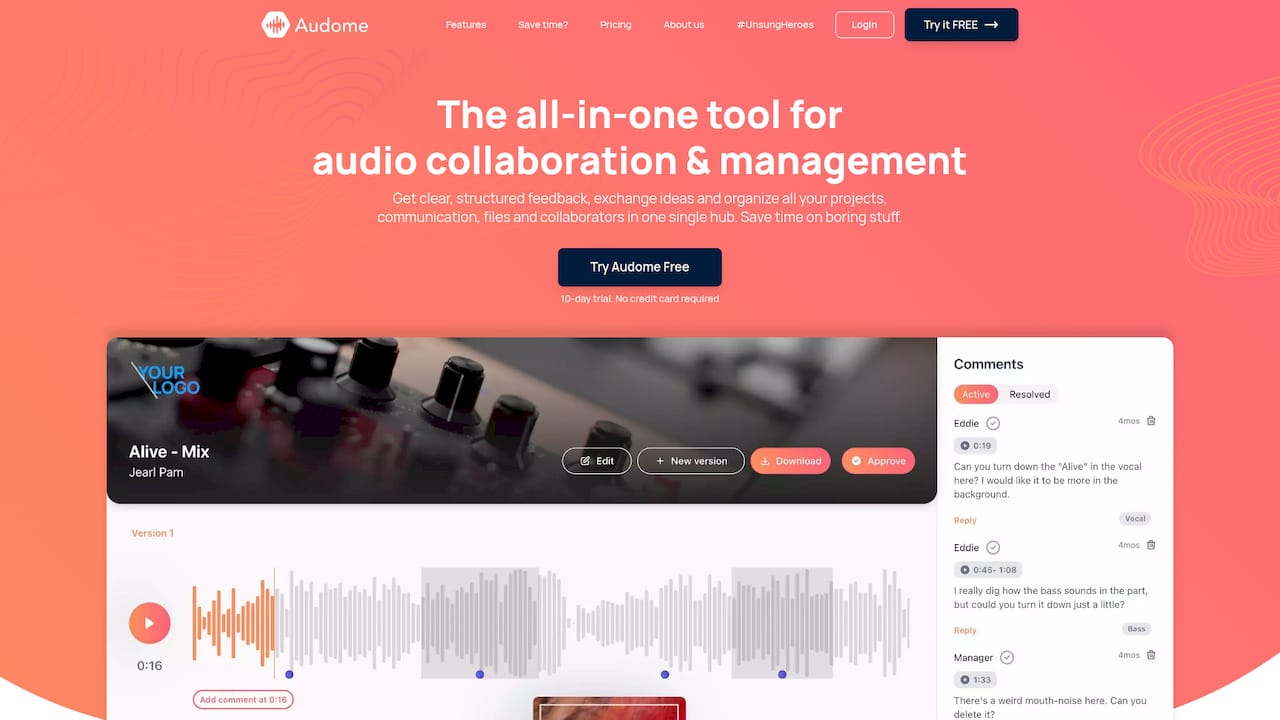
Audome is built for exactly this. It gives you private project spaces, unlimited file uploads at up to 96kHz/24-bit, timestamped comments, formal Approve and Revise buttons, and login-free client links. Everything covered in this article lives inside one platform. No more chasing feedback across email, Slack, and text threads. Your clients click a link, leave a timestamped note, and hit Approve. You have a record. The project moves forward.
If you’re still running your mix approval workflow through a patchwork of file sharing and email, it’s time to fix that. Visit Audome and see how fast the process gets when everything is in one place.
FAQ
What is a mix approval process?
A mix approval process is a structured workflow where audio files move through defined review and sign-off stages before a project is finalized. It includes assigned roles, feedback tools, and formal approval states to prevent miscommunication and scope creep.
How long should a mix approval cycle take?
Structured workflows reduce approval cycle time from 4.7 days to 1.8 days on average. Unstructured methods like email and text threads are the primary reason approvals drag on.
Why shouldn’t I use Dropbox or Google Drive for mix approvals?
General-purpose file sharing tools lack version control, timestamped commenting, and formal approval states. That leads to fragmented feedback, lost files, and no documented record of client sign-off.
What is parallel routing in a mix approval workflow?
Parallel routing lets multiple reviewers approve a mix at the same time instead of one after another. It cuts cycle time significantly when reviewers’ decisions are independent of each other.
How do I stop clients from requesting changes after approval?
Use a platform that records a formal “Approved” status with a timestamp and the client’s name attached. A documented approval record is your protection when a client tries to reopen a closed decision.