
A producer steers the creative vision, a recording engineer captures clean audio, a mix engineer balances it into a finished track, and a mastering engineer prepares it for release. Songwriters supply the material, and session musicians and vocalists perform it. Supporting roles like assistants and contractors keep sessions running, and we cover them and the handoffs between everyone next.
TL;DR:
- On independent projects, one person may handle several roles; larger productions often separate specialists, while vocal producers are commonly distinct on pop and R&B records.
- Remote collaborators should exchange stems or audio rather than native project files, then check matching sample rates, aligned track starts, reference mixes, and versioned filenames.
- Session musicians and vocalists usually receive flat work for hire fees without royalties, while producers may negotiate fees, royalty points, or both.
- Document songwriting splits, publishing shares, credits, and recoupment terms before release; tie payments and revision limits to approved deliverables in writing.
- Name one lead decision maker, set deadlines early, and collect timestamped feedback in one place to prevent conflicting notes and repeated revision rounds.
Table of Contents
- What do producers, engineers, songwriters, and session musicians actually do?
- Which supporting roles keep a session organized?
- When do vocal producers and other technical specialists join?
- How does work move from tracking to mastering, and how do you hand off remotely?
- What should collaborators agree on about contracts, credits, and pay?
- How can you cut friction in communication, deadlines, and revisions?
- Why do clear roles and one workspace speed projects up?
- How can one workspace help you manage roles and revisions?
- FAQ
- Sources
What do producers, engineers, songwriters, and session musicians actually do?
The split to remember: creative authority sits with the producer and songwriters, while technical authority sits with the engineers. Knowing which is which tells you who to call when a vocal feels flat versus when it sounds distorted.
- Producer: oversees the entire production process, including creative direction, budgets, schedules, and coordinating engineers and musicians. On a small project, this is often the person making the final call.
- Recording engineer: manages microphone placement, signal flow and gain staging so the performance is captured cleanly. Capturing a clean recording can make later work easier.
- Mix engineer: balances levels, EQ, compression, reverb, and delay so every element sits together as one cohesive track.
- Mastering engineer: optimizes the finished mix for distribution standards and playback across different devices and formats.
- Songwriter: writes the melody, lyrics, or both. Their contribution is the composition itself, which is tracked separately from the recording.
- Session musicians and vocalists: perform parts on someone else’s project. They are typically hired under work-for-hire arrangements and paid a flat session fee rather than long-term royalties.
In independent projects, one person often covers several of these jobs. Larger projects tend to assign separate specialists for each stage because it raises quality and speeds the work up.
Which supporting roles keep a session organized?
Behind the credited names, a handful of coordination jobs keep sessions on schedule and paperwork in order. You will meet most of these on bigger productions, where nobody can afford to hunt for a lost take.
- Assistant or second engineer: the Recording Academy’s engineer definitions place session logs and support of the main engineer here. Think patching, setup, and stepping in when the lead is busy.
- DAW or Pro Tools operator and digital editor: comps takes, cleans up edits, and prepares files for the next person in the chain.
- Music contractor: hires and coordinates musicians, and handles union paperwork, fees, and scheduling, as ASMAC describes.
- Music librarian: manages scores and parts, mostly on orchestral and film-style projects.
- Studio manager: books rooms, tracks budgets, and keeps the facility running.
- A&R: connects the label’s goals to the production, usually by reviewing progress rather than touching the session.
When do vocal producers and other technical specialists join?
Some roles appear only when a project’s size or style demands them. Knowing them helps you decide whether to add a person or let one collaborator wear another hat.
- Vocal producer: coaches performances, directs takes, and makes the comping decisions on lead and backing vocals. On pop and R&B records, this is frequently a separate job from the main producer.
- Mix assistant or additional engineer: the Recording Academy’s definitions list assistant mix engineers and additional engineers who support the lead mixer on large sessions, handling prep work like organizing tracks and building rough balances.
- Mix programmer: in electronic and remix work, builds and edits synth, drum, and sequenced parts inside the mix itself.
- Dedicated mastering engineer: worth bringing in when the release is going to streaming, vinyl, or multiple formats. Fresh ears at the end catch problems the mixer can no longer hear.
How does work move from tracking to mastering, and how do you hand off remotely?
Every project follows roughly the same chain, and each handoff is where files get lost or misunderstood. Here is the typical sequence:
- Tracking: the recording engineer captures performances and passes the session to the editor.
- Editing: the DAW operator comps takes, trims noise, and tightens timing.
- Mixing: the editor or producer exports organized stems or a clean session for the mix engineer.
- Review: the producer and artist send consolidated notes back to the mixer.
- Mastering: the mix engineer delivers the approved mix, and the mastering engineer prepares final release files.
For remote work, collaborators typically exchange stems or audio files rather than native project files, because different DAWs and plugins make shared sessions unreliable. If a part depends on a plugin the other person lacks, bounce it to audio or freeze the track.
Before you send anything, check four things: consistent sample rate and bit depth, consolidated tracks starting at the same point, a reference mix, and clear file names with version numbers.

Pro Tip: Name files with project, part, and version, for example “Song_LeadVox_v03”, and never overwrite an earlier version.
What should collaborators agree on about contracts, credits, and pay?
Settle money and credits before the final bounce, not after release. Most disputes come from assumptions nobody wrote down.
- Session fees: session musicians and vocalists usually perform on a work-for-hire basis and take a flat fee, which typically excludes royalty participation.
- Producer compensation: producers often negotiate a fee, royalty points, or both, so confirm which applies and what counts toward recoupment.
- Credits: per the Recording Academy’s producer definitions, the producer works with the artist to assign credits, supplies accurate information to the label or media company, and reviews finished liner notes.
- Splits and publishing: write down songwriting splits and publishing shares before release, and get everyone’s sign-off.
How can you cut friction in communication, deadlines, and revisions?
Most delays come from unclear ownership rather than technical problems. A few habits remove most of that.
- Name one lead decision-maker and a timeline up front, so feedback does not arrive from five directions.
- Use a single exchange format, usually stems, and keep naming and versioning consistent from the first session.
- Gather feedback tied to specific moments in the audio, and keep notes in one place instead of scattered across texts and email threads.
- Tie payments or revision limits to deliverable sign-offs, so each round has a clear end.
Pro Tip: Ask collaborators to list every note at once rather than sending them as they occur. One consolidated round beats four partial ones.
Why do clear roles and one workspace speed projects up?
Projects can run more smoothly when everyone knows who decides what. When roles are clear, feedback is anchored to exact moments in a track, and the latest version is obvious, revision cycles shrink. Write credits, file specs, and delivery expectations down at the start, and most late-stage arguments never happen.
— Kreg
How can one workspace help you manage roles and revisions?
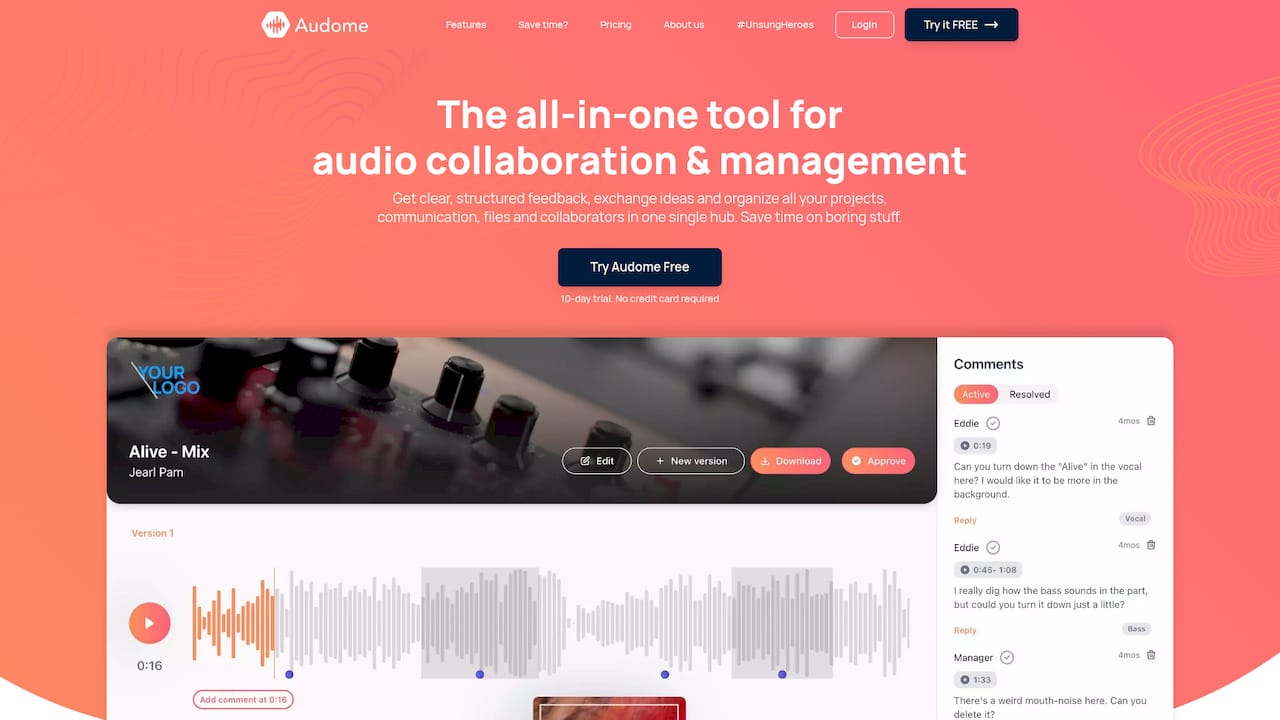
If you juggle files across email, cloud drives, and chat threads, we built Audome to bring that into one place. You can upload high-resolution audio, collect timestamped feedback on the waveform, track version history, and share a client portal for review. For revision control, studios can set revision limits and arrange payment for extra rounds. See our overview or compare plans on our pricing page, then pick the one that fits your studio.
FAQ
How do you collaborate on music effectively?
Agree on a lead decision-maker, timelines, and file formats before work starts. Exchange stems rather than full project files, name versions consistently, and keep all feedback in one place so nothing gets lost.
What does being a collaborator mean in music?
A collaborator is anyone who contributes creative or technical work to a project, such as a songwriter, producer, engineer, or session musician. Each contributes a defined piece, and the roles together form the production team.
What are the main types of audio collaborators?
The core roles are the producer, recording engineer, mix engineer, mastering engineer, songwriter, and session musician or vocalist. Supporting collaborators include assistant engineers, DAW operators, music contractors, librarians, studio managers, and A&R. Counts vary by source, so the exact number depends on how roles are grouped.
What are three types of collaboration in a studio?
Common patterns are in-person studio sessions, remote file exchange, and hybrid work where tracking happens live and mixing is done remotely. Tools have made remote work easier, but the same roles and handoffs organize the work in each.
Sources
- Careerexplorer
- Wisseloord
- Namm
- Music Production Collaboration: Working With Others Effectively | Mixvisor