
Sound design has long carried the reputation of being solitary work, a lone artist hunched over a DAW at 2 a.m. crafting textures no one else will touch until the project ships. That image is outdated. Modern sound design is a networked, team-driven discipline where the best work emerges from structured collaboration, shared feedback, and synchronized creative effort. This guide breaks down exactly how to build collaborative workflows that accelerate your projects, sharpen your craft, and produce results that no single designer could achieve working alone.
Table of Contents
- Why collaboration is redefining sound design
- Proven strategies for effective sound design teamwork
- Remote collaboration: Tools and technologies that deliver
- Real-world collaboration: Project leadership and creative outcomes
- Collaboration in sound design: What most guides won’t tell you
- Accelerate your next sound design project with collaborative tools
- Frequently asked questions
Key Takeaways
| Point | Details |
|---|---|
| Collaboration drives results | Partnering with others enhances both creativity and workflow in sound design. |
| Protocols and tools matter | Establishing communication norms and using robust platforms is key to project success. |
| Remote can outperform | With the right technology, remote teams can rival or exceed in-person audio production. |
| Feedback shapes growth | Clear, constructive feedback loops are essential for continual improvement in teams. |
Why collaboration is redefining sound design
To appreciate why collaboration matters so much in sound design, we need to understand how it’s reshaping the foundations of audio production.
For decades, sound design teams passed hard drives down the hall or emailed compressed stems and hoped for the best. The results were predictable: version confusion, missed feedback, and creative bottlenecks. Today, the model has flipped. Real-time sharing and feedback loops have replaced async guesswork, enabling sound designers to iterate faster, catch problems earlier, and align creative vision across time zones.
This shift isn’t just logistical. It’s fundamentally changing what sound design can accomplish. When you bring together designers with different technical backgrounds, plugin arsenals, and genre influences, the creative ceiling rises. Two designers who each specialize in different frequency ranges will produce a richer, more detailed soundscape together than either could produce independently.
“Shared creative environments don’t just speed up production. They build the kind of trust and shorthand between collaborators that leads to genuinely bold creative decisions.”
Here’s what separates high-performing collaborative sound design teams from chaotic ones:
- Consistent file naming conventions so every collaborator can locate, load, and reference assets without a search party
- Scheduled check-ins to surface blockers before they become bottlenecks, not after the deadline passes
- Documented feedback guidelines that keep critiques constructive and actionable rather than vague or personal
- Cloud-based project management using tools like Trello or Asana to track tasks and responsibilities across the team
- Communication platforms like Slack or Zoom that keep creative conversations tied to specific project contexts
Exploring the full music collaboration process reveals how these norms apply across both music production and sound design contexts. And the payoff isn’t just operational. Research consistently shows that feedback grows talent, meaning the more structured your feedback loops, the faster every member of your team develops professionally. Collaboration isn’t a workflow hack. It’s a growth accelerator.
Proven strategies for effective sound design teamwork
Having seen why collaboration is powerful, let’s get specific: what makes technical and interpersonal teamwork actually work in a sound design environment?
The most overlooked foundation is communication protocol. On a busy post-production project with multiple sound designers, composers, and a supervising editor, ambiguity kills momentum. Who speaks first on a review call? Who documents the revision requests? These questions need answers before the session starts, not mid-session.
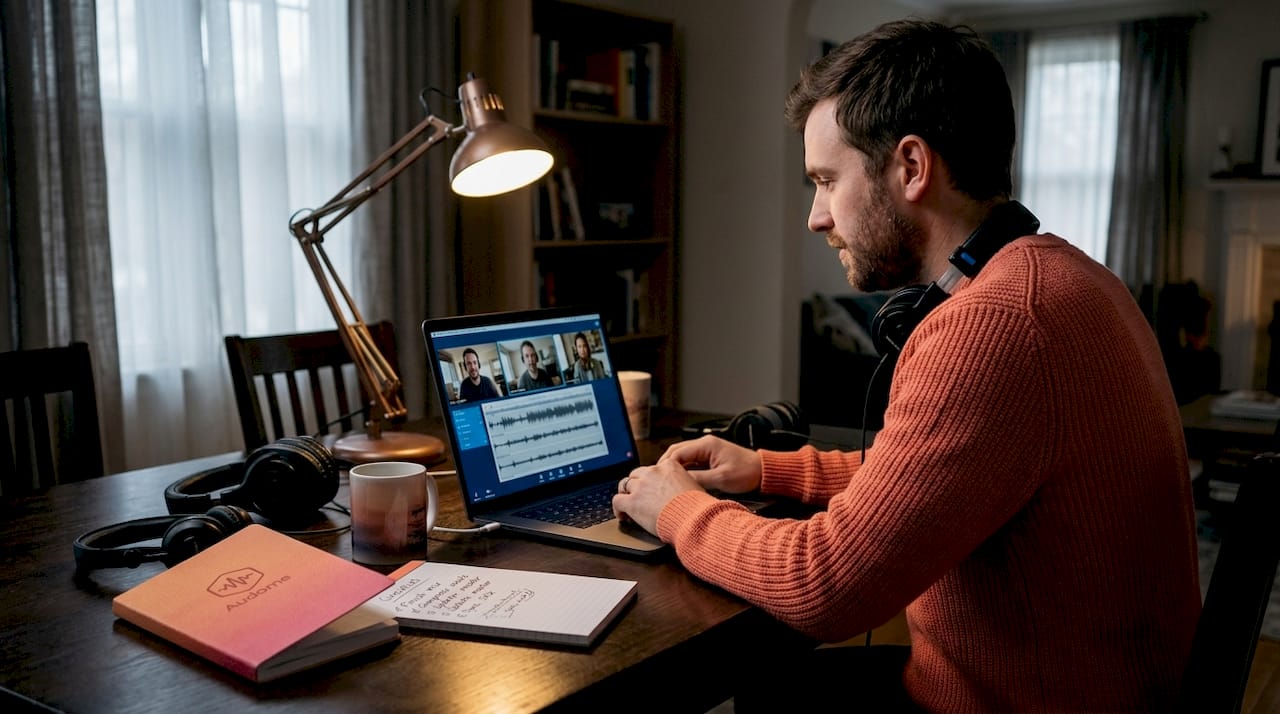
Equally critical is version control for audio. Without a structured handoff system, you risk two designers working on the same stem simultaneously and overwriting each other’s work. Established protocols around frequency allocation, where one designer owns low-end elements and another handles mid-range texture, also prevent masking issues and keep the mix organized from the first session. Sound ideas research confirms that structured handoffs between music and sound design roles are essential to prevent spectral conflicts.
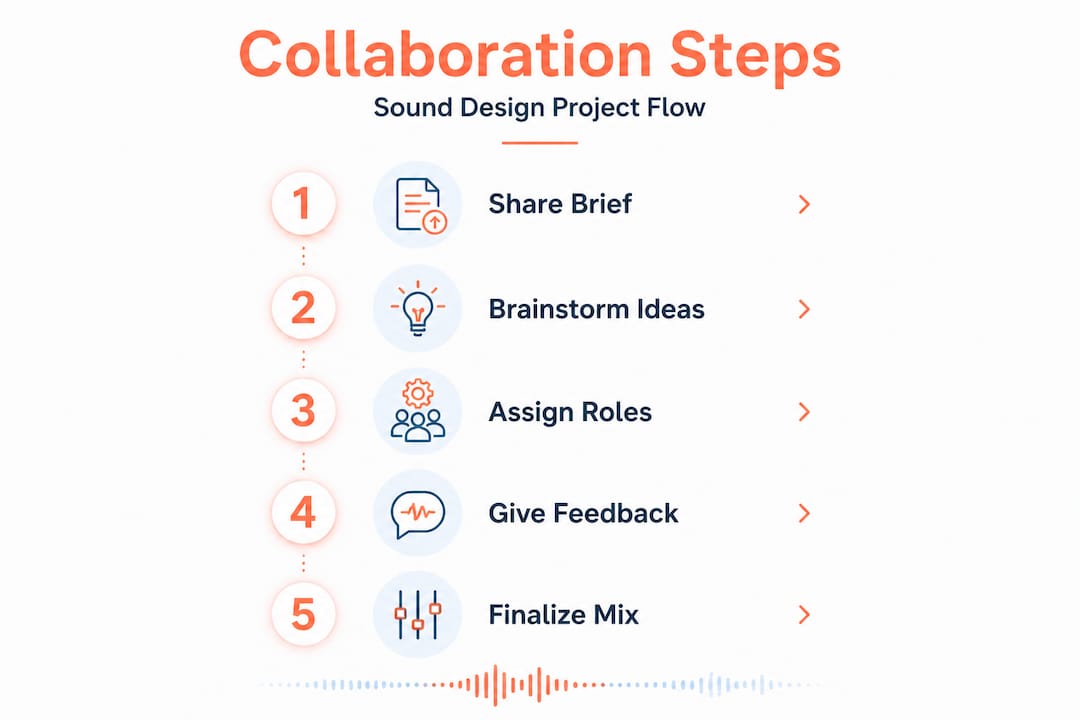
Here’s a numbered workflow that high-performing teams use consistently:
- Pre-session alignment: Define roles, tempo maps, key references, and the primary feedback channel before any files are shared
- Asset preparation: Standardize sample rates, bit depth, and folder structure before the first file lands in the shared workspace
- Talkback priority: Establish who has final say on creative decisions and who documents revisions in writing
- Feedback cycles: Run structured review sessions with timestamped notes rather than general verbal impressions
- Version handoffs: Archive each major version before beginning revisions so rollback is always an option
For remote post-production specifically, specialized tools handle the technical heavy lifting. Remote collaboration platforms like Source-Nexus, Sessionwire, and SyncDNA each bring distinct capabilities, including multi-stream support up to 128 channels, frame-accurate sync with picture, and immersive audio formats up to 9.1.6. Choosing the right platform depends on your project’s complexity and the formats you’re delivering.
| Tool | Max channels | Frame sync | Immersive support |
|---|---|---|---|
| Source-Nexus | 128 | Yes | Yes |
| Sessionwire | Stereo/multi | Yes | Limited |
| SyncDNA | Multi-stream | Yes | Yes (9.1.6) |
Pro Tip: When delivering feedback in collaborative sessions, focus on describing what the sound needs to do emotionally or functionally, not on prescribing specific technical fixes. “This impact needs more transient punch for the cut to land harder” beats “add 6dB at 3kHz.” It guides outcomes without overriding your collaborator’s expertise.
Remote collaboration: Tools and technologies that deliver
Now that protocols are clear, let’s see how technology bridges distances and enables teams to produce at a high level from anywhere.
Remote sound design collaboration has matured rapidly. The combination of high-speed internet, adaptive streaming protocols, and DSP-based latency compensation has closed the gap between remote and in-person sessions. In some measurable ways, remote models have surpassed their in-person counterparts, and the research backs this up.
A published empirical case study examining a remote collaboration between experienced sound designers Hebbeler and Vrenna found that real-time streaming with DSP latency management, independent DAW setups, and binaural processing produced results that rivaled in-person workflows. Beyond quality parity, the remote model delivered cost savings, scheduling flexibility, and access to unique hardware setups that neither designer could have accessed in a shared physical space.
The practical takeaway: remote collaboration isn’t a compromise. It’s a format with its own distinct advantages that informed teams are actively choosing rather than accepting by default.
That said, edge cases exist. Different DAWs require cross-compatible plugins, and what plays back cleanly in Pro Tools may behave unpredictably in Logic or Reaper without careful session preparation. Variable bandwidth is another variable. Adaptive streaming helps, but teams working with immersive formats need robust connections and frame-accurate sync to avoid drift. For practical guidance on avoiding these pitfalls, remote collaboration tips cover how to structure your technical setup before sessions begin.
Here’s a comparison of the most relevant considerations when setting up a remote sound design workflow:
| Challenge | Solution approach | Key tool category |
|---|---|---|
| Latency between DAWs | DSP compensation, adaptive streaming | Remote session software |
| Plugin incompatibility | Cross-platform plugin suites | Universal VST/AAX formats |
| File version confusion | Cloud storage with version history | Asset management platforms |
| Immersive format sync | Frame-accurate sync protocols | Post-production sync tools |
| Feedback clarity | Timestamped written notes | Collaborative review platforms |
The specific tools you choose matter less than how rigorously you adopt them. Teams that half-implement a collaboration platform get half the benefit. Full adoption, including clear ownership of tasks and consistent use of shared feedback channels, is what separates functional remote teams from exceptional ones.
- Standardize your DAW session template before sharing with collaborators
- Use reference tracks accessible to everyone in the shared project space
- Schedule at least one synchronous listening session per major revision cycle
- Store all working files in a single source of truth, not across multiple drives or inboxes
Real-world collaboration: Project leadership and creative outcomes
Beyond tools and protocols, human factors like leadership and mentorship fundamentally shape the creative results that collaborative sound design can achieve.
One of the most instructive recent examples comes from a student-mentor production of RENT at Elon University. A student sound designer, working under expert mentorship, managed 80 inputs and 38 outputs to deliver an immersive sound experience for a live theatrical production. The project used manual techniques to keep costs manageable at scale, a real-world lesson in how creative problem-solving replaces budget when leadership and mentorship are dialed in.
80 inputs. 38 outputs. One student-led immersive sound design project made possible through structured mentorship and rigorous project management.
This isn’t just an inspirational story. It’s a template for how collaborative production frameworks scale. The same principles that enabled a student to manage a complex theatrical production apply to a post-production team handling a feature film or a sound design house building a game audio library.
Here’s what the RENT project teaches about team-driven sound design:
- Leadership clarity: The mentor defined the scope and standards; the student executed and problem-solved within that frame, not the reverse
- Flexible role ownership: When budget constraints removed options, the team adapted techniques rather than reducing ambition
- Feedback as a learning mechanism: Regular mentor check-ins converted mistakes into skills rather than blockers
- Documentation discipline: Every creative decision was traceable, making revisions efficient and the final mix coherent
Pro Tip: Don’t lock collaborators into rigid roles on longer projects. Rotating responsibilities, even temporarily, builds empathy between roles and often surfaces creative solutions that specialists in a single area would never consider. A sound designer who spends a session acting as the feedback coordinator will write better feedback notes for the rest of their career.
The connection between strong project leadership and creative output is direct and quantifiable. Teams with a clear creative lead and structured feedback culture consistently deliver on time and produce work that reflects genuine creative ambition, not just technical competence. The human architecture of your team matters as much as your plugin list.
Collaboration in sound design: What most guides won’t tell you
We’ve covered the nuts and bolts. Now let’s cut through the noise and share what many experienced sound designers wish they’d learned sooner.
Most guides to collaborative sound design treat remote work as a workaround, something you do when you can’t be in the room together. That framing is wrong. Remote collaboration research shows that async flexibility, access to global talent, and independent hardware setups can produce results that genuinely exceed what a single shared physical studio makes possible. The “same room” feeling is real, but it isn’t always the optimal creative environment. Some designers do their best work when they’re not being observed.
What most guides also skip is the personal friction of collaboration. DAW incompatibilities aren’t just technical problems, they’re trust tests. When your collaborator sends you a session you can’t open without three missing plugins and a sample rate mismatch, frustration compounds quickly. Building a technical compatibility checklist before you begin isn’t paranoid, it’s professional. For a detailed breakdown of what to prepare, real-world remote collaboration walks through the most common friction points and how to preempt them.
There’s also the consensus trap. Many teams treat disagreement as a problem to be resolved quickly. In reality, structured creative conflict, where two designers advocate for genuinely different sonic directions and have to defend their choices, regularly produces better outcomes than early consensus does. Don’t rush to agreement. Make the tension work for the project.
Finally, hybrid workflows that blend remote collaboration with hands-on hardware sessions have a distinctive creative energy. There’s something about being in the same physical space with an analog synth or a large-format console that generates creative momentum that pure ITB remote sessions sometimes lack. The smartest teams treat remote and in-person collaboration as complementary modes rather than competing options.
Accelerate your next sound design project with collaborative tools
Having seen the immense power of collaboration, here’s how to put it all in motion with the right toolset.
The frameworks in this guide only work consistently when your infrastructure supports them. If your team is still routing feedback through email threads and managing files across three different cloud services, you’re spending creative energy on logistics instead of sound.
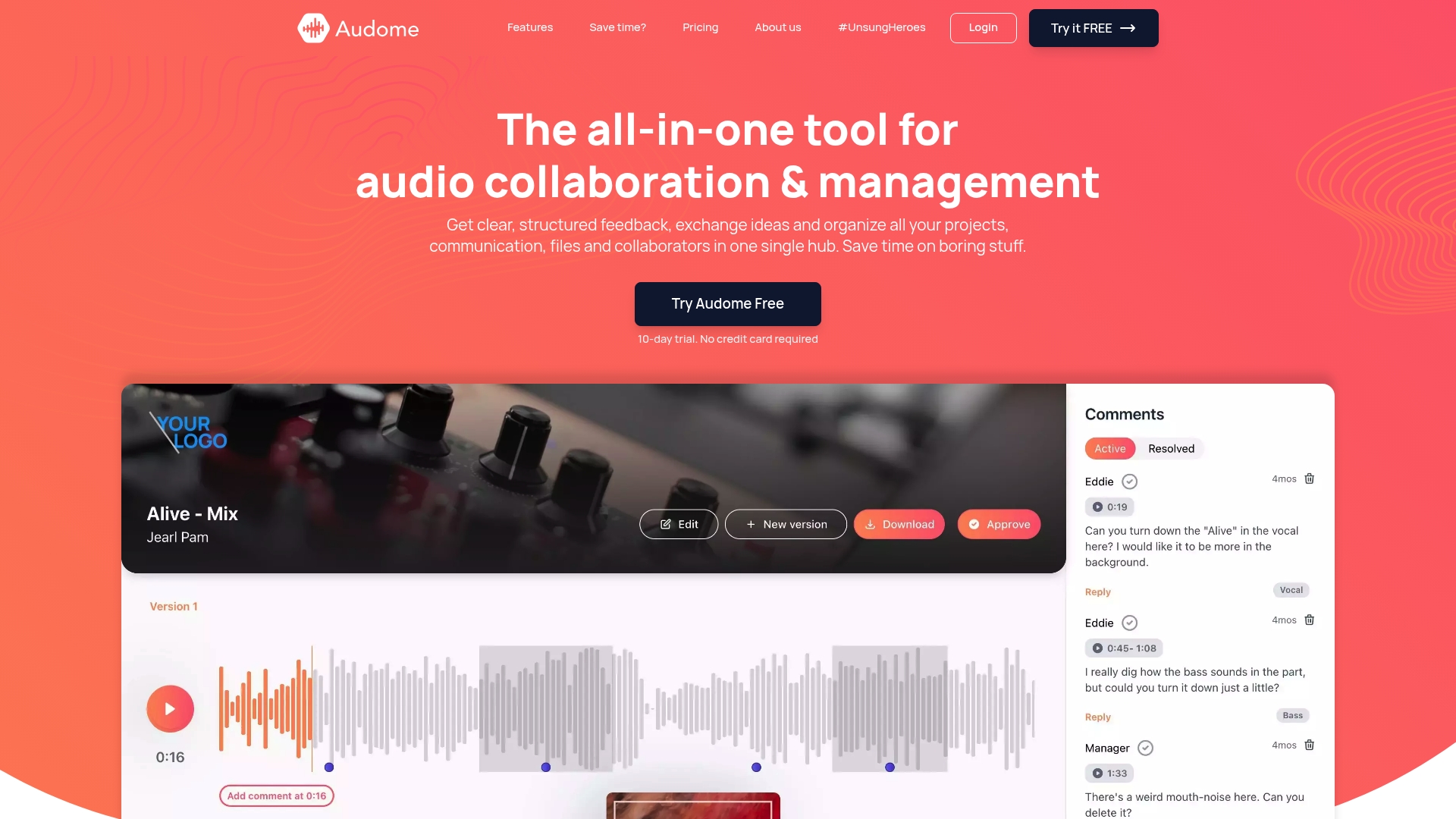
Audome is built specifically for audio professionals who need more than generic file sharing. It brings project management, all-in-one audio collaboration, and feedback collection into a single secure workspace that supports lossless audio up to 96kHz/24-bit. Timestamped comments let collaborators flag the exact moment in a file that needs attention, version control keeps your project history clean, and private collaborator spaces mean your work stays yours. No client login required. No compressed files. Just professional-grade collaboration infrastructure designed for the way sound designers actually work.
Frequently asked questions
What are the best tools for remote sound design collaboration?
Leading options include Source-Nexus, Sessionwire, and SyncDNA, each offering real-time sync, multi-stream support, and immersive audio capabilities for post-production teams.
How do I keep my collaborative sound project organized?
Use cloud storage and project management platforms alongside consistent file naming conventions, scheduled check-ins, and a single documented feedback channel to keep everyone aligned.
Can remote collaboration match the results of in-person sound design?
Yes, and sometimes it exceeds them. Real-time streaming with DSP latency management and synced independent DAWs have produced results that rival and occasionally surpass shared physical studio setups.
What are the main challenges when collaborating on sound design?
The biggest hurdles are DAW compatibility and adaptive streaming, along with ensuring that feedback is specific, documented, and tied to exact moments in the audio rather than delivered verbally and forgotten.